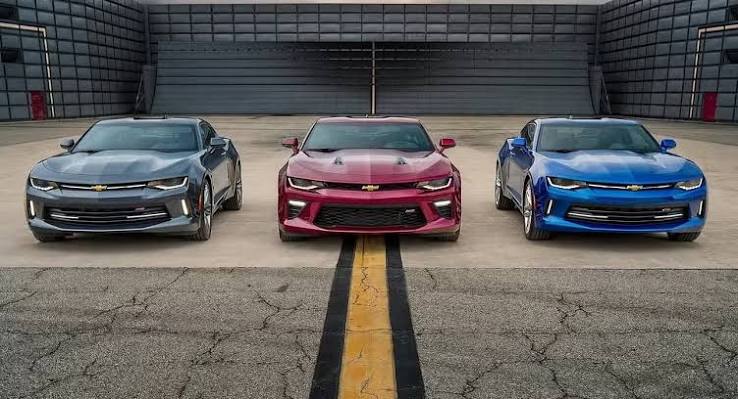
In December 2023, General Motors (GM) officially ended sixth-generation Chevrolet Camaro production at the Lansing Grand River plant in Michigan. That decision reshaped the muscle car landscape, leaving enthusiasts to choose between the enduring Ford Mustang and the discontinued Camaro.
Over a standard five-year ownership period, the financial gap may become hard to ignore. The base-model 2024 Ford Mustang EcoBoost uses a 2.3-liter turbocharged four-cylinder engine producing 315 horsepower and launched with a $30,920 starting MSRP, excluding destination fees. Chevrolet’s final Camaro production year, the 2024 model, offered the base 1LS variant at a $32,445 MSRP before discontinuation. That initial difference sets the baseline.
Performance Tiers and Mechanical Demands
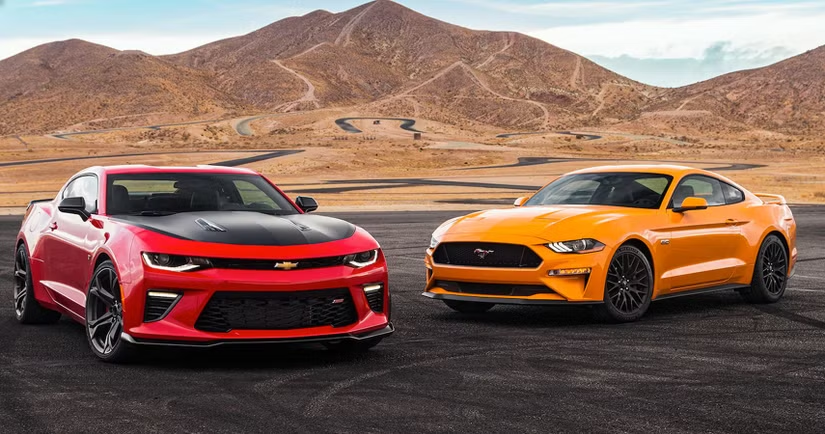
The Ford Motor Company builds the Ford Mustang, which reportedly competes directly with the Chevrolet Camaro in the American muscle car segment aimed at performance enthusiasts. That rivalry reaches into mechanical complexity and running costs. More powerful models can need more frequent service and burn fuel faster.
The 2024 Ford Mustang Dark Horse gets a 5.0-liter Coyote V8 producing 500 horsepower and 418 lb-ft of torque, and it may need premium fuel to preserve that output. The Camaro ZL1’s supercharged setup may likewise require specialized compressor-system maintenance. Both brands’ vehicles can experience greater drivetrain wear when drivers push them hard, while the Mustang provides a wider efficiency range through its EcoBoost option. For more detail, see Roadshow by CNET.
Year Three: Maintenance Windows and Reliability Trends
Once owners pass the three-year threshold, Camaro parts scarcity may become a concern. GM’s production stoppage could put pressure on aftermarket support, potentially leaving owners of late-model cars dependent on used components.
Ford’s continued production may help preserve supply chains and get Mustang owners quicker repairs. Insurance costs could also move in different directions; the Mustang’s popularity may keep rates steady, while Camaro rarity could raise comprehensive coverage costs. Those possible fees may chip away at the early savings.
Year Five: Depreciation Trajectories and Resale Value
The five-year mark puts resale strategies to the test. Camaro models built before the December 2023 cutoff may draw collector interest, potentially keeping their values above normal depreciation curves. Well-kept examples may bring premiums that offset the higher purchase
Recommendation: Calculating the True Cost of Ownership
The choice ultimately comes down to risk tolerance. The Ford Mustang EcoBoost may produce a lower five-year cost profile, thanks to accessible maintenance and more predictable depreciation. Its 315-horsepower output works well for daily driving without necessarily putting extra strain on the budget.
The Camaro 1LS costs more upfront, but its discontinued status gives it speculative value. Buyers focused on potential savings may lean toward the Mustang. Those willing to gamble on collector appreciation may accept the Camaro’s premium. The muscle car rivalry comes down to how you define value.
The Mustang may mean lower bills; the Camaro offers a speculative bet on collector glory.
FAQs
Does the Camaro hold value better than the Mustang?
Discontinuation can lift resale values for rare models, potentially helping the Camaro beat standard depreciation curves.
Which engine variant costs more to maintain over five years?
High-performance V8 models such as the Dark Horse and ZL1 may need premium fuel and specialized service, raising lifetime costs.
What is the cheapest muscle car to purchase initially?
The base-model 2024 Ford Mustang EcoBoost starts at $30,920, giving it the lowest entry price among comparable new vehicles.
Was this article helpful?
Your feedback directly improves future articles on this site.