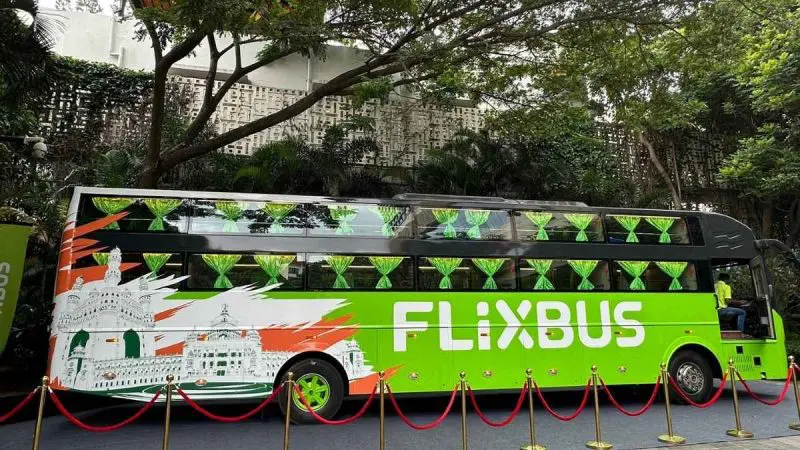
Ever tried booking an intercity bus during festival season only to find everything sold out? FlixBus India just showed how a smart, data-driven network can turn that scramble into smooth sailing. As Independence Day, Raksha Bandhan, and Onam drove a surge in travel demand this August, the company responded by significantly ramping up capacity on some of its busiest corridors — with one route seeing growth as high as 150%.
Table of Contents
What Triggered the Surge
August in India is a festival-heavy month, and this year was no exception. With Independence Day, Raksha Bandhan, and Onam all falling within weeks of each other, millions of travelers headed toward hometowns, pilgrimage sites, and family gatherings. Intercity bus travel, long a backbone of affordable domestic mobility in India, naturally saw a sharp spike in demand across these overlapping occasions.
FlixBus Route-Level Growth Snapshot
FlixBus didn’t just react uniformly — it scaled capacity strategically based on where demand was strongest.
| Corridor | Month-on-Month Network Growth |
|---|---|
| Hyderabad–Tirupati | 150% |
| Chennai–Vijayawada | 67% |
| Jaipur–Dehradun | 33% |
| Delhi–Amritsar | 25% |
The Hyderabad-Tirupati spike stands out in particular, likely reflecting the route’s popularity as a pilgrimage corridor, while the Delhi-Amritsar and Jaipur-Dehradun increases point toward strong festive and leisure travel patterns during the period.
Why This Kind of Scaling Matters
Behind these numbers lies a broader operational philosophy. According to Surya Khurana, Managing Director of FlixBus India, building a strong intercity network isn’t just about throwing more buses at a problem — it’s about anticipating where mobility needs are emerging and scaling in response. This demand-led approach benefits both passengers, who get more travel options during high-demand windows, and FlixBus’s regional fleet partners, who get to grow their operations alongside the platform.
This kind of dynamic capacity planning is increasingly common across the global transportation industry, where companies use real-time demand data to optimize fleet allocation rather than relying on fixed, static schedules.
The Bigger Picture: India’s Growing Intercity Bus Market
Since entering India in February 2024, FlixBus has expanded impressively, now covering over 330 cities across North, South, and West India with more than 1,400 stops. The company operates on an asset-light, technology-driven model, focusing on network planning, pricing, and customer experience while partnering with local bus operators to actually run the services. This mirrors the operational strategy of its parent company, Flix, which runs similar tech-enabled travel networks across more than 40 countries globally.
Features like seamless digital booking and real-time tracking have become standard expectations for modern intercity travel, and FlixBus’s ability to flex capacity around festival demand suggests the platform is maturing quickly in a market where reliability during peak periods can make or break customer trust.
If you enjoy following how transportation and travel-tech companies use data to adapt their operations in real time, our team at TechnoSports regularly covers these industry trends — worth a look for fellow mobility and tech enthusiasts.
What This Means Going Forward
With festive travel patterns clearly influencing route-level strategy, FlixBus appears set to continue this responsive scaling approach for future high-demand periods. For travelers, that likely means more availability and better options exactly when they need them most — during the festivals that matter.
FAQs
Q1: Which FlixBus route saw the highest growth in August?
The Hyderabad–Tirupati corridor saw the largest increase, growing 150% month-on-month.
Q2: How many cities does FlixBus currently operate in across India?
FlixBus covers over 330 cities with more than 1,400 stops nationwide.