NAM321/6 (50 ov)
 IRE
IRE FCA
FCA FCU
FCU KOE
KOE S04
S04 M05
M05 SVW
SVW RBL
RBL ELV
ELV SCP
SCP HSV
HSV MEX-W
MEX-W ARG-W
ARG-W ARS
ARS EVE
EVE COV
COV FUL
FUL MOZ19
MOZ19 UGA23/0 (0.5/20 ov, target 20)
 NZ180/5
 IND181/6 (19.5/20 ov, target 181)
 Ipswich1
 Nottm Forest1
 Alavés1
 Málaga1
 WA105/3 (18.5/50 ov, target 372)
 NSW371/8
 DEN
DEN KUW
KUW KENYA
KENYA QAT
QAT SWD-W
SWD-W EPR-W
EPR-W TTN-W
TTN-W WPR-W
WPR-W BOR
BOR WAR15/1 (2.5/20 ov)
 LIONS
LIONS Limpo21/1 (2.5/20 ov)
 NZ-A135/3 (41 ov)
 IND-A113
 DHA293/3 (84.1 ov)
 RAJ
RAJ MYMS
MYMS CHATT
CHATT RAN320/5 (80 ov)
 BAR
BAR UAE
UAE NED
NED PAK
PAK ENG
ENG IND-W
IND-W ZIM-W
ZIM-W GMB
GMB LES
LES ZMB
ZMB NGA
NGA AFG170/3 (34.3/50 ov, target 170)
 ZIM169
 OFC
OFC NEU
NEU Torino3
 Monza2
 Brest1
 Nice2
Nice2 Stuttgart2
 Gladbach3
 Al Ahli4
 Al Khaleej1
Argentina arrive at the 2026 FIFA World Cup in a position no team has occupied since Brazil in 1962: defending world champions with genuine expectations of winning it again.
Only Italy (1934, 1938) and Brazil (1958, 1962) have ever won successive World Cup titles. If Lionel Scaloni’s side can repeat, they join an extraordinarily exclusive historical club.
Since lifting the trophy in Qatar, Argentina have been relentlessly consistent. They won the 2024 Copa América on home soil for the tournament, claimed the 2024 Finalissima, and finished comfortably atop CONMEBOL qualifying. Yet several genuine concerns surround La Albiceleste heading into this summer — and seven factors will determine whether they can make history.
1. A Lack of Tests Against Elite Opposition
The first concern is the quality of opposition Argentina have faced during this cycle. Beyond South America’s competitive qualifying environment, the reigning world champions have rarely encountered elite European nations or rapidly developing sides such as Morocco or Japan.
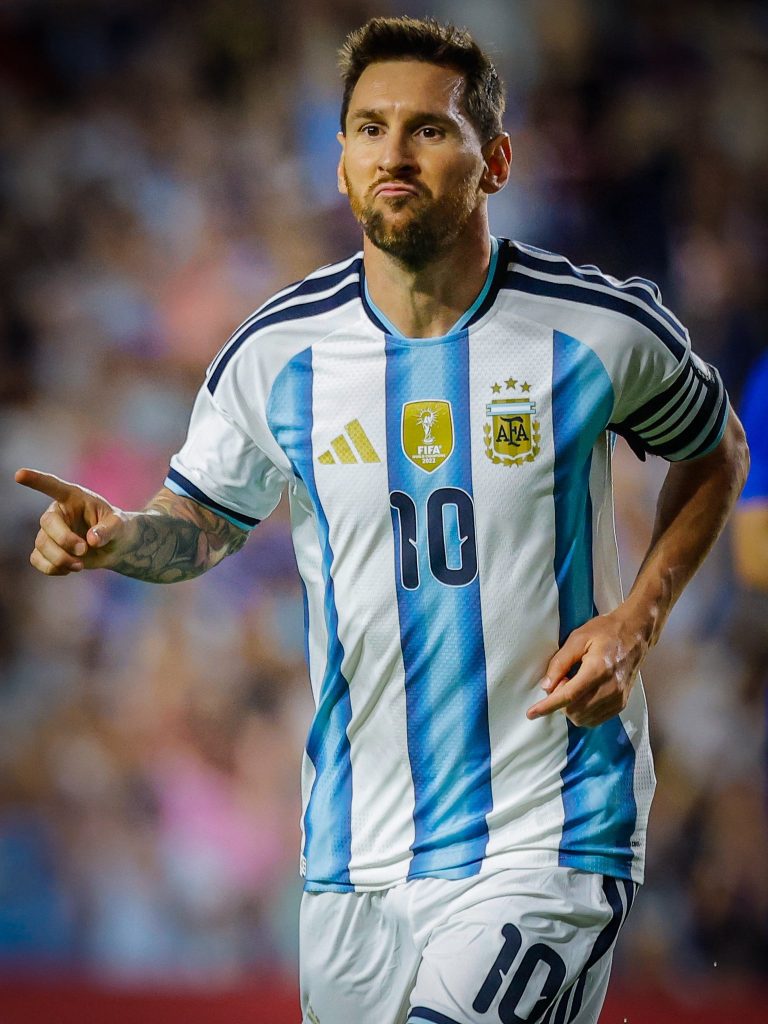
Their non-competitive schedule has included opponents like Puerto Rico, Zambia, and Mauritania — matches providing minimal tactical information and almost no indication of how they would perform against the best. A similar pattern preceded Qatar 2022, but the disparity has been more pronounced this time.
2. Fitness Concerns Among Key Players
Physical condition is a genuine uncertainty. Several core members of the 2022 World Cup-winning squad — including Emiliano Martínez, Cristian Romero, and Leandro Paredes — have dealt with injury issues during the closing stages of the club season.
Tournament football hinges on availability, and Argentina’s ability to manage workloads across a compact schedule could prove as decisive as any tactical preparation.
3. Messi, De Paul and the MLS Factor
There is uncertainty around the competitive environment that Lionel Messi and Rodrigo De Paul have been operating in at Inter Miami in Major League Soccer.
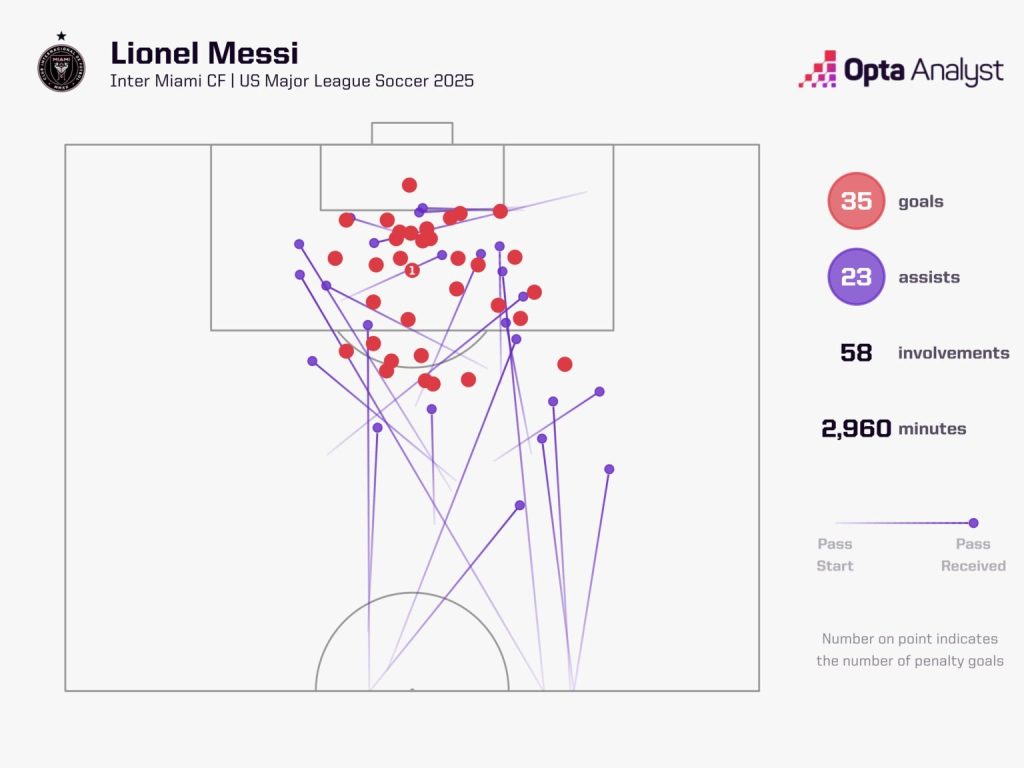
MLS continues to grow in quality, but it operates at a different intensity and competitive level to Europe’s top competitions. The World Cup will provide the clearest indication yet of how Messi’s dominance in that environment translates against elite international opposition.
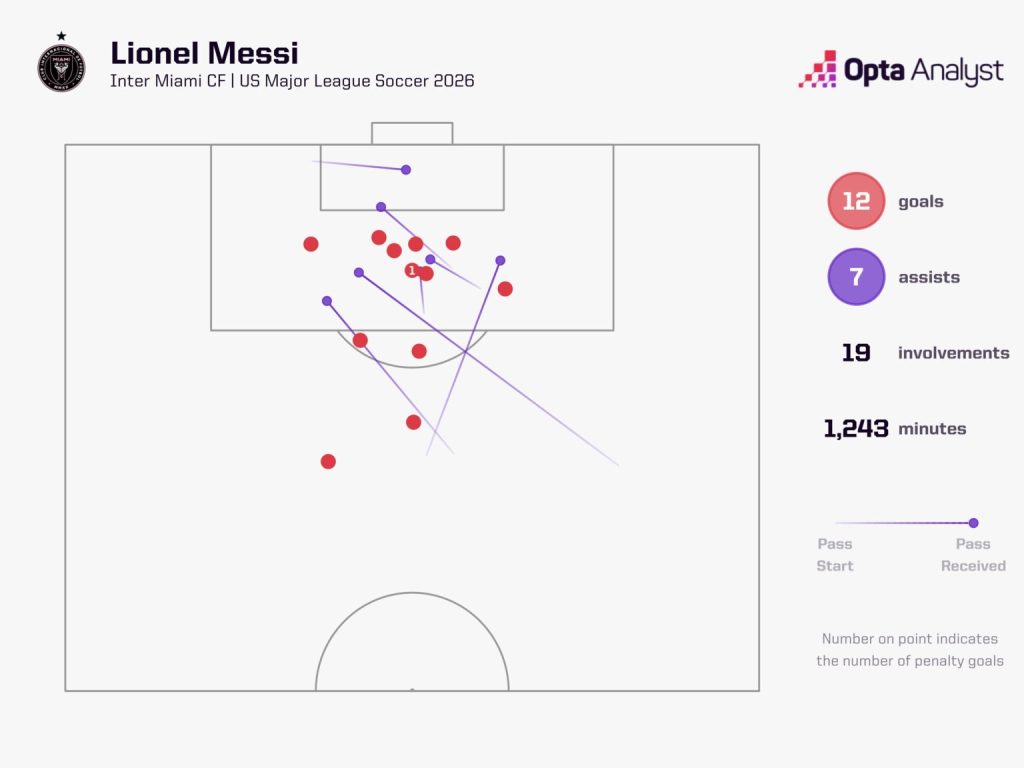
The numbers remain remarkable:
| Lionel Messi — MLS Goal Involvements | Season | Games | Goals | Assists | Total |
|---|---|---|---|---|---|
| 2024-25 | 34 | 35 | 23 | 58 | |
| 2025-26 (current) | 14 | 12 | 7 | 19 |
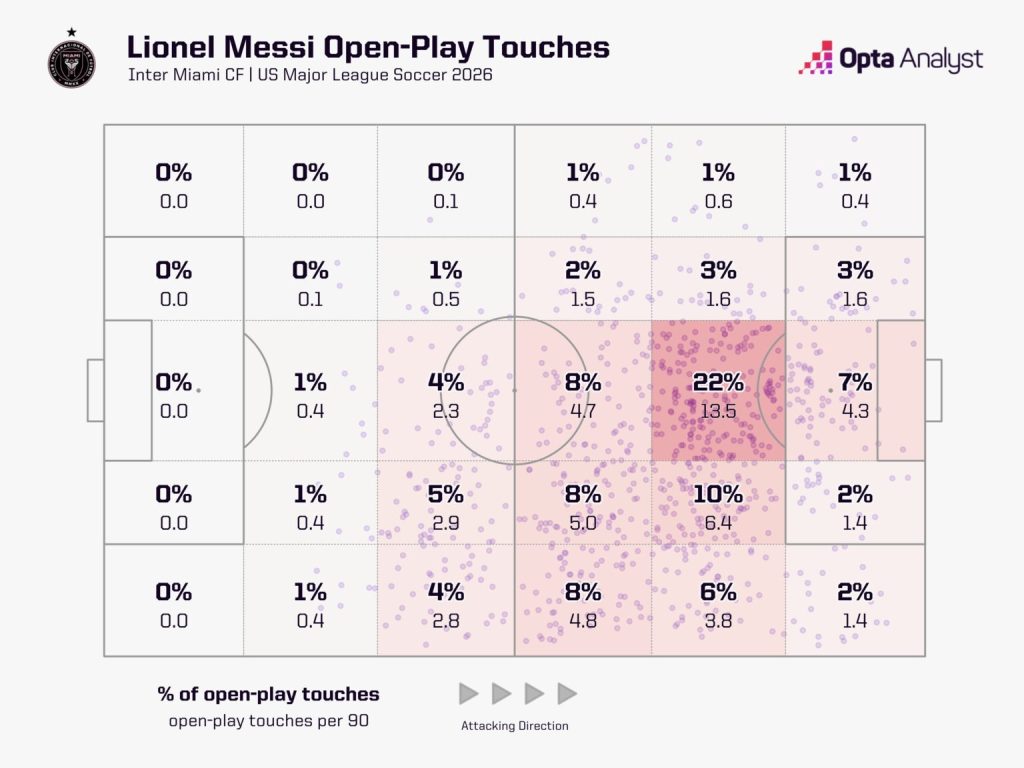
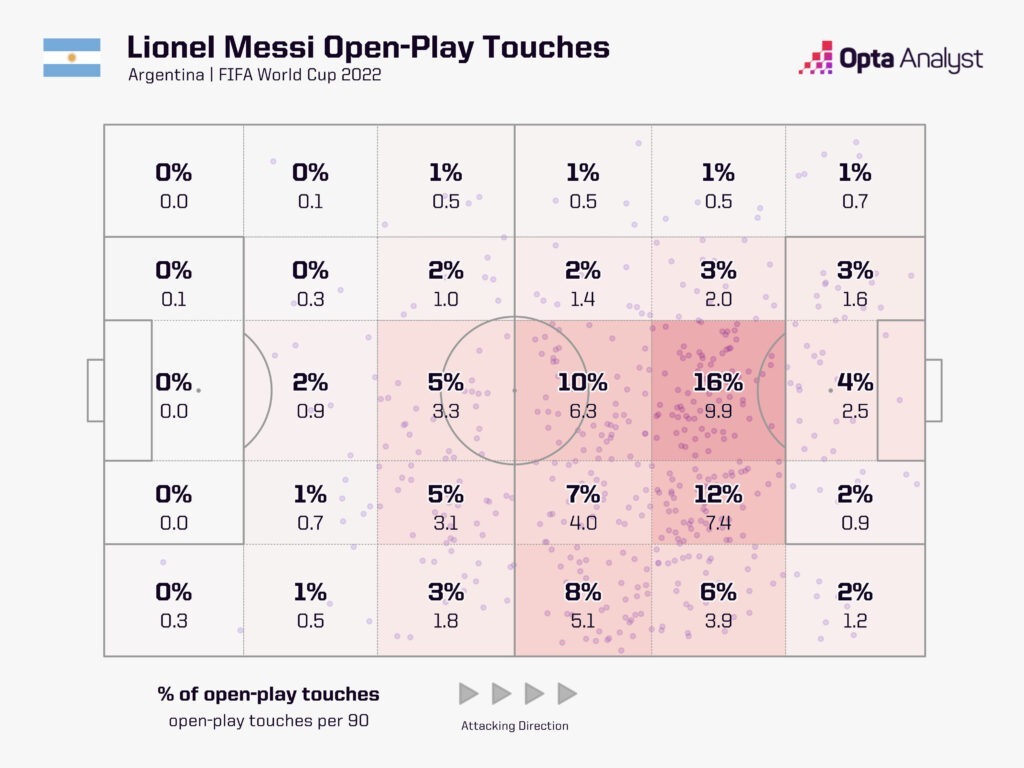
There is also a positional shift worth noting. At Inter Miami, Messi operates closer to the opposition goal than he did during Argentina’s 2022 World Cup campaign — a difference in role that Scaloni will need to manage carefully when reintegrating him into the international system.
4. Managing Messi’s Workload
Opta Vision data showed Messi averaged 13 sprints per 90 minutes during the 2024 Copa América — a significant increase on both his Qatar 2022 figures and his recent MLS averages. The physical demands appeared to take their toll; he was forced to leave the Copa América final in tears with an injury. Argentina won anyway.
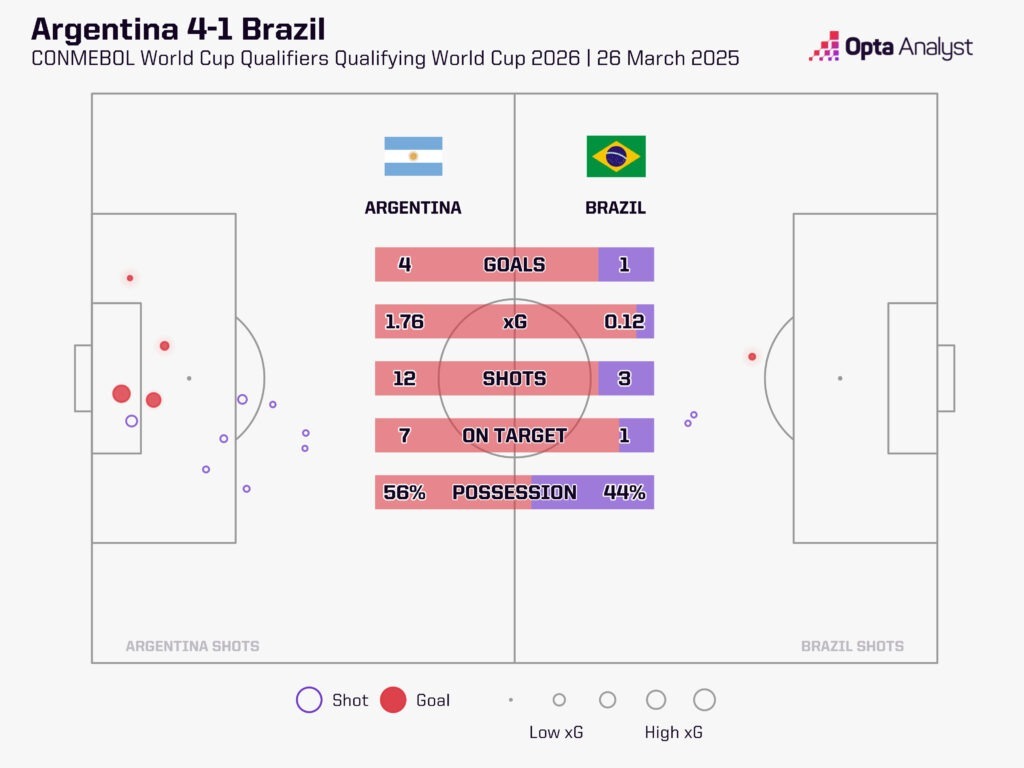
That theme resurfaced during qualifying. Their most dominant performance of the cycle — a 4-1 victory over Brazil — was achieved entirely without Messi. For a team beginning to prepare for life after their captain, those performances carry real significance.
5. Continuity as Scaloni’s Guiding Principle
Scaloni’s 2026 squad reflects the consistency and continuity that has defined his management.
Players who were integral to the cycle but missed Qatar through injury — including Giovani Lo Celso and Nicolás González — remain important members of the group. The major departures from the title-winning squad are Ángel Di María, who retired from international football after the 2024 Copa América, and Marcos Acuña.
In their place, Nicolás Medina has been selected — a player capable of operating at both full-back and centre-back, offering Scaloni greater tactical flexibility across the squad.
6. Potential Breakout Players
One of Scaloni’s greatest strengths has been his willingness to trust emerging players at exactly the right moment. At Qatar 2022, Enzo Fernández and Alexis Mac Allister entered the tournament with relatively limited international experience before becoming essential contributors to the title.
Several players could follow a similar trajectory in 2026:
Valentín Barco — recovered from a difficult period following his move to Brighton, rediscovering his best form at Strasbourg. He provides versatility, attacking threat from deep, and defensive resilience.
Giuliano Simeone — has adapted quickly to Argentina’s pressing and transitional style, offering energy and tactical discipline from the front line.
José Manuel “Flaco” López — brings a physical, penalty-box presence that complements Argentina’s existing attacking options with a different profile.
Nico Paz (Como) — perhaps the most intriguing of all. His technical quality and ability to unlock a compact defence could become increasingly valuable as the tournament progresses into later rounds — a demanding role that even players of Paulo Dybala’s calibre never fully made their own at international level. Ongoing fitness concerns are the primary concern around him.
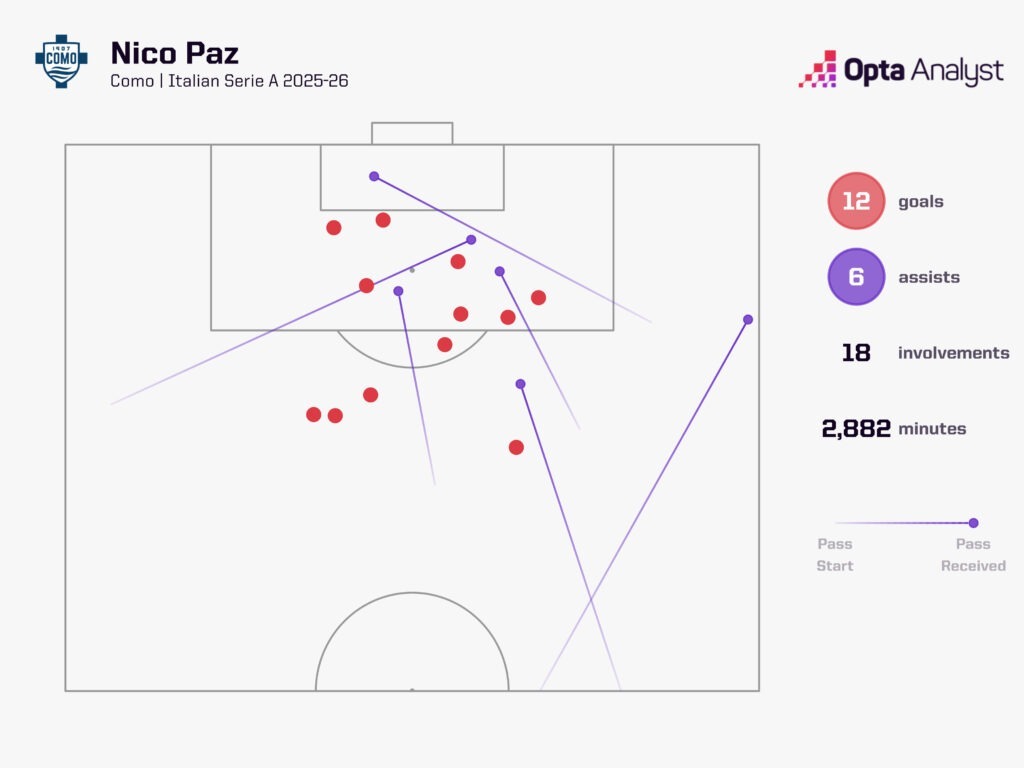
| Nico Paz — Como 2025-26 Season | Stat |
|---|---|
| Club | Como |
| Role | Creative attacking midfielder |
| League | Serie A |
| Status | Fitness concerns heading into tournament |
7. Age Profile and the Advantage of Flying Under the Radar
Several key contributors from Qatar 2022 are now entering the latter stages of their international careers. The squad’s age profile is shifting — though Scaloni has managed that transition carefully rather than hastily.
There may also be a structural advantage in arriving just below the very top tier of tournament favourites. Argentina benefited from a similar dynamic in Qatar, building momentum gradually as the tournament progressed without the suffocating expectation that surrounded some rivals. Without the psychological burden of ending a decades-long title drought, they were free to peak at the right moment.
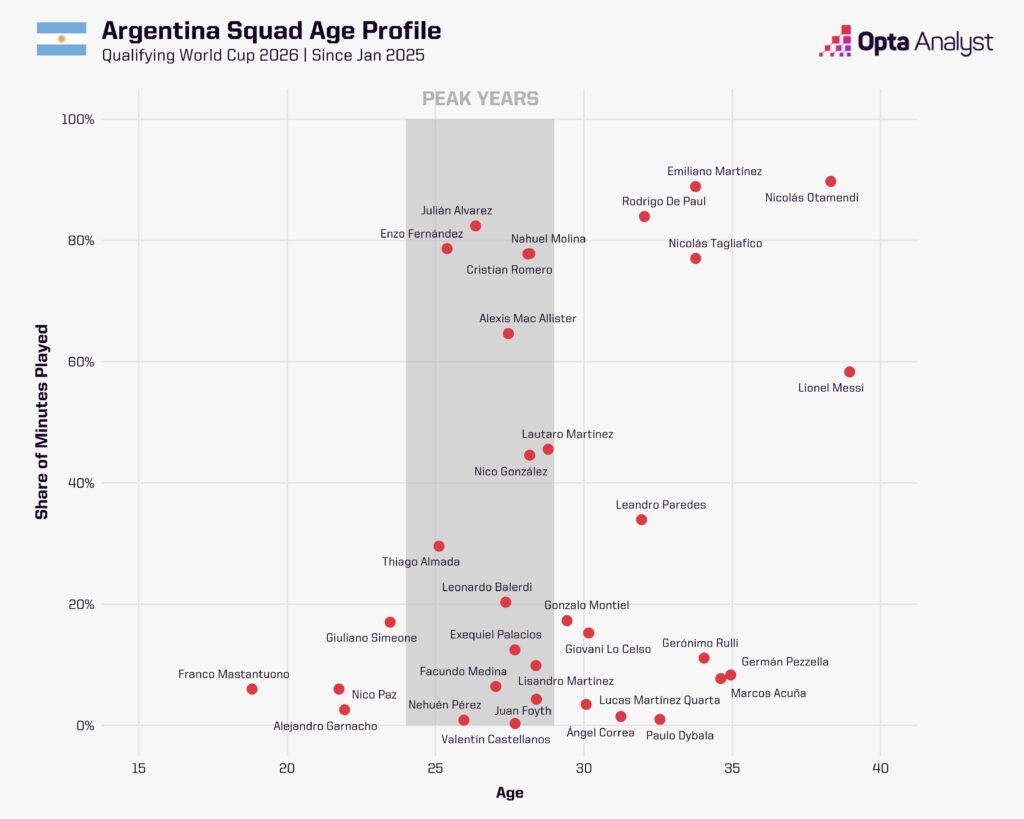
Without that drought to break, the pressure dynamic is different in 2026 — but the squad’s ability to win under pressure, without Messi, and when it matters most has been demonstrated repeatedly over the past four years.
Doubters Beware
Whether Argentina can successfully defend their crown remains uncertain. The absence of genuine elite-level tests, fitness concerns across key players, and the MLS adaptation question for Messi are all legitimate points of concern.
But this is a team that has spent four years consistently proving doubters wrong. They won a World Cup after early tournament struggles. They won a Copa América after Messi was injured in the final. They produced their best qualifying performance without their captain.
Scaloni has built something sustainable — a system, a culture, and a squad with the depth and resilience to absorb setbacks. Messi’s sixth and final World Cup is the stage he deserves to close on the highest possible note.
Overlooking this team would be a significant mistake.