FIFA referees chief Pierluigi Collina has officially confirmed that Video Assistant Referee technology will be expanded to review corner kick decisions at the 2026 World Cup, marking the most significant extension of VAR protocols since the system’s introduction. The legendary Italian official made the announcement at a briefing in Washington D.C. on the eve of the tournament’s group stage draw, emphasizing that “honest mistakes” by match officials should not determine outcomes at football’s premier event.
The decision represents FIFA’s determination to push ahead with the controversial innovation despite domestic leagues rejecting the proposal for regular competition. The 2026 World Cup, scheduled for June 11 to July 19 across the United States, Canada, and Mexico, will serve as the testing ground for what could become a revolutionary change in how football matches are officiated globally.
Collina’s Philosophical Justification
Speaking at the Washington D.C. briefing, Collina articulated a clear philosophical foundation for expanding VAR’s scope to include corner kick decisions. The chairman of FIFA’s referees committee emphasized that the primary objective must be making correct decisions on the field of play rather than allowing avoidable errors to influence results.

Collina stated that it would be a pity if the result of a competition is decided not by what the players do on the field of play, but by an honest mistake made by the decision-maker. He explained that this fundamental principle convinced FIFA 13 to 14 years ago to start exploring how technology could support referees in their increasingly demanding role.
The former World Cup final referee emphasized that if FIFA can achieve this goal of eliminating clear errors, the outcome would be positive regardless of the challenges involved in implementation. Collina acknowledged that discussions around the proposal feature different opinions but maintained that the objective would be worth pursuing.
Natural Delay Provides Implementation Window
One of the primary concerns regarding VAR expansion involves potential delays to match flow, an issue that has generated significant criticism since the technology’s introduction. However, Collina argues that corner kicks present a unique situation where review can occur without disrupting the natural rhythm of the game.
When asked whether checking corners risked further delays to matches, Collina emphasized that the main criteria remains no delay. He explained that with corners, there exists a physiological delay because when a corner is awarded, teams normally wait until center-backs advance into the attacking penalty area.
This natural pause typically takes 10 to 15 seconds as both teams organize their positioning, with attackers moving into strategic locations and defenders marking their assignments. Collina argues that during these 10 to 15 seconds, if the corner kick has been wrongly awarded, VAR officials can review the decision without extending the break in play beyond what would occur naturally.
The Italian official questioned why football should ignore obvious errors when technology provides the capability to correct them quickly. He used the metaphor of hiding heads under the sand and hoping nothing happens on wrongly awarded corners, suggesting this passive approach contradicts modern officiating standards when clear evidence of incorrect decisions exists.
Historical Precedent: Euro 2016 Final Incident
Collina has consistently cited a specific incident from the Euro 2016 final to illustrate the potential impact of expanded VAR usage. During extra time of that match between Portugal and France, Portuguese players were wrongly awarded a free kick for an alleged handball on the edge of the penalty area that nearly resulted in a goal.
The incident, which occurred during one of European football’s most prestigious finals, exemplified exactly the type of clear factual error that Collina believes modern technology should prevent. Had VAR been authorized to review such decisions at that time, officials could have corrected the mistake before Portugal gained an undeserved attacking opportunity in a crucial moment.
This real-world example demonstrates Collina’s broader argument that any error quickly identifiable by VAR should be communicated to the on-field referee. The principle reflects his belief that technology’s role should extend to all clear factual errors rather than being artificially limited to arbitrary categories of decisions.
IFAB Rejection Creates Unique FIFA Trial
The path to implementing VAR for corner kicks at the 2026 World Cup has not been straightforward. At an October meeting of the International Football Association Board, which serves as football’s lawmaking body, there was agreement to expand VAR to cover incorrectly issued second yellow cards that result in red cards.

However, FIFA’s proposal to review corner kicks was rejected during that same IFAB meeting. The rejection came primarily from domestic league representatives who expressed concerns about further delays and the slippery slope of continually expanding VAR’s scope beyond its original four categories: goals, penalties, red cards, and mistaken identity.
The IFAB decision means that FIFA will need to effectively create a separate trial specifically for the World Cup if the organization wants to implement corner kick reviews at next summer’s tournament. This approach has precedent, as FIFA has regularly applied trials to its competitions before wider adoption.
Semi-automated offside technology represents the most prominent recent example, having been tested at the 2022 World Cup in Qatar before gradually being adopted by various leagues worldwide. Similarly, referees announcing VAR decisions to the crowd via microphone was first introduced at FIFA tournaments before some domestic competitions considered implementing the practice.
Regulatory Approval Process
For corner kick VAR reviews to be implemented at the 2026 World Cup, FIFA must secure approval from IFAB at its annual business meeting scheduled for January in Wales. The proposals will be revisited during that meeting, with FIFA presenting evidence and arguments for why the trial should be authorized for its showcase tournament.
Johannes Holzmueller, FIFA’s director of innovation, indicated that the governing body wants to expand various technological implementations tested at the Club World Cup but first needs to secure the necessary regulatory approvals. Any rule changes require IFAB blessing before FIFA can officially implement them at the World Cup.
The January IFAB meeting will be critical in determining whether FIFA receives authorization to proceed with the corner kick VAR trial. While domestic leagues remain opposed to permanent implementation, IFAB may grant FIFA special permission to test the system during the World Cup as a controlled experiment.
How Corner Kick VAR Would Operate
Understanding how corner kick VAR would function requires recognizing a fundamental principle in football’s Laws of the Game: a referee cannot change a restart decision once play has resumed, even if they realize the decision was incorrect. This rule means that once a corner kick is taken and the ball is back in play, the game must continue regardless of whether the corner was wrongly awarded.
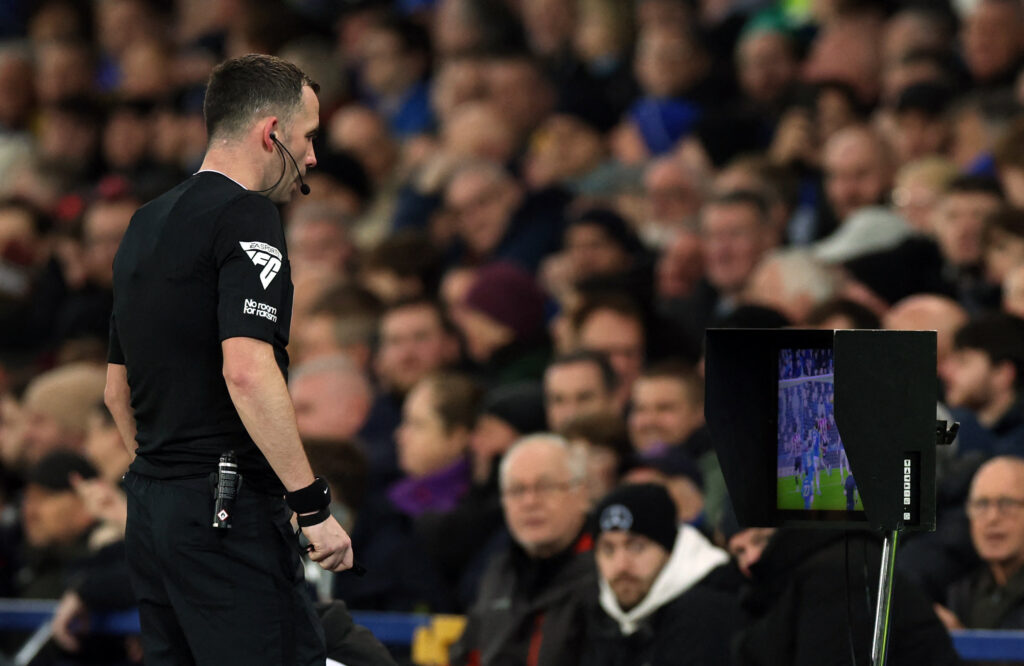
Under the proposed system, every corner kick would need to be checked by VAR officials before the ball is put back into play. In the majority of cases, the decision will be straightforward and confirmed within seconds, utilizing the natural delay as players position themselves.
When controversy exists, VAR officials would review multiple camera angles to determine definitively whether the ball fully crossed the goal line and which team last touched it before it went out of play. The same technology and processes used for semi-automated offside decisions could be adapted for corner kick reviews.
If VAR identifies that a corner was incorrectly awarded and should have been a goal kick, or vice versa, the VAR would communicate this to the on-field referee before play resumes. The referee would then correct the decision, awarding the proper restart before any corner kick or goal kick is taken.
Additional VAR Expansion: Second Yellow Cards
Corner kicks represent only one element of FIFA’s broader plans to expand VAR usage at the 2026 World Cup. The organization also intends to implement VAR reviews for incorrectly issued second yellow cards that result in red cards, a proposal that received more favorable reception from IFAB members.
The logic behind reviewing second yellows stems from the significant consequences these decisions carry. An incorrect second yellow card not only reduces a team to ten players for the remainder of the match but also triggers an automatic suspension for the following game, potentially affecting crucial knockout stage matches.
This expanded VAR category has garnered less opposition than corner kicks because second yellow card situations occur relatively infrequently compared to corner kicks. The limited number of potential reviews means minimal impact on match flow while potentially preventing serious injustices.
Advanced Technological Innovations
Beyond VAR expansion, FIFA is pursuing several other technological innovations for the 2026 World Cup pending regulatory approval. The referee body camera system, branded “referee with you,” was successfully trialed at the Club World Cup and feeds images directly into live television broadcasts and stadium giant screens.
This system allows spectators to see exactly what the referee observed during crucial moments, enhancing transparency and understanding of decision-making processes. Holzmueller emphasized that FIFA wants to bring this technology to the World Cup subject to obtaining necessary approvals.
FIFA has also advanced its semi-automated offside technology by sending certain offside alerts directly to assistant referees instead of only to the video assistant referee. During the Club World Cup, positional offside information was transmitted via audio alert directly to assistant referees, allowing them to raise flags immediately without waiting for VAR confirmation.
This innovation has eliminated delays for positional offside decisions while maintaining the accuracy benefits of technological assistance. Holzmueller reported that they no longer experience delays for positional offside calls thanks to this direct communication system.
Opposition from Domestic Leagues
Despite Collina’s passionate advocacy, domestic leagues remain firmly opposed to implementing VAR for corner kicks in regular competition. Football Association chief executive Mark Bullingham, who sits on the IFAB board, has previously stated his opposition to expanding VAR’s scope beyond its current boundaries.
The primary concerns center on potential delays and the precedent such expansion would create. Opponents argue that if VAR begins reviewing corner kicks, logical consistency would demand reviews of throw-ins, free kicks, and potentially every restart decision, fundamentally transforming football into a stop-start sport resembling American football.
Nottingham Forest manager Sean Dyche has publicly expressed frustration after his team conceded goals from corners that were wrongly awarded, suggesting some coaches would welcome the additional oversight. However, unless IFAB changes its collective stance, domestic leagues will not implement corner kick reviews even if the World Cup trial proves successful.
All leagues currently face pressure to limit VAR delays, and there exists real opposition to anything that might worsen the situation. This tension between accuracy and flow represents the central debate in discussions about technology’s role in modern football.
Balancing Tradition and Technology
FIFA officials reject suggestions that technology is creating a fundamentally different version of the sport. Holzmueller argued that technology can actually help restore the game’s traditional flow by eliminating controversies and stoppages caused by incorrect decisions.
He emphasized that FIFA constantly seeks balance between improvements technology enables and respect for the sport’s traditions. Technology should support referees, coaches, medical staff, and fans without fundamentally changing the game’s essential character.
This philosophical approach positions technological innovation not as transformation but as refinement, allowing the game’s natural flow and player skill to determine outcomes without interference from avoidable officiating errors. Whether this vision aligns with reality will be tested at the 2026 World Cup.
Implications for Future of Football Officiating
If FIFA successfully implements corner kick VAR reviews at the 2026 World Cup and the system proves effective without causing excessive delays, it could establish a template for gradual adoption by domestic leagues and other competitions worldwide. However, the opposite outcome could effectively end discussions about further VAR expansion for years.
The 2026 World Cup therefore represents a critical juncture for football’s relationship with technology. Collina and FIFA leadership believe the sport must embrace available technology to eliminate clear errors, while opponents worry about drifting toward an over-officiated product that loses football’s essential spontaneity and flow.
Corner kicks occur frequently enough that any system review will face extensive real-world testing across the tournament’s 104 matches. The expanded 48-team format provides FIFA with abundant data to evaluate whether the benefits of eliminating incorrect corner decisions outweigh any drawbacks in terms of delays or complexity.
Pierluigi Collina’s confirmation that FIFA wants VAR to review corner kicks at the 2026 World Cup represents the governing body’s most ambitious expansion of technological officiating assistance since VAR’s introduction. The legendary referee’s philosophical commitment to eliminating honest mistakes that could determine match outcomes drives this initiative despite significant opposition from domestic leagues.
The January IFAB meeting will determine whether FIFA receives authorization to proceed with the trial, but Collina’s public advocacy suggests the organization remains committed to the concept. The natural delay inherent in corner kick situations provides FIFA with a practical argument that reviews can occur without disrupting match flow.
Whether this technological expansion represents necessary evolution or overreach will be debated throughout the tournament and beyond. What remains certain is that the 2026 World Cup will serve as a defining moment in determining how much technology should intervene in football’s officiating, potentially reshaping the sport’s future across all levels of competition.
Read More: Jesse Lingard and FC Seoul Mutually Terminate Contract at End of 2025