Five years ago, Enjoy Enjaami shattered borders, streamed across the globe, and became the anthem of Tamil lockdown culture. But on its anniversary in March 2026, the song is making headlines for all the wrong reasons — a raw, public clash between composer Santhosh Narayanan and singer-lyricist Arivu over who truly made it, and who earned from it.
The Enjoy Enjaami Dispute at a Glance
| Detail | Info |
|---|---|
| Song | Enjoy Enjaami |
| Released | 2021 (during COVID-19 lockdown) |
| Composer / Producer | Santhosh Narayanan |
| Performer / Lyricist | Arivu (feat. Dhee) |
| Dispute Trigger | Song’s 5th anniversary post on X (Twitter) |
| Arivu’s Credit on Song | “Featuring artist” only |
| Royalties Received by Arivu | None (as per Arivu’s claim) |
| Santhosh’s Upcoming Projects | Seyon (with Sivakarthikeyan), Kalki 2898 AD Part 2 |
What Started the Fight?
It began simply enough — a fan on X shared a clip of the song calling it a Tamil indie track that went global. Another user alleged that singer Dhee and her father had “stolen” the track from Arivu. That allegation was the spark that set off a very public firestorm.
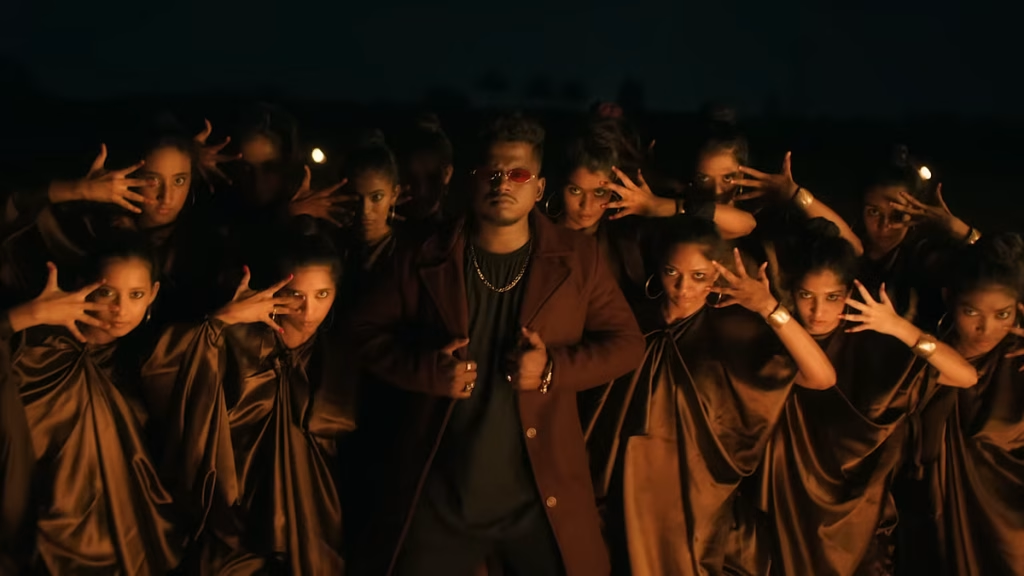
Santhosh Narayanan’s Version
Santhosh pushed back quickly. According to him, the idea for Enjoy Enjaami was conceived by Dhee, who also contributed tunes, while director Manikandan developed the core narrative during their work on Kadaisi Vivasayi. Santhosh says he composed, produced, and crafted the song’s melodies — and that his only lyrical contribution was suggesting the word “Enjaami.” He added that in the digital age, every claim can and should be verified with evidence.
Arivu’s Version: Credit, Rights, and Dignity
Arivu’s response was more personal — and more damning. He says the beat was sent to him, after which he wrote almost all the words, composed the main vocal melody, and performed the track drawing from his own cultural roots and lived experience. The song was even filmed in his village.
Despite all of this, he was billed only as a “featuring artist” — and five years on, the collaborators hold the rights and collect royalties while Arivu says he has received neither ownership nor payment. His final point was pointed and precise: this isn’t about sympathy — it’s about the credit, rights, and dignity of labour.
Why This Matters Beyond the Controversy
This dispute cuts to the heart of how the Indian music industry treats folk and independent artists. When a song draws from the stories of a community, performed by someone from that community — who truly owns it?
For more South Indian music and entertainment news, keep up with TechnoSports and explore our full South Indian entertainment coverage.