For a decade, the big-budget sci-fi epic treated representation as scenery — a splash of tribal colour against a monocultural hero’s journey.
Dune Part One (2021) and Part Two (2024) delivered spectacle on a scale Hollywood rarely attempts, yet the genre’s deeper promise — showing how faith, power, and identity actually reshape a civilisation — stayed at the margins. Dune Part Three changes that calculus, and the shift is worth examining closely.
The Catalyst: From Conquest to Consequence
The change begins with the source material. Where the first two films adapted Frank Herbert’s original novel, Part Three reportedly draws from Dune Messiah, the 1969 sequel that dismantles everything the first book built.
Paul Atreides is no longer the liberator; he is the emperor who unleashed a holy war that has killed billions in his name. This is the crucial turn. Villeneuve’s earlier films showed the Fremen as a proud but largely reactive people — their culture framed through Paul’s eyes. Part Three reportedly inverts that lens, centring the Fremen’s own faith, their manipulation by the Bene Gesserit, and their grief at watching their religion weaponised. Representation stops being decorative and becomes structural.
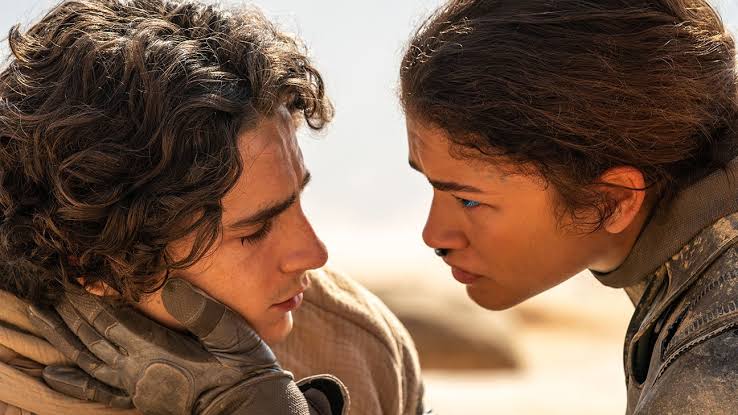
The After: Representation as Engine, Not Embellishment
Here’s the thing: the film reportedly interrogates the white-saviour myth from within. Paul’s own horror at what his name has done becomes the narrative spine, not a subplot.
The Bene Gesserit’s centuries-long breeding program, the Fremen’s messianic expectations, the political machinations of the Guild — all of these now function as commentary on how real-world power uses culture as a weapon.
That is the genre’s evolution: from showing us a world to making us feel its consequences. Where earlier instalments treated the desert planet’s people as a backdrop for a hero’s ascent, Part Three reportedly makes their suffering, agency, and resistance the emotional core.
For a franchise this large, that is a bold creative bet.
Side-by-Side: Before and After
| Dimension | Part One & Two (2021-2024) | Part Three (reportedly) |
|---|---|---|
| Hero framing | Paul as liberator | Paul as reluctant tyrant |
| Fremen role | Supportive backdrop | Central agency and grief |
| Faith | Exotic ritual | Weaponised ideology |
| Power | Conquest narrative | Consequence narrative |
| Representation | Visual diversity | Structural critique |
What This Means for the Genre
The comparison matters beyond one franchise. If Part Three lands its adaptation, it could reset expectations for how blockbusters handle culture — not as costume, but as conflict.
For Indian audiences, the resonance is immediate: our own epics have long wrestled with the gap between myth and the people who suffer for it, from Baahubali to Padmaavat.
FAQs
How does Dune Part Three elevate the representation genre through its visual storytelling?
Dune Part Three elevates the representation genre through its breathtaking visual storytelling, blending practical effects with cutting-edge CGI to create immersive desert landscapes and intricate political arenas. The film expands the representation genre by depicting Arrakis as a living, breathing character whose shifting sands mirror the internal struggles of Paul Atreides and the Fremen.
What creative techniques does Denis Villeneuve use to push the boundaries of representation in Dune Part Three?
Denis Villeneuve pushes the boundaries of representation in Dune Part Three by employing sweeping aerial cinematography, layered sound design, and symbolic color palettes that distinguish the noble houses of the Imperium. The director also deepens the representation genre by weaving cultural rituals, ecological metaphors, and prophetic visions into a cohesive narrative that honors Frank Herbert’s original vision while expanding its cinematic language.
Was this article helpful?
Your feedback directly improves future articles on this site.