Minecraft’s Mounts of Mayhem update is bringing desert biomes to life with a menacing new skeleton variant called the Parched. While these sun-bleached archers might look like their regular skeleton cousins, they pack unique abilities that change desert survival strategies. Here’s everything you need to know about these two bone-chilling mobs and how they’ll impact your gameplay.
Skeleton vs Parched: Minecraft Head-to-Head Comparison
| Feature | Regular Skeleton | Parched |
|---|---|---|
| Spawn Locations | Overworld (light 0), Spawners, Soul Sand Valley | Desert biomes only (surface) |
| Appearance | Light gray bones, dark eyes, visible ribs | Torn beige clothes, darker bones, light beige eyes |
| Health Points | 10 hearts (20 HP) | 8 hearts (16 HP) |
| Arrow Type | Regular arrows | Arrows of Weakness |
| Weakness Effect | None | -2 hearts attack damage |
| Common Drops | Bones, Arrows | Bones, Regular Arrows |
| Special Drop | Skeleton Head (charged creeper) | Arrows of Weakness (50% chance) |
Spawning Mechanics: Where the Danger Lurks
Regular Skeletons: Universal Threat
These classic hostile mobs spawn anywhere darkness prevails. Any Overworld location with light level zero and two-block vertical clearance becomes potential skeleton territory—except on transparent blocks like slabs, glass, or carpets. They also appear through monster room spawners, trial chambers, and surprisingly, in the Nether’s Soul Sand Valley biome.
This universal spawn pattern makes skeletons one of Minecraft’s most consistent threats. Whether you’re mining deep underground or exploring surface caves at night, skeletons are always a possibility.
Parched Skeletons: Desert Specialists
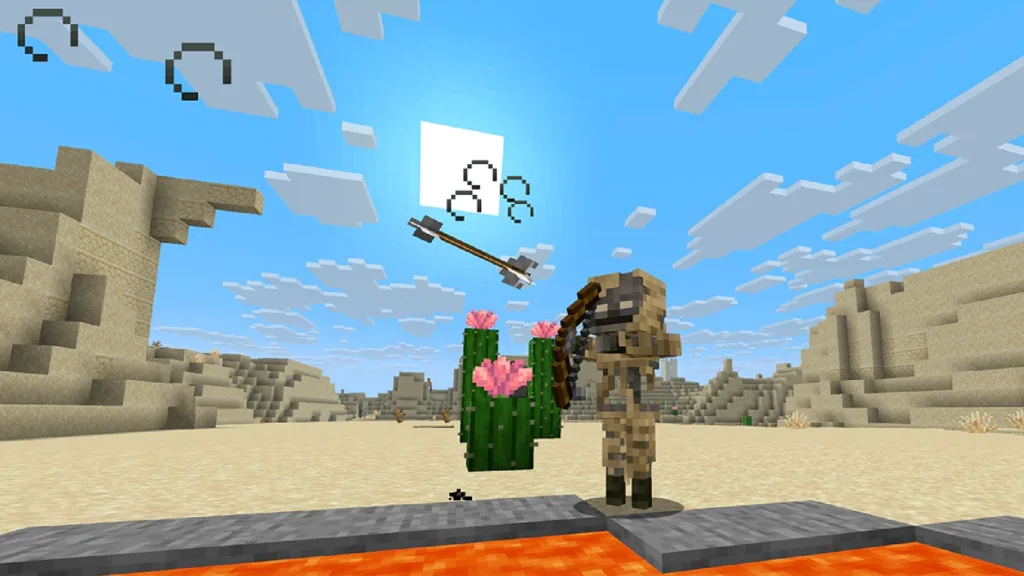
The Parched variant exclusively spawns in desert biomes on the surface where light level hits zero—meaning they only appear at night or in shadowed areas. Unlike regular skeletons, Parched cannot spawn underground, making them purely a surface desert hazard.
Interestingly, deserts now feature a mixed population. You’ll encounter both regular skeletons and Parched variants, adding unpredictability to desert exploration. This biome-specific spawning creates unique desert survival challenges.
Visual Differences: Spotting Your Enemy
Regular Skeleton Appearance: Light gray and gray bones with dark gray eyes and mouth. The torso showcases exposed ribs you can see through. Carries a bow ready to fire. Clean, “fresh” skeletal appearance.
Parched Appearance: Wears tattered, beige-colored desert clothing remnants. Bones appear darker and weathered compared to regular skeletons. Light beige eyes contrast with a dark gray mouth. The overall aesthetic suggests prolonged desert exposure—sun-bleached and worn.
These visual distinctions matter tactically. Spotting the beige clothing immediately signals you’re facing the Weakness-arrow threat.
Combat Capabilities: Same Threat, Different Danger
Both skeleton types detect players from distance and shoot infinite arrows at identical firing rates. The archery mechanics remain consistent—same accuracy, same range, same relentless pursuit.
The Critical Difference: Weakness Effect
Parched skeletons shoot Arrows of Weakness instead of regular arrows. When hit, the Weakness effect reduces your melee attack damage by two full hearts. This debuff fundamentally changes combat dynamics:
- Sword Fighting Becomes Harder: Your blade deals significantly less damage
- Extended Battles: You need more hits to defeat mobs
- Strategic Retreat: Sometimes disengaging until the effect wears off is smarter
- Milk Emergency: Keep milk buckets handy to cleanse the effect immediately
Health and Loot Analysis
Durability Difference: Regular skeletons boast 10 hearts (20 HP) while Parched have only 8 hearts (16 HP). This makes Parched slightly easier to eliminate—ironic since their Weakness arrows make them tactically more dangerous.
Drop Comparison: Both drop bones and arrows. Regular skeletons can drop their heads when killed by charged creeper explosions. Parched skeletons offer a 50% chance to drop Arrows of Weakness—valuable for brewing or PvP scenarios.
Strategic Implications for Desert Exploration
Desert adventurers now face dual threats. The Parched’s Weakness arrows make close-quarters combat riskier, favoring ranged combat strategies. Keep shields ready, maintain distance, and always carry milk to counter the debuff.
For more Minecraft survival strategies and update coverage, visit TechnoSports’ gaming section. Stay updated on official Minecraft news at Minecraft.net.
The Mounts of Mayhem update arrives by year’s end—prepare for desert dangers now!
FAQs
Can Parched skeletons spawn anywhere besides desert biomes in Minecraft?
Do Arrows of Weakness from Parched skeletons affect all attacks or just melee damage?
The Weakness effect from Parched skeleton arrows specifically reduces melee attack damage by two hearts (4 damage points). This affects sword strikes, axe hits, and bare-handed punches. However, it does not reduce ranged damage from bows, crossbows, or tridents. If you’re fighting Parched skeletons, switching to ranged weapons while affected by Weakness maintains your full damage output, making bows particularly effective counters.