RIY1
 TAA0
 LAZ0
 PAR0
 RCL0
 PAR0
 MEX-W
 ARG-W
 ATM0
 DEP0
 MTL0
 NSH1
 ADO0
 HEE0
 UAE
 NED
 PAK
 ENG
 IND-W
 ZIM-W
 GMB
 LES
 MOZ
 ZMB
 Inter Milan
 Fiorentina
 Churchill
 Punjab FC
 NGA
 UGA
 CHE0
 TOT2
 VAL1
 VIL2
 DOR1
 SGE0
 NAP3
 ROMA3
 NZ-A135/3 (41 ov)
 IND-A113
 SYL
 KHU
 MYMS299/4 (87 ov)
 CHATT
 DHA293/3 (84.1 ov)
 RAJ
 RAN320/5 (80 ov)
 BAR
 DEN
 PNG
 NAM321/6
 IRE290 (47.3/50 ov, target 322)
 NZ180/5
 IND181/6 (19.5/20 ov, target 181)
 VEN0
 JPN1
 ZAM0
 FRA1
 Athletic
 Getafe
 C Palace
 Newcastle
 Hull
 Brentford
 Liverpool
 Brighton
 Man United
 Bournemouth
 Atalanta
 Frosinone
 KHO0
 ETT3
 RAC2
 ESP1

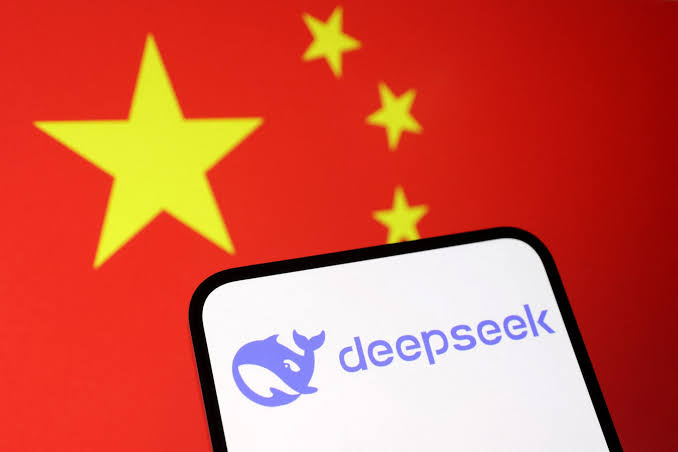
A single figure crossed a psychological threshold this week. Deep seek has officially hit an annualised revenue run rate of one billion dollars, marking a rare commercial inflection point for a Chinese artificial Intelligence lab ope
Commercial Scale Achieves Unprecedented Velocity
The valuation shift did not arrive through bloated infrastructure spending. Instead, the numbers reflect a lean operational model that prioritizes parameter efficiency over brute-force compute scaling. The financial projection reportedly stems from recent subscription growth and enterprise licensing deals that accumulated rapidly since the start of the year.
The company secured its position by offering competitive pricing tiers that undercut Western competitors while maintaining performance parity on critical benchmarks. > The annualised revenue run rate has officially reached one billion dollars. Enterprise demand has surged as organizations integrate these capabilities into core workflows. The velocity of this accumulation stands out even more when compared to traditional software rollouts. Most enterprise platforms require multiple quarters of sales cycles to reach comparable figures, yet the subscription uptake for these models compressed that timeline dramatically.
The Hangzhou Origin And Model Milestones
The journey to this financial plateau began in Hangzhou, where the research lab initially focused on solving the diminishing returns associated with larger transformer models. The breakthrough came with the release of DeepSeek-V3 in late 2024, which demonstrated that mixture-of-experts routing could deliver state-of-the-art reasoning with significantly lower inference costs. Early 2025 brought DeepSeek-R1, a model that stunned technical evaluators by matching proprietary closed systems on complex coding and logic tasks.
These releases triggered a wave of developer migration, as teams sought to reduce their monthly API bills without sacrificing output quality. The transition from academic curiosity to commercial powerhouse relied heavily on architectural innovations rather than marketing spend. By optimizing the ratio of active parameters to total size, the lab reduced the hardware requirements for both training and serving models. This technical edge allowed the company to expand its customer base across regions where compute costs remained prohibitive for standard large language models. The resulting traction created a flywheel effect, drawing top engineering talent back to the headquarters and reinforcing the cycle of product improvement. For more detail, see OpenAI Blog.
Economic Pressure On Proprietary Giants
Competitors now face immediate pressure to justify premium pricing against a rival delivering comparable utility at a fraction of the cost. The market response suggests a consolidation phase where smaller labs struggle to match the distribution network of established tech conglomerates. However, the success of this Hangzhou-based operation proves that geographic origin and regulatory environment do not inherently limit commercial viability in the global software market.
Analysts expect continued expansion into vertical-specific applications, particularly within healthcare data analysis and autonomous system simulation, areas where precise token usage yields high returns. Stakeholders are watching closely to see whether sustained revenue growth can outpace the escalating expenses required to train the next generation of reasoning architectures. The one-billion-dollar mark represents more than just accounting growth; it validates a fundamental shift in how computational resources are valued across the technology sector. Organizations will increasingly prioritize models that optimize the ratio of Intelligence per dollar spent rather than chasing raw parameter counts. As the fiscal year concludes, the focus shifts to long-term retention and the ability to defend margins against incoming feature-parity clones. It is worth watching how Deep Seek develops from here. For more detail, see VentureBeat AI.
FAQs
What does the reported revenue figure represent?
The announcement indicates that the company has reached an annualised revenue run rate of one billion dollars based on current business metrics. Which models drove the initial surge in adoption?
Technical releases including DeepSeek-V3 and DeepSeek-R1 generated significant interest among developers seeking efficient alternatives to existing options. Where is the research laboratory headquartered? The organization maintains its primary operations and development facilities in Hangzhou, China, leveraging local talent and infrastructure advantages.
Source: Thenextweb
Was this article helpful?
Your feedback directly improves future articles on this site.