NZ113/3 (14.4 ov)
 IND
 NAM321/6
 IRE208/5 (37.3/50 ov, target 322)
 MEX-W
 ARG-W
 ARS
 EVE
 COV
 FUL
 OFC
 NEU
 NEOM
 ABH
 RAC
 ESP
 KHO
 ETT
 NAP
 ROMA
 MOZ19
 UGA23/0 (0.5/20 ov, target 20)
 Ipswich1
 Nottm Forest1
 Alavés1
 Málaga1
 Torino3
 Monza2
 KENYA
 QAT
 SWD-W
 EPR-W
 TTN-W
 WPR-W
 BOR135/3 (18/20 ov, target 137)
 WAR136/8
 NZ-A135/3 (41 ov)
 IND-A113
 DHA293/3 (84.1 ov)
 RAJ
 MYMS299/4 (87 ov)
 CHATT
 RAN320/5 (80 ov)
 BAR
 SYL
 KHU
 UAE
 NED
 PAK
 ENG
 IND-W
 ZIM-W
 GMB
 LES
 ZMB
 NGA
 AFG170/3 (34.3/50 ov, target 170)
 ZIM169
 CHE
 TOT
 Brest1
 Nice2
 Stuttgart2
 Gladbach3
 Al Ahli4
 Al Khaleej1

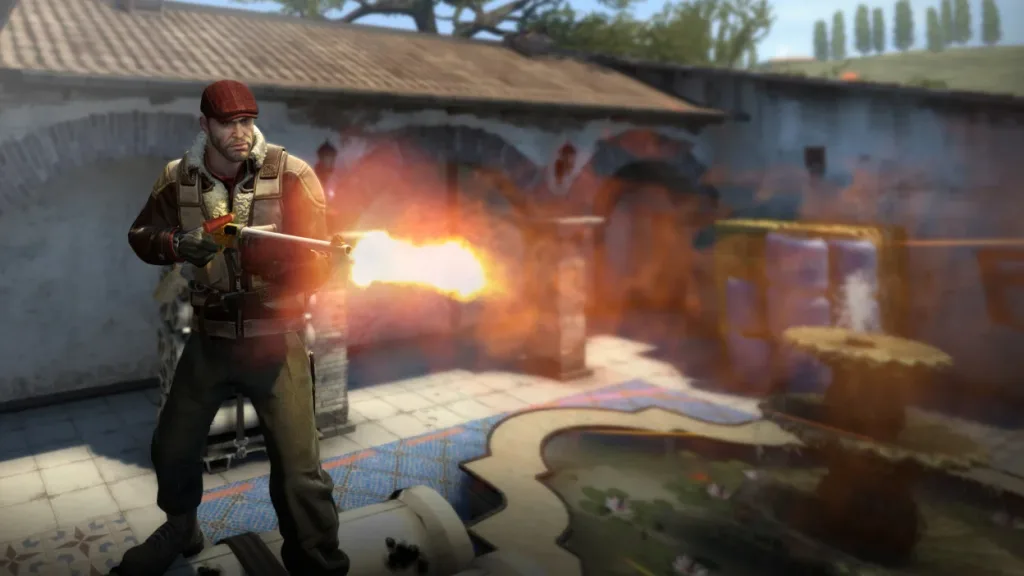
Counter-Strike 2 launched with fewer accessibility toggles than many indie shooters, yet it has ended up steering how the entire competitive FPS genre thinks about inclusive design. That contrast is the story here: a minimalist sequel forcing an industry maximum.
Why CS2’s Approach Matters
Valve built Counter-Strike 2 on the Source 2 engine with a deliberate philosophy — competitive clarity above everything. Every visual choice, from smoke behaviour to map lighting, serves readability at the professional level.
Here’s the thing: that same clarity-first mindset doubles as accessibility work, even when Valve never frames it that way.
Colour-blind-friendly settings, adjustable HUD scaling, and robust audio cue design mean a player in Chennai competing on a modest setup reads the same information as a tier-one pro in Copenhagen.
Compare that with the genre’s older guard, where such options arrived years after launch, if at all. CS2 shipped with them.
The Feature Landscape, Compared
To see CS2’s influence clearly, it helps to set its design choices against other major shooters. The table below outlines how the current generation approaches the same problems.
| Feature Area | Counter-Strike 2 | Typical Modern Shooter |
|---|---|---|
| Colour-blind modes | Integrated HUD and radar options | Often multiple preset filters |
| Audio accessibility | Directional, high-clarity cues by default | Mix of subtitle and visual cues |
| Crosshair customisation | Deeply granular, community-driven | Preset-heavy, less flexible |
| Visual clutter | Minimalist by design | Varies wildly between titles |
| Input flexibility | Full config file control | Menu-level remapping only |
What does this comparison reveal? CS2 wins on consistency and depth, while broader shooters sometimes offer more surface-level options. Neither approach is strictly superior — but Valve’s granular crosshair system has become the benchmark other developers quietly study. Worth noting: community-made configuration guides now outnumber official documentation, a pattern familiar to anyone who has followed our coverage of Elden Ring: A Tactical deep-dive on build optimisation.
The Ripple Effect Across the Genre
The real measure of CS2’s influence shows up in its competitors. Tactical shooters released after 2023 increasingly treat readable visuals and precise input control as baseline expectations rather than post-launch patches. Esports organisers, too, have pushed for standardised settings so that accessibility features work identically at every event — a demand CS2’s uniform client makes easier to satisfy. That said, gaps remain. Subtitle coverage for callout-heavy team play is thin, and motion-sickness options lag behind single-player titles.
Players who need those features often build workarounds, much like the community experimentation documented in our Elden Ring Torrent Mount combat guide — players will always engineer their own solutions when official ones fall short. The lesson transfers across genres: accessibility thrives where communities and developers collaborate. There’s also a competitive-integrity angle. When everyone sees the same clean radar and hears the same footsteps, skill expression becomes purer. Accessibility and fairness, in CS2’s world, are the same project viewed from two directions — a design insight more developers should absorb, and one we explored through loadout philosophy in our Elden Ring Best Strength breakdown for newcomers.
Where Inclusive FPS Design Goes Next
The next phase belongs to adaptive input. Controllers with remappable profiles, eye-tracking experiments, and one-handed play configurations are all areas where CS2’s client could expand without touching its core balance.
Valve moves slowly, but when it moves, the market follows — and competitors are already shipping features that anticipate that shift. If you build shooters, study CS2’s restraint: fewer, deeper options beat shallow menus. If you play them, demand the same clarity everywhere.
Related Articles
- Elden Ring: Five Essential Weapons for Dominating Any Boss Encounter
- Malenia’s Blade Dance: Unpacking the Anatomy of Elden Ring’s Deadliest Encounter
FAQs
Does Counter-Strike 2 have colour-blind settings?
Yes, CS2 includes colour adjustment options for the HUD and radar, letting players tune critical visual information to their needs.
Are accessibility features allowed in CS2 esports?
Standardised in-game accessibility settings are generally permitted, since they do not alter gameplay balance or provide competitive advantage.
Was this article helpful?
Your feedback directly improves future articles on this site.