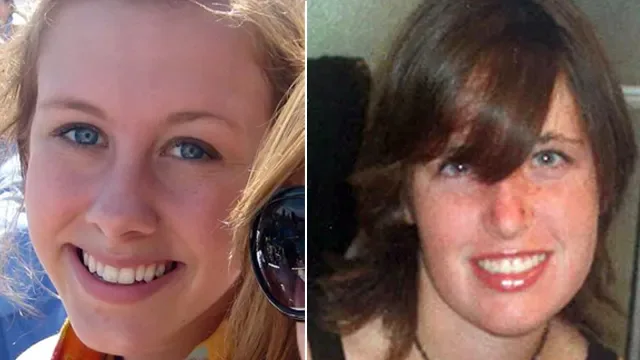
When 14-year-old Amber Dubois disappeared on Friday the 13th in 2009, her San Diego County community hoped for a miracle. Exactly one year and 12 days later, 17-year-old Chelsea King vanished during an afternoon run—and investigators realized they were hunting the same predator. The tragic cases that followed sparked sweeping legal reforms and exposed critical failures in the sex offender monitoring system.
The Friday the 13th Murders episode 5, “I Will Kill,” airing October 29, 2025, revisits these linked cases and the investigation that changed how California handles sex offenders.
I Will Kill: Case Summary
| Detail | Amber Dubois | Chelsea King |
|---|---|---|
| Age | 14 years old | 17 years old |
| Disappearance | February 13, 2009 | February 25, 2010 |
| Location | Near Escondido High School | Lake Hodges, Rancho Bernardo |
| Activity | Walking to school | Afternoon run |
| Remains Found | March 2010 (Pala area) | March 2, 2010 (shallow grave) |
| Time Missing | Over 1 year | 5 days |
The Disappearances That Shocked San Diego
Amber Dubois was last seen on February 13, 2009, walking toward Escondido High School. She simply vanished in broad daylight, leaving her family and community desperate for answers. Despite extensive searches and media coverage, months passed without leads.

Chelsea King disappeared on February 25, 2010, during what should have been a routine afternoon run near Lake Hodges in Rancho Bernardo. Her disappearance triggered an immediate, massive search effort. Unlike Amber’s case, investigators found critical evidence quickly—Chelsea’s clothing near the running path.
The DNA evidence from Chelsea’s clothing produced a match that would crack both cases wide open.
The Breakthrough: DNA and a Brave Survivor
The investigation took a crucial turn thanks to a December 2009 assault that occurred between both disappearances. A jogger near the same park area was attacked but managed to fight back and escape. Her detailed account of the location, approach, and attacker’s behavior gave investigators a living witness—and when combined with DNA evidence, it pointed directly to one man.
John Albert Gardner III, a registered sex offender with prior prison time who had completed parole, became the prime suspect. Disturbingly, reports revealed he had violated parole numerous times while wearing a GPS monitor, raising serious questions about oversight failures in the system.
According to the FBI’s National Crime Information Center, effective monitoring of sex offenders is critical to public safety, yet Gardner’s case exposed significant gaps. For more on criminal justice system failures, visit our comprehensive legal analysis section.
The Rapid Resolution
Within days of identifying Gardner, search crews found Chelsea King’s body in a shallow grave near Lake Hodges on March 2, 2010—just five days after her disappearance. The focus immediately shifted back to Amber’s cold case.
With negotiations underway and mounting evidence, investigators pressed Gardner for information about Amber. In March 2010, more than a year after her disappearance, Amber’s remains were finally located near the Pala area.
Justice and a Controversial Plea Deal
In April 2010, John Albert Gardner III pleaded guilty to:
- The murders of Amber Dubois and Chelsea King
- The attempted rape of the December 2009 jogger
The plea agreement spared him the death penalty in exchange for revealing Amber’s location and avoiding a lengthy trial. In May 2010, he received consecutive life sentences without the possibility of parole after both families delivered powerful impact statements in court.
According to ABC News coverage of the sentencing, the courtroom was packed with supporters of both families who had searched tirelessly for answers.
Chelsea’s Law: A Legacy of Protection
The tragic deaths sparked immediate legislative action. Chelsea’s Law, passed in 2010, implemented sweeping reforms to California’s sex offender laws, including:
- Tougher penalties for serious sex offenses against children
- Enhanced monitoring requirements for high-risk offenders
- Park and school zone restrictions for certain parolees
- Improved GPS tracking and alert systems
- Faster DNA database checks
The families of both victims advocated fiercely for these changes, channeling their grief into protecting other children. Chelsea’s Law represents one of the most comprehensive sex offender reform packages in California history.
For information on current sex offender laws and community safety, visit the California Megan’s Law website.
What the Documentary Reveals
The Friday the 13th Murders episode 5 examines the investigative process, the survivor’s critical role, and the difficult decisions prosecutors faced. The show doesn’t shy away from exploring the tradeoffs involved in accepting a plea deal versus pursuing a death penalty trial.
The episode also honors the families who refused to give up—organizing search parties, maintaining media attention, and ultimately pushing for legislative change that would protect countless other children.
For more true crime documentary coverage and analysis, explore our in-depth case studies.
The Systemic Failures
Perhaps most disturbing was the revelation that Gardner violated parole multiple times while supposedly being monitored via GPS. These failures raised urgent questions:
- Why weren’t parole violations acted upon more swiftly?
- How effective was GPS monitoring if violations went unaddressed?
- Could better oversight have prevented these tragedies?
These questions drove much of the reform that followed, ensuring that Gardner’s crimes would lead to meaningful change in how California manages sex offenders.