NAM321/6 (50 ov)
 IRE
IRE GMB
GMB ZMB
ZMB NGA
NGA LES
LES CAG
CAG BOL
BOL COMO
COMO SAS
SAS FCA
FCA FCU
FCU KOE
KOE S04
S04 M05
M05 SVW
SVW RBL
RBL ELV
ELV MOZ19
MOZ19 UGA23/0 (0.5/20 ov, target 20)
 NZ180/5
 IND181/6 (19.5/20 ov, target 181)
 Ipswich1
 Nottm Forest1
 Alavés1
 Málaga1
 WA105/3 (18.5/50 ov, target 372)
 NSW371/8
 DEN
DEN KUW
KUW KENYA
KENYA QAT
QAT SWD-W
SWD-W EPR-W
EPR-W TTN-W
TTN-W WPR-W
WPR-W BOR
BOR WAR15/1 (2.5/20 ov)
 LIONS
LIONS Limpo21/1 (2.5/20 ov)
 NZ-A135/3 (41 ov)
 IND-A113
 DHA293/3 (84.1 ov)
 RAJ
RAJ MYMS
MYMS CHATT
CHATT RAN320/5 (80 ov)
 BAR
BAR MEX-W
MEX-W ARG-W
ARG-W UAE
UAE NED
NED PAK
PAK ENG
ENG IND-W
IND-W ZIM-W
ZIM-W AFG170/3 (34.3/50 ov, target 170)
 ZIM169
 SCP
SCP HSV
HSV ARS
ARS EVE
EVE Torino3
 Monza2
 Brest1
 Nice2
Nice2 Stuttgart2
 Gladbach3
 Al Ahli4
 Al Khaleej1
Finance Minister Nirmala Sitharaman presented her record ninth consecutive Union Budget on February 1, 2026, and delivered news that middle-class taxpayers didn’t expect: no changes to income tax slabs after last year’s generous relief. However, the FM announced several compliance-easing measures, extended deadlines, and tax exemptions designed to simplify the tax framework and reduce burden on small taxpayers.
Budget 2026 Income Tax: What Changed & What Didn’t
| Aspect | Current Status | Budget 2026 Update |
|---|---|---|
| Income Tax Slabs | No change from FY 2025-26 | Remain unchanged |
| Tax-Free Income (New Regime) | Up to ₹12 lakh | Stays at ₹12 lakh |
| Salaried Tax-Free (with deduction) | Up to ₹12.75 lakh | Unchanged |
| Revised ITR Filing Deadline | December 31 | Extended to March 31 |
| TCS Rate (LRS – Education/Medical) | 5% | Reduced to 2% |
| New Income Tax Act Implementation | – | April 1, 2026 |
| ITR Forms | Old forms | Simplified forms (to be notified) |
Why No Tax Slab Changes This Year?
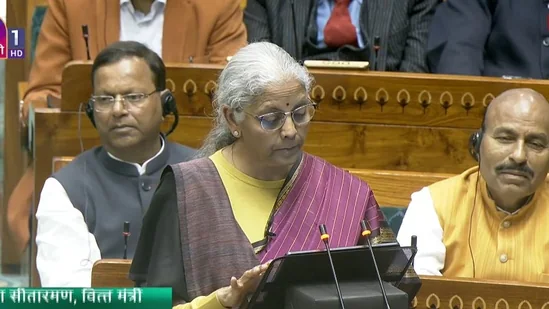
After Budget 2025’s landmark reform that exempted income up to ₹12 lakh from tax (₹12.75 lakh for salaried after ₹75,000 standard deduction), expectations for Budget 2026 were moderate. The government has prioritized policy continuity over headline announcements, focusing instead on:
- Simplifying tax compliance procedures
- Reducing litigation through technology
- Extending deadlines for taxpayer convenience
- Implementing the new Income Tax Act, 2025
For detailed analysis on Budget 2026 tax reforms and middle-class financial planning strategies, explore our comprehensive guides.
Key Direct Tax Reliefs Announced
1. Extended ITR Revision Deadline The deadline for filing revised Income Tax Returns has been extended from December 31 to March 31, subject to a nominal fee. This gives taxpayers more breathing room to correct errors without penalties.
2. Lower TCS for Education & Medical TCS (Tax Collected at Source) under the Liberalised Remittance Scheme (LRS) for overseas education and medical treatment has been slashed from 5% to 2%—making foreign education and healthcare more affordable.
3. Motor Accident Compensation Exemption Interest awarded by Motor Accident Claims Tribunals to accident victims will be fully exempt from income tax, ensuring victims receive complete compensation without TDS erosion.
4. Staggered ITR Filing Timeline
- ITR-1 and ITR-2 (salaried individuals): July 31 deadline continues
- Non-audit business cases and trusts: Extended to August 31
This reduces system congestion and eases filing pressure.
5. New Scheme for Small Taxpayers A rule-based, automated system will be introduced for small taxpayers in FY27 to cut manual intervention, simplify compliance, and reduce tax disputes.
New Income Tax Act, 2025: What You Need to Know
The Income Tax Act, 2025 officially replaces the six-decade-old Income Tax Act of 1961, effective April 1, 2026. Key features include:
- Simplified tax language and structure
- Redesigned ITR forms (to be notified shortly)
- Trust-based taxation framework
- Reduced litigation and compliance burden
Current Tax Slabs (Unchanged in Budget 2026)
New Tax Regime (Most Popular):
- Up to ₹4 lakh: Nil
- ₹4–8 lakh: 5%
- ₹8–12 lakh: 10%
- ₹12–16 lakh: 15%
- ₹16–20 lakh: 20%
- ₹20–24 lakh: 25%
- Above ₹24 lakh: 30%
Benefits: ₹75,000 standard deduction, ₹25,000 family pension deduction
Old Tax Regime:
- Below 60 years: ₹2.5 lakh exempt
- Senior citizens (60-80 years): ₹3 lakh exempt
- Super senior (80+ years): ₹5 lakh exempt
- 30% tax kicks in above ₹10 lakh
Other Notable Tax Changes
STT Hike: Securities Transaction Tax increased—Futures from 0.02% to 0.05%, Options to 0.15%—making stock market trading costlier.
Buyback Taxation: Share buybacks will now be taxed as capital gains across all shareholder categories, ensuring uniform taxation.
NRI Tax Exemption: NRIs get 5-year income tax exemption on earnings from supplying capital goods to Indian companies.