Former Barcelona and Brazil defender Dani Alves has embarked on a surprising new chapter in his illustrious football career, becoming co-owner of Portuguese third-tier club Sporting Clube de São João de Ver. The 42-year-old, widely regarded as one of the most decorated players in football history with 43 trophies to his name, officially joined the club’s ownership structure on January 2, 2026, marking his first formal venture into club management and potentially setting the stage for an unexpected playing comeback.
Table of Contents
The Deal That Brings Dani Alves to Portugal
Sporting Clube de São João de Ver announced the landmark agreement in a statement that emphasized the transformative nature of the partnership. Club president Carlos Branco shook hands with Dani Alves as the Portuguese outfit revealed that the Brazilian legend had acquired an initial 50% stake in the club’s SAD (Sociedade Anónima Desportiva), with plans to purchase the remaining 50% at the conclusion of the 2025-26 season.
| Ownership Details | Information |
|---|---|
| Player | Dani Alves |
| Club | Sporting Clube de São João de Ver |
| Division | Portuguese Third Division |
| Initial Stake | 50% of SAD |
| Full Ownership Timeline | End of 2025-26 season |
| Investment Partners | Group of Brazilian investors |
According to ESPN Brasil, Dani Alves has the backing of a group of Brazilian investors who facilitated the acquisition. The financial terms of the deal have not been disclosed, though reports suggest a multi-million euro investment will help stabilize and develop the club, which currently competes in Portugal’s Campeonato de Portugal, the country’s third tier of professional football.
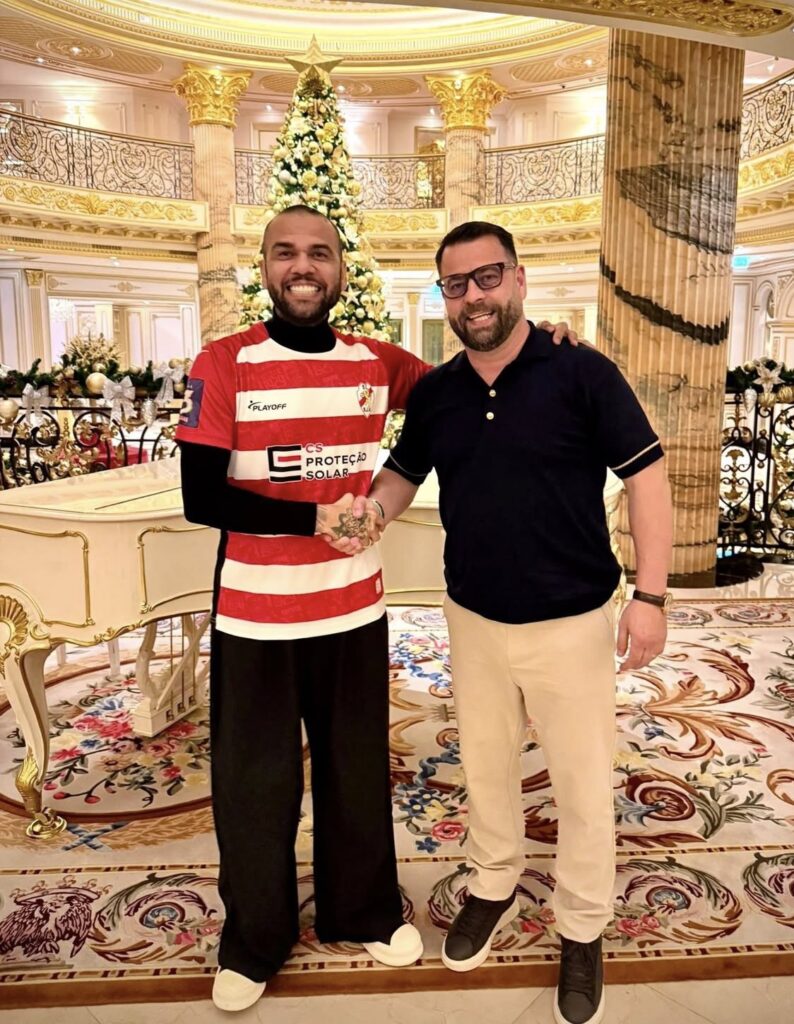
Founded in 1929, São João de Ver are based in Santa Maria da Feira in northern Portugal, approximately 30 kilometers south of Porto. The club has spent most of its existence in Portugal’s lower divisions, making the arrival of a global football icon like Dani Alves a transformative moment in its 97-year history.
From Barcelona Glory to Portuguese Third Division
The contrast between Dani Alves’ glittering career and his new project could hardly be starker. During his playing days, the right-back established himself as arguably the greatest in his position, winning six La Liga titles and three UEFA Champions League trophies during two spells with Barcelona. He also claimed domestic titles with Sevilla, Juventus, and Paris Saint-Germain, while his 43 career trophies place him second only to Lionel Messi in the all-time standings.
| Dani Alves Career Highlights | Achievements |
|---|---|
| Total Career Trophies | 43 (2nd most in football history) |
| Barcelona Titles | 23 (including 6 La Liga, 3 Champions League) |
| Brazil Caps | 126 |
| Major Clubs | Sevilla, Barcelona, Juventus, PSG, São Paulo |
| Olympic Gold | 2021 (Tokyo, aged 38) |
At Barcelona, Dani Alves formed one of football’s most devastating partnerships with Lionel Messi down the right flank. His attacking prowess, defensive solidity, and tireless work rate made him integral to the Pep Guardiola and Luis Enrique eras that dominated European football. He recorded more assists than any other defender in Champions League history and redefined what was possible from the full-back position.
His international career with Brazil spanned 126 caps across 17 years, including appearances at three World Cups and winning the Copa América twice. Remarkably, Dani Alves captured Olympic gold at the 2021 Tokyo Games at age 38, demonstrating his longevity and continued relevance at the highest level well into his late thirties.
The Road Back to Football
Dani Alves’ return to football comes nearly three years after his career was abruptly halted in January 2023. The defender was playing for Mexican club Pumas UNAM when he was arrested in Barcelona on sexual assault charges. He remained in custody from January 20, 2023, until March 2024, when he was released on €1 million bail while awaiting the outcome of his appeal.
In February 2024, a Barcelona court initially found Dani Alves guilty and sentenced him to four and a half years in prison. However, in March 2025, Catalonia’s High Court of Justice unanimously overturned the conviction on appeal. The court ruled there was “insufficient evidence” to disprove the presumption of innocence, citing “gaps, inaccuracies, inconsistencies and contradictions” in the original trial’s reasoning.
The appeal court determined that the complainant’s testimony had not been subjected to sufficient scrutiny and had not been properly compared with forensic and biological evidence that supported the defense’s argument. All restrictions on Dani Alves, including travel bans and restraining orders, were lifted following the successful appeal.
Since his release, Dani Alves has been working behind the scenes in European football, primarily as an agent and advisor. He has maintained relationships with various investors and clubs while preparing for what he has always indicated would be a return to football in some capacity. The investment in São João de Ver represents the realization of those plans.
A Possible Playing Comeback at 42
Perhaps the most intriguing aspect of Dani Alves’ new role is the possibility that he might register himself as a player. ESPN Brasil reported that the Brazilian is considering signing a six-month playing contract between January and June 2026, effectively combining the roles of player and owner.
If he proceeds with this plan, Dani Alves believes he would need approximately 30 days to regain match fitness. Sources indicate he has maintained an individual training program since leaving competitive football, designed specifically to keep him prepared for a potential return to playing. He has already obtained his UEFA A coaching license and views this brief return to the pitch as a way to properly conclude his playing career before transitioning into management.
The prospect of the 42-year-old competing in Portugal’s third division would create one of football’s most unusual narratives. A player who won Champions League finals and starred for Barcelona would be turning out for a club currently sharing last place in Group A of the Campeonato de Portugal after 14 matches. The club has three other Brazilian players in their squad, including former Palmeiras winger Washington, who could provide familiar cultural support for Dani Alves if he decides to play.
The Club’s Vision and Ambitions
Sporting Clube de São João de Ver’s official statement announcing Dani Alves’ arrival emphasized the partnership’s transformative potential. “In a moment that will forever be etched in the club’s memory, we officially announce the entry of Daniel Alves as co-owner,” the club declared. “A name that carries one of the most victorious trajectories in world football now crosses paths with a club with deep roots, hard work, resilience and passion.”
The statement continued: “This union symbolizes more than a structural change. It represents the meeting between the experience of those who conquered the world and the soul of a club that never stopped believing. Dani Alves brings a global vision, winning mentality and ambition. São João de Ver offers identity, community and a history built with effort and truth. Together, we transform what is already great into a bigger, sustainable and more inspiring project.”

These lofty ambitions will be tested against the harsh realities of Portugal’s lower divisions. São João de Ver currently struggle near the bottom of their group, facing the challenge of improving on-field performance while integrating new ownership and potentially a high-profile player-owner. The club’s infrastructure, financial resources, and competitive environment differ dramatically from the elite European football Dani Alves experienced throughout his playing career.
However, the involvement of a figure of Dani Alves’ stature undoubtedly raises the club’s profile both domestically and internationally. Media attention, potential sponsorship opportunities, and increased interest from players and coaches could all follow from his ownership, even if immediate on-field success proves elusive.
Following in Notable Footsteps
Dani Alves joins a growing trend of former players investing in clubs, particularly in Portugal’s lower divisions. His compatriot Vinicius Junior recently acquired Portuguese club Nazaré, demonstrating that Brazilian stars see value in Portuguese football’s development potential and regulatory environment.
The Portuguese football system offers several advantages for foreign investors. The country’s strategic location, established football culture, pathway to European competitions, and relatively accessible lower-division clubs make it attractive for players looking to transition into ownership and management. Portugal’s SAD structure allows private investment in professional clubs while maintaining some separation between sporting and commercial operations.
For Dani Alves specifically, Portugal offers proximity to major European markets where he built his reputation, a language (Portuguese) he speaks fluently, and a football ecosystem he understands well. These factors likely influenced his decision to invest in a Portuguese club rather than options in Brazil, France, Spain, or other countries where he played.
Challenges and Realities
While the announcement generates excitement, significant challenges await Dani Alves in his new role. Transitioning from player to owner requires entirely different skills than those that made him successful on the pitch. Financial management, strategic planning, personnel decisions, and navigating club politics demand expertise he has not previously demonstrated.
São João de Ver’s current position near the bottom of their division indicates systemic problems that cannot be solved through ownership change alone. The club will need investment in facilities, coaching staff, player recruitment, and youth development—all requiring substantial financial resources and time to show results.
Additionally, Dani Alves must manage the expectations his involvement creates. Supporters will naturally expect rapid improvement given his legendary status, yet transforming a struggling third-division club takes years rather than months. Balancing these expectations with realistic timelines will test his communication skills and patience.
The potential complications of simultaneously owning and playing for the club also deserve consideration. FIFA regulations and Portuguese football authorities may scrutinize this arrangement to ensure no conflicts of interest arise regarding team selection, transfers, or contractual matters. While player-owners exist elsewhere in football, they typically face additional oversight to maintain competitive integrity.
What Success Looks Like
For Dani Alves and São João de Ver, success over the next 18-24 months might involve several measurable objectives beyond simply winning matches. Stabilizing the club’s financial position, improving infrastructure, establishing a clear sporting project, and creating pathways for youth development would all represent meaningful progress.
On the field, avoiding relegation from the third division and gradually climbing the table would demonstrate improvement. Medium-term ambitions might include reaching the second division within three to five years, though even this would require sustained investment and excellent management.
Perhaps equally important, Dani Alves must establish credibility as an administrator and potential future coach. His decisions regarding squad building, coaching appointments, and club culture will be scrutinized by others in football who may eventually provide opportunities for him to manage at higher levels. Success at São João de Ver could open doors; failure might limit his options outside playing.
The Brazilian legend has stated his intention to eventually pursue coaching after properly concluding his playing career. If he successfully guides São João de Ver through this transition period while gaining coaching experience and completing his badges, the Portuguese club could serve as his stepping stone toward managing at higher levels in the future.
Read More: Aubameyang Banned as Gabon Government Suspends National Team Following Disastrous AFCON Campaign
FAQs
Which Portuguese club did Dani Alves become co-owner of?
Dani Alves became co-owner of Sporting Clube de São João de Ver, a third-division club based in Santa Maria da Feira in northern Portugal. He acquired an initial 50% stake with plans to purchase the remaining 50% at the end of the 2025-26 season.
How many trophies did Dani Alves win during his playing career?
Dani Alves won 43 trophies during his playing career, making him the second-most decorated player in football history behind Lionel Messi. His honors include 23 titles with Barcelona, including six La Liga championships and three UEFA Champions League trophies.
Will Dani Alves play for the Portuguese club?
According to ESPN Brasil, Dani Alves is considering signing a six-month playing contract between January and June 2026. At 42 years old, he believes he needs approximately 30 days to regain match fitness and wants to properly conclude his playing career before transitioning into coaching.
What happened with Dani Alves’ legal case in Spain?
Dani Alves was arrested in January 2023 on sexual assault charges and initially convicted in February 2024. However, in March 2025, Catalonia’s High Court of Justice unanimously overturned the conviction, ruling there was insufficient evidence and citing inconsistencies in the original trial.
Which major clubs did Dani Alves play for during his career?
Dani Alves played for several elite European clubs including Sevilla, Barcelona (two spells), Juventus, and Paris Saint-Germain. He also played for São Paulo in Brazil and Pumas UNAM in Mexico. He spent eight seasons with Barcelona across two stints, winning 23 trophies with the Catalan giants.