NZ
NZ IND
IND NAM
NAM IRE
IRE MOZ
MOZ UGA
UGA Aston Villa
 Man City
 Rayo
Rayo Elche
Elche GMB
GMB ZMB
ZMB NGA
NGA LES
LES Cagliari
 Bologna
 IPS1
IPS1 NFO1
NFO1 ALA1
ALA1 MCF1
MCF1 TOR3
TOR3 MON2
MON2 BRE1
BRE1 NICE2
NICE2 TAS67/4 (15.4/50 ov, target 305)
 VIC304/7
 NZ-A133/1 (39.2 ov)
 IND-A113
 DHA
DHA RAJ
RAJ MYMS
MYMS CHATT
CHATT RAN
RAN BAR
BAR SYL
SYL KHU
KHU UAE
UAE NED
NED PAK
PAK ENG
ENG IND-W
IND-W ZIM-W
ZIM-W AFG170/3 (34.3/50 ov, target 170)
 ZIM169
 DOLPH56/0 (3.5/8 ov, target 56)
 SWD51/4 (8/8 ov)
 WSW1
WSW1 BRI1
BRI1 Como
Como Sassuolo
 Augsburg
 Union Berlin
 Cologne
 Schalke
 Mainz
Mainz Bremen
 RB Leipzig
 Elversberg
 VFB2
VFB2 BMG3
BMG3 AHL4
AHL4 KHA1
KHA1
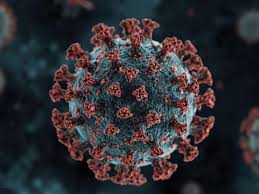
A heavily mutated new COVID-19 strain is quietly making its rounds across the United States — and health officials are paying close attention. Meet BA.3.2, nicknamed the “Cicada” COVID variant, now detected in at least 25 US states. Here’s everything you need to know, calmly and clearly.
BA.3.2 Cicada COVID Variant — Key Facts at a Glance
| Detail | Info |
|---|---|
| Official Name | BA.3.2 (SARS-CoV-2 variant) |
| Nickname | Cicada |
| First Detected | November 22, 2024 — South Africa |
| First US Detection | June 2025 — San Francisco Airport |
| US States Affected | At least 25 (as of Feb 11, 2026) |
| Countries Affected | At least 23 globally |
| Spike Protein Mutations | Approximately 70–75 |
| WHO Classification | Variant Under Monitoring (since Dec 2025) |
| Current US Dominant Strain | XFG (Stratus) at 53% |
| BA.3.2 Share in US Wastewater | 3.7% (as of March 14, 2026) |
Why Is It Called “Cicada”?
BA.3.2 was nicknamed “cicada” by T. Ryan Gregory, a professor of evolutionary biology at the University of Guelph — the same researcher who coined variant names like “stratus” and “pirola.” Like the insect it’s named after, BA.3.2 spent its first years largely underground before re-emerging as a potential major variant.
The analogy is fitting — and a little unnerving. Just like cicadas disappear for years before suddenly showing up everywhere, this variant has been quietly lurking since late 2024.
Which US States Have Been Affected?
CDC data tracked the presence of BA.3.2 in 25 states, including California, Connecticut, Florida, Hawaii, Idaho, Illinois, Louisiana, Maine, Michigan, Maryland, Massachusetts, Missouri, New Hampshire, New Jersey, Nevada, New York, Ohio, Pennsylvania, Rhode Island, South Carolina, Texas, Utah, Vermont, Virginia, and Wyoming.
Detection has primarily been through wastewater surveillance — 132 wastewater samples from 25 US states, nasal swabs from four travelers, three airplane wastewater samples, and clinical samples from five patients. CDC
How Dangerous Is It — Really?
Here’s the balanced truth: there’s no evidence that BA.3.2 is causing more severe disease or hospitalizations in countries where it’s more widespread. Experts note it looks alarming on paper due to its high mutation count, but hasn’t made a significant impact in terms of serious illness in most places yet.
That said, the variant carries 70 to 75 mutations in its spike protein, setting it apart from JN.1 and LP.8.1 — the strains targeted by current COVID-19 vaccines — raising concerns about partial immune evasion. Washington Times
Existing antiviral drugs remain effective against BA.3.2, and vaccines are still expected to protect against severe disease, even if their effectiveness against infection may be reduced. U.S. News & World Report
Staying informed about COVID-19 variants remains as important as ever — and for more health and science updates, check out our latest coverage at TechnoSports and our guide on staying safe during new COVID surges.