NZ
NZ IND
IND NAM
NAM IRE
IRE MOZ
MOZ UGA
UGA Aston Villa
 Man City
 Rayo
Rayo Elche
Elche GMB
GMB ZMB
ZMB NGA
NGA LES
LES Cagliari
 Bologna
 IPS1
IPS1 NFO1
NFO1 ALA1
ALA1 MCF1
MCF1 TOR3
TOR3 MON2
MON2 BRE1
BRE1 NICE2
NICE2 TAS129/7 (23.3/35 ov, target 276)
 VIC304/7 (50 ov)
 WA
WA NSW38/1 (9/50 ov)
 NZ-A135/3 (41 ov)
 IND-A113
 DHA
DHA RAJ
RAJ MYMS
MYMS CHATT
CHATT RAN
RAN BAR
BAR SYL
SYL KHU
KHU MEX-W
MEX-W ARG-W
ARG-W UAE
UAE NED
NED AFG170/3 (34.3/50 ov, target 170)
 ZIM169
 IND-W200/1 (27.1/50 ov, target 198)
 ZIM-W197
 DOLPH56/0 (3.5/8 ov, target 56)
 SWD51/4 (8/8 ov)
 WSW1
WSW1 BRI1
BRI1 Como
Como Sassuolo
 Augsburg
 Union Berlin
 Cologne
 Schalke
 Mainz
Mainz Bremen
 RB Leipzig
 Elversberg
 VFB2
VFB2 BMG3
BMG3 AHL4
AHL4 KHA1
KHA1
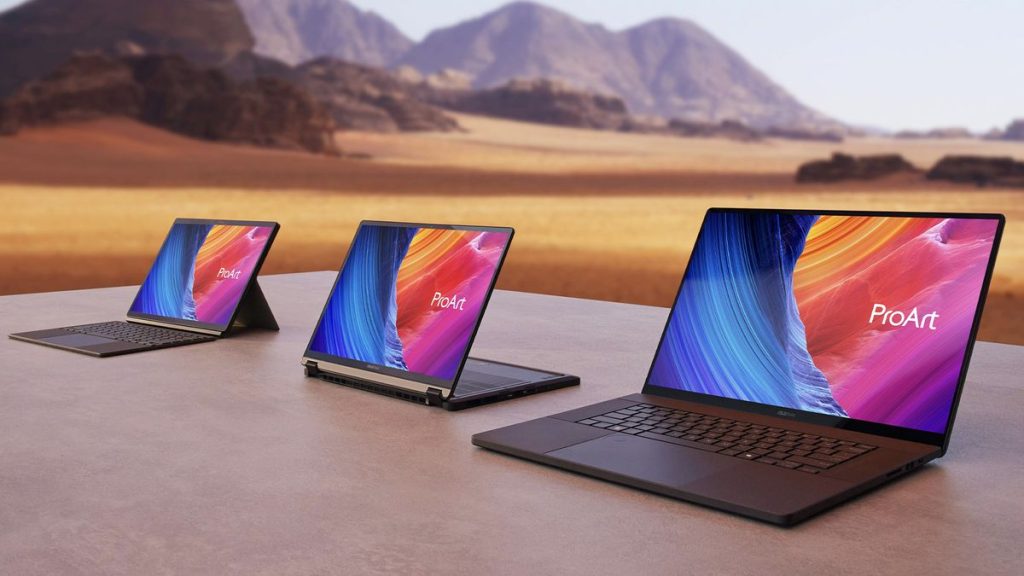
ASUS just dropped a game-changer for creative professionals. At Computex 2026, the company unveiled a new generation of ProArt PCs powered by NVIDIA RTX Spark—the world’s first Windows PCs purpose-built for personal AI agents. These machines can render 90GB+ 3D scenes, generate 4K AI videos, and run massive language models locally with up to 1 million tokens of context. All while maintaining slim profiles and all-day battery life.
ASUS ProArt AI PC Lineup: Specifications That Redefine Creation
| Model | Display | Specs | AI Capability |
|---|---|---|---|
| ProArt P16 | ASUS Lumina Pro OLED | RTX Spark, up to 128GB RAM | Local 120B LLMs |
| ProArt P14 | ASUS Lumina Pro OLED | RTX Spark, up to 128GB RAM | Local 120B LLMs |
| ProArt Mini PC | Compact Desktop | RTX Spark, up to 128GB RAM | Local 120B LLMs |
| CUDA Cores | N/A | 6,144 (Blackwell RTX) | 1 Petaflop AI Performance |
| CPU | N/A | 20-core NVIDIA Grace | Full-stack AI Stack |
RTX Spark: The Superchip That Changes Everything
NVIDIA’s RTX Spark represents a philosophical shift—moving AI capabilities from cloud-dependent to locally-run. The superchip combines an NVIDIA Blackwell RTX GPU (6,144 CUDA cores) with a 20-core NVIDIA Grace CPU via the NVLink-C2C chip-to-chip interconnect.
What does this mean practically? Creators can now run tasks locally that previously required cloud infrastructure. Adobe is re-architecting Photoshop and Premiere from the ground up for RTX Spark, delivering 2x faster AI and graphics performance compared to traditional approaches.
Unbounded Creative Capabilities
The numbers sound theoretical until you realize what they enable:
3D Content: Render ultra-large 90GB+ 3D scenes with real-time interactivity. That’s professional-grade capability in a laptop.
Video Generation: Create 4K AI videos locally with full creative control. No waiting for cloud renders, no privacy concerns with external servers.
Language Models: Run 120B-parameter large language models with up to 1 million tokens of context—essentially unlimited conversation history with advanced reasoning.
Gaming Performance: AAA games at 1440p with 100+ fps. These are serious performance machines, not compromises.
Want comprehensive reviews of creator laptops? Check our creative computing coverage for in-depth analysis of professional creator hardware and performance benchmarks.
The AI Creator Ecosystem: More Than Hardware
ASUS understands creators need more than raw specs—they need integrated workflows. ProArt devices ship with exclusive software tools purpose-built for AI-native creativity:
ProArt Creator Hub intelligently optimizes system resources for demanding workflows, automatically balancing performance and battery life based on active applications.
MuseTree introduces AI-assisted creative capabilities, enabling artists to explore variations and generate options at unprecedented speed.
StoryCube reimagines content organization and narrative development through AI understanding.
These tools aren’t afterthoughts—they’re core to the ProArt philosophy: AI as a creative collaborator, not a separate tool.
Adobe Creative Cloud Re-architected for RTX Spark
Adobe’s commitment to RTX Spark proves this isn’t vaporware. The company is completely re-architecting Photoshop and Premiere for Spark’s architecture. Every ProArt purchase includes three months of Adobe Creative Cloud subscription—essentially providing immediate access to the latest AI-enhanced creative tools.
Combined with 1000+ supported accelerated applications (including Blender, CapCut, ComfyUI, and Blackmagic Design), creators have an entire ecosystem optimized for their hardware.
Security Meets Performance
Running personal AI agents locally raises legitimate security concerns. RTX Spark addresses this with robust security architecture alongside the 1 petaflop of performance. The unified 128GB memory architecture enables massive model execution while maintaining clear security boundaries.
According to personal computer security on Wikipedia, the future of computing demands local processing with privacy guarantees. ASUS and NVIDIA’s approach delivers exactly this.
Explore AI and creative technology innovations: Visit our AI technology section for coverage of how AI is reshaping creative workflows and professional computing.
FAQs
Q1: Can these ProArt laptops actually replace cloud-based creative workflows?
Q2: Why do creators need 128GB unified memory?
Large 3D scenes, video timelines, and running massive language models simultaneously require enormous memory pools. 128GB unified memory (shared between GPU and CPU) eliminates data movement bottlenecks, enabling smooth interaction with projects most laptops can’t even load.