NAM321/6 (50 ov)
 IRE
 FCA
 FCU
 KOE
 S04
 M05
 SVW
 RBL
 ELV
 SCP
 HSV
 MEX-W
 ARG-W
 ARS
 EVE
 COV
 FUL
 MOZ19
 UGA23/0 (0.5/20 ov, target 20)
 NZ180/5
 IND181/6 (19.5/20 ov, target 181)
 Ipswich1
 Nottm Forest1
 Alavés1
 Málaga1
 WA105/3 (18.5/50 ov, target 372)
 NSW371/8
 DEN
 KUW
 KENYA
 QAT
 SWD-W
 EPR-W
 TTN-W
 WPR-W
 BOR
 WAR15/1 (2.5/20 ov)
 LIONS
 Limpo21/1 (2.5/20 ov)
 NZ-A135/3 (41 ov)
 IND-A113
 DHA293/3 (84.1 ov)
 RAJ
 MYMS
 CHATT
 RAN320/5 (80 ov)
 BAR
 UAE
 NED
 PAK
 ENG
 IND-W
 ZIM-W
 GMB
 LES
 ZMB
 NGA
 AFG170/3 (34.3/50 ov, target 170)
 ZIM169
 OFC
 NEU
 Torino3
 Monza2
 Brest1
 Nice2
 Stuttgart2
 Gladbach3
 Al Ahli4
 Al Khaleej1

Ravichandran Ashwin wants Gautam Gambhir and Shubman Gill to give Sarfaraz Khan clear role messaging. Why? Because unclear batting plans can cost India runs at the worst possible moments. That matters even more when selection talk gets loud—players stop knowing if they’re being groomed for impact overs, a specific No. 4/5 job, or a spin-matchup role.
Ashwin’s point hits hard because Sarfaraz has already shown he can change games when it counts. In the IPL 2026 match at Chepauk on 11 April 2026, Chennai Super Kings beat Delhi Capitals by 23 runs. Sarfaraz took a diving catch to dismiss Axar Patel—a wicket that came on the first ball of the seventh over, bowled by Gurjapneet Singh. Here’s the thing: Sarfaraz did not bat that day. His value came through fielding, not batting execution.
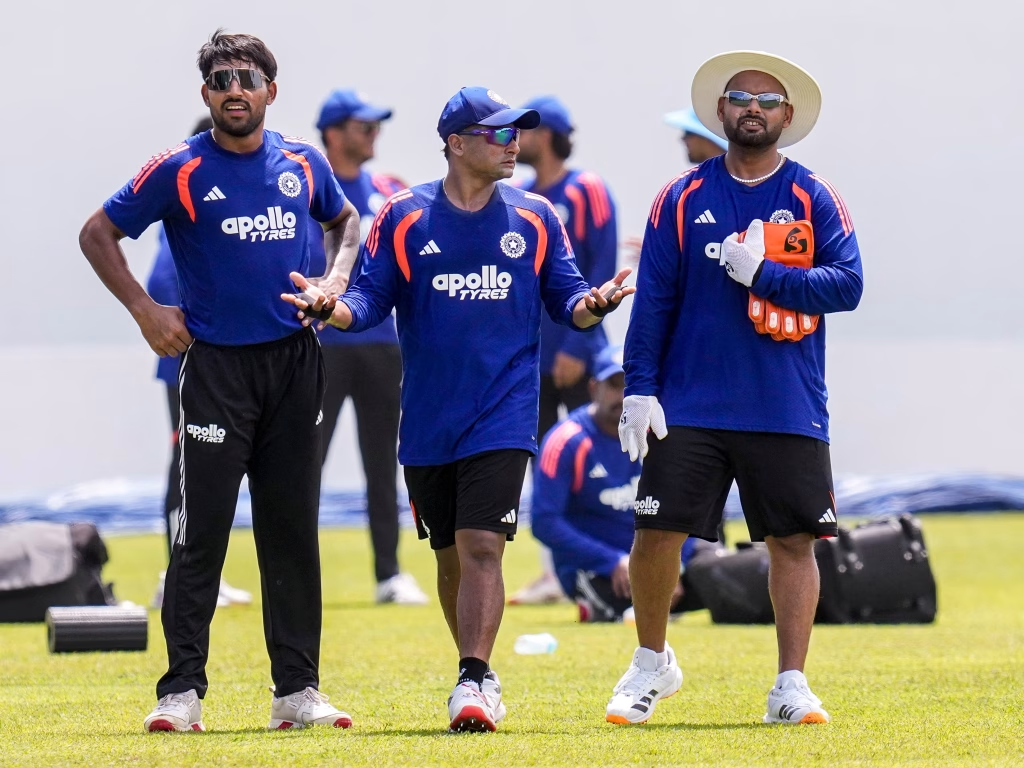
Ashwin urges sarfaraz khan: Key Details: what Ashwin is pushing for, and why it’s timing-critical
So what exactly is Ashwin asking? Role clarity. When a batter’s assignment keeps shifting—tempo, position, how long they’ll be backed, what counts as “acceptable”—confidence turns into guesswork. That’s where Gambhir and Gill’s messaging becomes decisive. The batting order isn’t just a lineup; it’s a psychological contract.
Sarfaraz’s profile makes this practical, not theoretical. He’s an Indian cricketer born on 22 October 1997, listed as a middle-order batter. He’s played for Mumbai domestically and Chennai Super Kings in the IPL. He’s already experienced different team cultures. The next step is consistent instructions about what he must do with the bat when he walks in.
In the Chepauk game, CSK set 213 as the target. Ashwin’s “clear role” argument becomes easy to see here. In a chase where partnerships and over-by-over intent decide outcomes, a batter who doesn’t know whether he’s there for consolidation, acceleration, or specific matchup work will often hesitate—even if his technique is ready.
Context: the root cause isn’t talent—it’s decision-making under uncertainty
Here’s the thing: India’s batting success depends on more than raw ability. It depends on whether the batter knows the plan before the first ball of the over begins. Role uncertainty creates a ripple effect—batters try to “solve” the match themselves, and that’s how scoring patterns break.
There’s also a selection-politics angle, even when people don’t label it that way. If conversations around who bats where evolve faster than a player’s preparation, then every training session becomes a negotiation instead of a rehearsal. That’s exactly why Ashwin’s push is aimed at Gambhir and Gill: leadership messaging should reduce ambiguity, not add to it.
Worth noting: in the 11 April 2026 Chepauk match, Sarfaraz’s biggest contribution was fielding—his diving catch removed Axar Patel on the first ball of the seventh over. That kind of impact often signals readiness, but if batting responsibility isn’t equally clear, fans can end up asking why a set-up that looks perfect in theory doesn’t fully convert in the middle.
For broader framing on how teams manage role assignments and batting continuity, we can also look at context from major coverage like ESPN’s match and player reporting: see ESPN’s cricket coverage at https://www.espn.com, and for stat-driven match details, Cricinfo match notes at https://www.espncricinfo.com.
What’s next: three solutions, their trade-offs, and the most realistic path
Ashwin’s advice implies a problem-solution roadmap. Here are three candidate solutions leadership can adopt—each with a downside we can’t ignore.
| Solution | What it changes for Sarfaraz | Downside |
|---|---|---|
| 1) Fixed batting role for a block of matches | He gets consistent responsibility: No. 4/5 job with a defined tempo | If opponents counter that role, his growth curve can stall |
| 2) “Template innings” plan by over range | Clear goals (e.g. stabilize vs accelerate) for specific phases | Risk of robotic play—batters may stop trusting instincts |
| 3) Match-by-match role with an explicit reason | He understands why he’s placed where he is | If explanations come too late, clarity won’t help under pressure |
Ashwin Urges Sarfaraz Khan: That said, our recommendation is straightforward: if leadership wants the fastest confidence boost, choose Solution 1 (fixed role for a block)—and only adjust if performance data clearly shows the role isn’t working.
The human reason is simple: Sarfaraz needs mental repetition, not constant repositioning, after being showcased through high-pressure moments like the Chepauk catch—even in matches where he didn’t get to bat. The immediate outlook depends on whether Gambhir and Gill translate Ashwin’s messaging into concrete batting instructions for the next innings, not just general support. If they do, Sarfaraz’s best skill—turning opportunity into momentum—should show up more often with the bat, not only in the field. Stay tuned for more on Gambhir Gill.
Related Articles
- How Virat Kohli Adapts to Powerplay Pressure in Modern Cricket
- Virat Kohli and the Paradox of Modern Test Match Anchoring
- Why Virat Kohli’s Classical Technique Outperforms Modern T20 Batting Aggression
FAQs
What did Ravichandran Ashwin urge Gambhir and Gill to do?
Ashwin urged Gautam Gambhir and Shubman Gill to give Sarfaraz Khan clear role messaging, so the middle-order batter understands his responsibility and tempo expectations.
Why is “role messaging” a big deal for a middle-order batter like Sarfaraz?
Because middle overs are decision-heavy: hesitation can convert into wickets quickly, and unclear batting plans force a batter to improvise rather than execute a practiced role.
Does Sarfaraz Khan’s Chepauk performance support Ashwin’s argument?
In the 11 April 2026 CSK vs DC match at Chepauk, Sarfaraz showed impact via a diving catch (Axar Patel out on the first ball of the seventh over), even though he did not bat—which underlines readiness that role clarity can amplify.
When did the CSK vs DC match happen and what was the result?
The match finished with CSK beating DC by 23 runs, and CSK posted a 213 target; it was played on 11 April 2026 at Chepauk.
Was this article helpful?
Your feedback directly improves future articles on this site.