RIY1
RIY1 TAA0
TAA0 LAZ0
LAZ0 PAR0
PAR0 RCL0
RCL0 PAR0
PAR0 MEX-W
MEX-W ARG-W
ARG-W ATM0
ATM0 DEP0
DEP0 MTL0
MTL0 NSH1
NSH1 ADO0
ADO0 HEE0
HEE0 Mirassol0
 São Paulo0
 UAE
UAE NED
NED PAK
PAK ENG
ENG IND-W
IND-W ZIM-W
ZIM-W GMB
GMB LES
LES MOZ
MOZ ZMB
ZMB Inter Milan
 Fiorentina
 Churchill
 Punjab FC
 NGA
NGA UGA
UGA CHE0
CHE0 TOT2
TOT2 VAL1
VAL1 VIL2
VIL2 DOR1
DOR1 SGE0
SGE0 NAP3
NAP3 ROMA3
ROMA3 NZ-A135/3 (41 ov)
 IND-A113
 SYL
SYL KHU
KHU MYMS299/4 (87 ov)
 CHATT
CHATT DHA293/3 (84.1 ov)
 RAJ
RAJ RAN320/5 (80 ov)
 BAR
BAR DEN
DEN PNG
PNG NAM321/6
 IRE290 (47.3/50 ov, target 322)
 NZ180/5
 IND181/6 (19.5/20 ov, target 181)
 Vitória0
 Athletico-PR0
 VEN0
VEN0 JPN1
JPN1 ZAM0
ZAM0 FRA1
FRA1 Athletic
 Getafe
 C Palace
 Newcastle
 Hull
Hull Brentford
 Liverpool
 Brighton
 Man United
 Bournemouth
 Atalanta
 Frosinone
 KHO0
KHO0 ETT3
ETT3 RAC2
RAC2 ESP1
ESP1
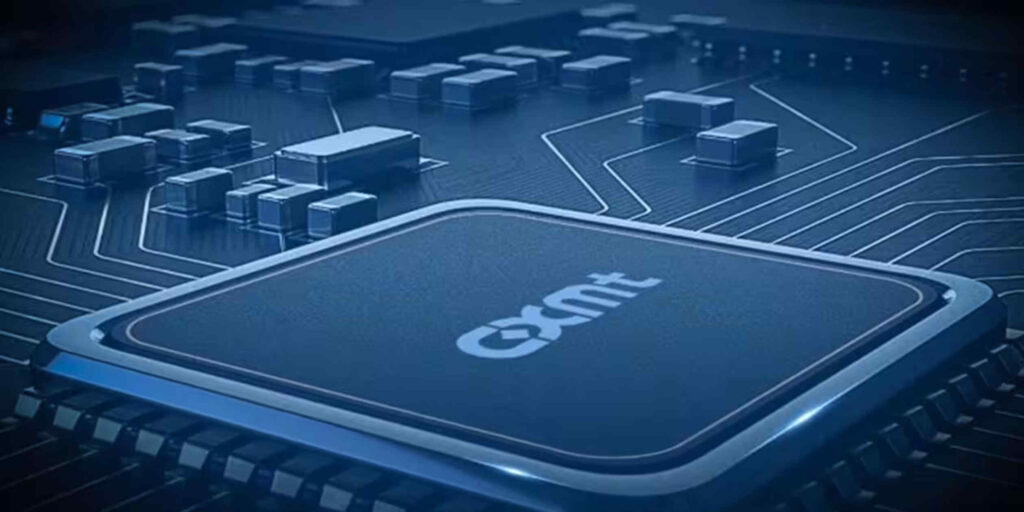
Apple In Talks with YMTC and CXMT: When the world’s most valuable company starts flirting with sanctioned Chinese chipmakers, you know the global memory market is in serious trouble. According to a bombshell report by Ijiwei via WCCFtech, Apple is quietly exploring partnerships with China’s two biggest memory manufacturers — YMTC and CXMT — in a bold gambit to counter the increasingly aggressive negotiation tactics of the so-called “Big Three.”
The Problem: Apple’s Suppliers Are Playing Hardball
Right now, Apple’s memory supply chain reads like a who’s who of semiconductor royalty. Samsung supplies roughly 60% of the DRAM for the iPhone 17 lineup alone. SK Hynix and Micron plug the gaps, while Samsung, SK Hynix, and KIOXIA share the NAND supply duties.
But here’s the problem: these suppliers know exactly how much Apple needs them — and they’re using that leverage. With Samsung, SK Hynix, and Micron all pivoting production capacity toward the far more lucrative AI server memory market, consumer-grade DRAM and NAND supplies have tightened dramatically. Memory prices have surged by triple-digit percentages quarter-on-quarter, and suppliers aren’t exactly rushing to offer Apple a discount.
So Apple is doing what Apple does best — engineering leverage where none previously existed.
Enter YMTC and CXMT: China’s Rising Memory Giants
| Company | Specialty | Current Status | Key Milestone |
|---|---|---|---|
| YMTC | NAND Flash | On US Entity List (2022) | 270-layer 3D NAND; 13% global NAND share |
| CXMT | DRAM | Ex-Pentagon restricted list | Mass-producing HBM3; $42B IPO pending |
Apple’s plan isn’t necessarily to actually source chips from YMTC or CXMT — at least not immediately. It’s to use the threat of doing so as a negotiating weapon. And it’s a credible one. HP and Dell are already qualifying CXMT’s DRAM chips, while Acer and ASUS are quietly asking their Chinese manufacturing partners to source locally-made memory — a seismic shift from industry norms.
CXMT in particular has made remarkable progress. Despite lacking access to EUV lithography equipment due to US restrictions, it has demonstrated working DDR5 designs, delivered HBM3 samples to Huawei, and is building a new Shanghai fab that could be three times the size of its existing Hefei headquarters. YMTC, meanwhile, has narrowed the NAND gap dramatically — its 270-layer 3D NAND stacks are closing in on Samsung’s 286-layer and SK Hynix’s 321-layer products.
The Geopolitical Minefield
This is where the story gets genuinely explosive. In a whiplash-inducing moment on February 13, both CXMT and YMTC were briefly added to the Pentagon’s Section 1260H “Restricted Companies” list — and then removed just as quickly. The DoD later withdrew the document entirely, leaving the industry in a state of nervous uncertainty.
The critical caveat: even off the Pentagon list, YMTC remains on the US Commerce Department’s Entity List since 2022 — the same blacklisting that previously killed Apple’s attempt to work with YMTC for iPhone NAND chips. Any company that partners with Entity List firms risks severe consequences, including losing access to US technology and markets.
Apple’s Real Game Here
This move is less about actually buying Chinese chips and more about psychology. By signalling openness to YMTC and CXMT, Apple is essentially telling Samsung, SK Hynix, and Micron: “We have options. Don’t push us.”
It’s a classic Tim Cook supply chain manoeuvre — the same playbook that built Apple’s legendary cost efficiency and explains why Apple’s supply chain strategy has historically been its most underrated competitive advantage.
The risk, though, is very real. If US regulators interpret any actual procurement as a violation of export control laws, Apple could face penalties that dwarf whatever savings it achieves on memory pricing. The geopolitical optics alone — Apple funnelling revenue to Chinese military-linked firms amid US-China tech tensions — would be a PR nightmare.
What This Means for the Broader Market
Apple flirting with Chinese memory makers is a symptom of a global semiconductor supply crisis driven almost entirely by the AI boom. Every memory manufacturer’s best customers right now are hyperscalers — Microsoft, Google, Amazon — pouring billions into AI infrastructure. Consumer devices sit further down the priority queue, and Apple — with all its purchasing power — is feeling the squeeze like everyone else.
The bottom line: the memory market is broken enough that even Apple is having to play geopolitical chess. And the Chinese challengers, building new fabs at breakneck pace, are more than happy to be the pieces on the board.
Stay on top of the latest in semiconductor and chip supply chain news, Apple strategy, and global tech geopolitics at Technosports.