The initial performance results for AMD’s 12-core Ryzen 9 9900X “Zen 5” Desktop CPU in the Cinebench R23 benchmark have been disclosed. The latest Zen 5 performance report is here where the AMD Ryzen 9 Desktop CPU, codenamed Rheinland-X competes with Intel’s Raptor Lake Core i7-14700K which features a total of 20 cores. While we have no speculation to share, AMD’s latest Ryzen CPUs show a big gain in multi-threaded workloads like Cinebench on the whole – so today here you can see us discuss this new CPU and its performance from default operation all the way up through Precision Boost Overdrive (PBO).
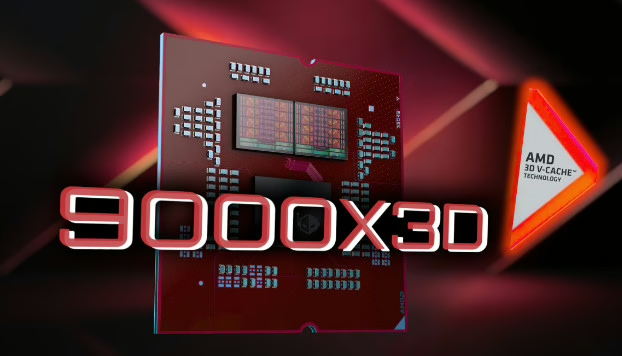
More About the AMD Ryzen 9 9900X ‘Zen 5’ Performance
The AMD Ryzen 9 9900X (100-000000662) is a twelve-core, twenty-four-threaded part that clocks in at a base of 4.4 GHz and boosts to as high as the even odder number – operating up to ~5.6GHz on its clock speeds for applications demanding such frequency stretches. This chip features a TDP of 120W, which sits in the lower end as compared to the 170W operating level of Ryzen 9 7900X.
While it keeps the boost clock speed as its predecessor, base clocks are down 300 MHz in stepping the Ryzen 9 9900X to fit within a TDP of just over those marks. Nonetheless, a 12-core configuration should provide some good multi-threaded performance.
The benchmark results reveal some impressive figures, as testing on a high-end X670E motherboard featuring the retail AMD Ryzen 9-9990X and an AGESA 1.2.0.x BIOS produced stellar figures in benchmarks running with fury unleashed. Running the CPU at 120W took it to the default setting, which resulted in a Cinebench R23 multi-threaded score of around 33k points. That’s a decent 14% uplift over the Ryzen 9 7900X, which you’d typically see score around within the realm of ~29K points at its 170W TDP sign that AMD has improved multi-threaded efficiency.
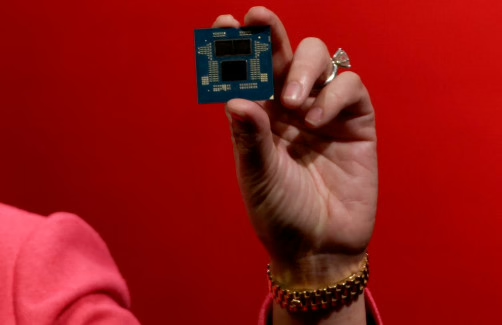
Turning on PBO helps the Ryzen 9 9900X performance further, and it hits a score of nearly 34,500 points with about the same gain over its predecessor. But crucially this performance jump also arrives alongside a fall in power consumption compared to Zn 4 chips. These performance levels will unfortunately likely be close to (or even exceed) the Intel Core i7-14700K, especially with upcoming BIOS updates designed to further optimize Zen 5. Other points on the horizon may include Future insights into what gaming performance this chip offers.