

AMD quietly confirmed three new EPYC Embedded processor families targeting industrial, networking, and edge computing markets—with the flagship Venice series bringing cutting-edge Zen 6 architecture to embedded applications for the first time.
Table of Contents

AMD EPYC Embedded Lineup Overview
| Family | Key Specs |
|---|---|
| Venice 9006 | Up to 96 Zen 6 cores, PCIe Gen6, DDR5/MRDIMM, 2nm process |
| Fire Range 2005 | Up to 16 Zen 5 cores, PCIe Gen5, DDR5-5600, desktop die |
| Annapurna | Highly integrated x86, optimized for network control planes |
What Makes EPYC Embedded Venice Special
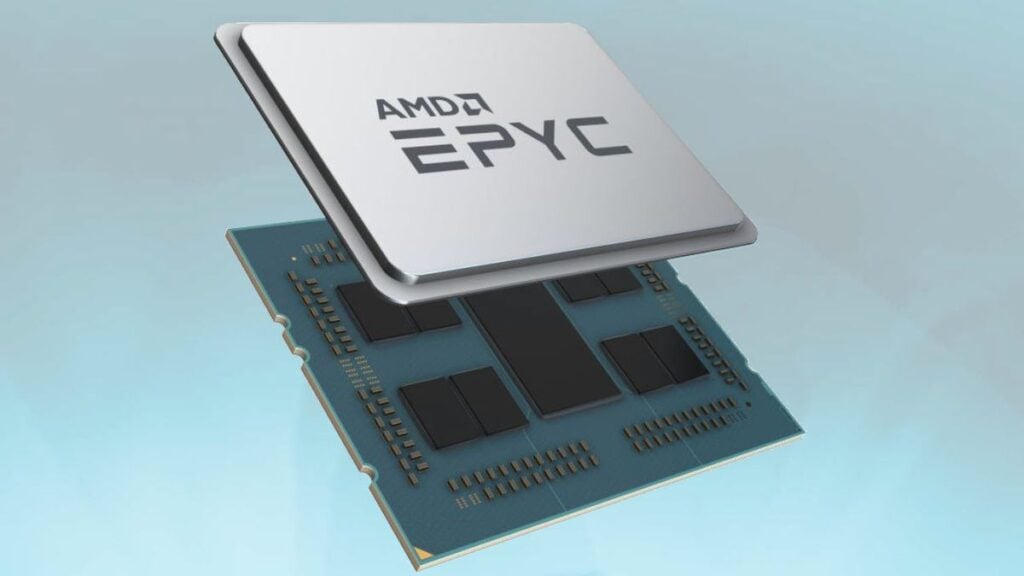
The EPYC Embedded 9006 Venice series represents AMD’s most advanced embedded processor to date, bringing datacenter-class technology to specialized industrial applications. With up to 96 Zen 6 cores, these chips deliver massive parallel processing power for edge AI inference, network virtualization, and storage controllers.
Next-Gen Connectivity: PCIe Gen6 support doubles bandwidth compared to Gen5, critical for high-speed networking equipment and NVMe storage arrays. MRDIMM (Multi-Ranked DIMM) memory support further enhances memory bandwidth for data-intensive workloads.
2nm Manufacturing: Venice leverages TSMC’s cutting-edge 2nm process node, promising significant power efficiency gains over current-generation embedded processors. This matters enormously in thermal-constrained embedded environments where active cooling may be limited.

Fire Range and Annapurna Fill Mid-Range Gaps
The EPYC Embedded Fire Range 2005 series targets mid-tier applications with up to 16 Zen 5 cores—essentially repurposed Ryzen 9000HX mobile dies optimized for networking, storage, and industrial control systems. This design strategy reduces costs while leveraging mature silicon.
Meanwhile, the EPYC Embedded Annapurna family focuses on network control planes with optimized power efficiency and integrated features suited for routers, firewalls, and edge networking appliances. Details remain sparse, but the emphasis on integration suggests competitive pricing against Arm-based alternatives.
Market Impact
These embedded processors challenge Intel’s Xeon D lineup and Arm-based server SoCs in specialized markets where x86 compatibility, high core counts, and advanced I/O matter. The Venice series particularly targets telecommunications infrastructure, industrial automation, and edge AI deployments where traditional server chips prove overkill.
AMD’s Technical Information Portal listings suggest imminent availability, though official launch dates remain unconfirmed. Expect formal announcements at embedded computing trade shows in early 2026.
Read more hardware news at TechnoSports.
FAQs
What’s the difference between EPYC Embedded and regular EPYC server chips?
Embedded versions offer extended availability guarantees, industrial temperature ranges, and validation for mission-critical applications requiring 10+ year support cycles.
When will EPYC Embedded Venice be available?
AMD hasn’t announced pricing or availability, but Technical Information Portal listings suggest a 2026 launch aligned with mainstream Venice server CPUs.