Alibaba Cloud announced a six-year infrastructure plan targeting 20 gigawatts (GW) of datacenter capacity on Tuesday, September 22, 2026, during the Apsara Conference in Hangzhou.
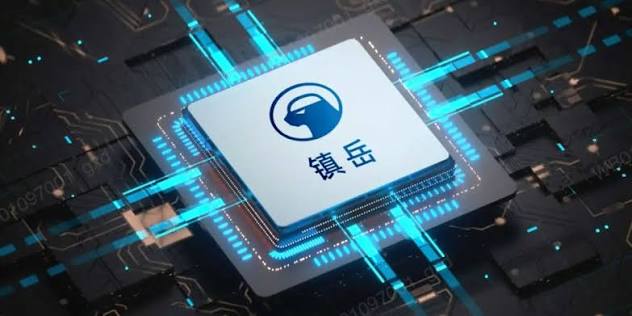
Can the company sustain that scale through 2032? What role will its newly revealed chip play? The chip was developed by Alibaba’s semiconductor division, T-Head, although that detail is not yet officially confirmed. The plan reflects a wider bet that demand for AI computing will continue expanding rather than fade after the current investment cycle.

What exactly did Alibaba Cloud announce?
The company’s blueprint aims to expand its datacenter capacity to 20 GW by 2032, giving it a six-year window to build out the infrastructure required for cloud services and AI workloads. Chief Executive Officer Eddie Wu presented the strategy at the Apsara Conference in Hangzhou, linking the investment to his view that AI applications are still at an early stage.
As first reported by The Register, Wu compared today’s AI applications with the first uses of electricity, arguing that the most valuable applications may arrive after the initial wave. The announcement gives a long-term target, but it does not specify how much capacity will be added each year or where every facility will be built. The next question is whether the chip can make that expansion more practical.
What is known about the T-Head chip?
The proprietary chip revealed alongside the datacenter strategy was reportedly developed by T-Head, Alibaba’s semiconductor division. Specific details such as the chip’s manufacturing process, computing performance, memory configuration, energy use, and production schedule have not been disclosed, so comparisons with NVIDIA, AMD, or custom cloud processors would be premature.
That restraint matters because datacenter capacity is measured in power availability as much as in server count. A chip designed for internal deployment could help Alibaba tailor hardware and software for its own workloads, but the benefit will depend on real-world efficiency, supply, and compatibility with existing systems. Readers tracking the broader hardware race can also see our coverage of RTX GPU Power for context on how power constraints shape AI hardware. > “Machine Thinking” is Eddie Wu’s preferred term for AI, according to his Apsara Conference speech. The chip’s role remains the key technical detail still waiting for a fuller disclosure.
Why does a 20GW target matter for AI datacenters?
A 20GW target signals that Alibaba is planning for infrastructure demand beyond chatbots and today’s visible AI products. Wu used the history of steam and combustion engines to argue that early applications rarely reveal the eventual scale of a technology; he reportedly said engines eventually powered 99.9% of the world’s physical work.
That comparison supports an aggressive capacity strategy, but it also raises practical questions about electricity, cooling, land, network connections, and capital. A datacenter fleet cannot grow on computing demand alone. It needs long-term access to power and water, while regulators in major markets are tightening infrastructure rules. The energy question also connects with our report on Nova Power Unveiled, where device-level power demands show how AI expansion reaches beyond large server halls. For Alibaba, the 20GW ambition will be judged by delivery milestones rather than the headline figure.
What happens next through 2032?
The immediate test is disclosure. Alibaba has announced the destination, but it has not provided a public construction timetable, regional allocation, annual capacity targets, or pricing model for the T-Head chip. Those missing details make it impossible to calculate the plan’s cost or compare its efficiency with rival cloud infrastructure.
The six-year horizon gives the company time to align chip development, datacenter construction, and software deployment. It also leaves room for demand, regulation, and energy 2032 endpoint. Coverage of AI data science research will remain relevant as model training and inference workloads determine which facilities need the most power. Alibaba Cloud’s plan therefore looks less like a single construction announcement and more like a long-term infrastructure commitment whose credibility will depend on measurable milestones.
The next major signal will be the T-Head chip’s technical disclosure, because capacity without efficiency could make the six-year stroll far more expensive than planned.
FAQs
How much datacenter capacity is Alibaba targeting?
The plan targets 20 GW of datacenter capacity by 2032.
Who developed the disclosed chip?
The chip was developed by T-Head, Alibaba’s semiconductor division, although that detail remains unconfirmed.
When was the plan announced?
Eddie Wu announced the initiative on September 22, 2026, at the Apsara Conference in Hangzhou. Source: The Register
Was this article helpful?
Your feedback directly improves future articles on this site.