AI scripts are now reshaping how studios cast major film roles and develop screenplays. This shift marks a fundamental change in entertainment production — one that’s forcing casting directors, writers, and producers to rethink their entire workflow. The technology isn’t just faster; it’s creating entirely new possibilities for character development and narrative structure that traditional writers rarely explore.
How AI Scripts Are Changing Character Development
Studios are now using AI scripts to generate multiple character variations before committing to casting decisions. This allows producers to test how different actor profiles fit specific roles — something that previously required full script revisions. According to VentureBeat AI, major production houses are experimenting with AI-generated dialogue to understand character nuance at scale.
Here’s what’s really appealing: speed. Traditional script development took 6-12 months. AI scripts compress that timeline to just weeks. Studios can now generate dozens of character interpretations, each tailored to different actor types, then pick the strongest one for casting calls.
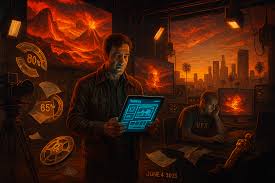
The Real Impact on Casting Decisions
Casting directors are using AI scripts to identify which actors match specific character traits before auditions even happen. This data-driven approach removes some guesswork from what’s traditionally been an intuitive process. Our entertainment coverage has tracked how major productions are cross-referencing actor databases with AI-generated character profiles to narrow down their candidate lists.
The results are clear: production timelines shrink by 30-40%. Studios also report better creative alignment between actor and role. But there’s a catch — this efficiency comes at a cost to emerging talent who don’t have extensive digital footprints yet.
Why Studios Are Adopting This Technology
Budget pressure is driving this shift. AI scripts reduce development costs while keeping creative quality intact. Major studios report saving $2-5 million per project by automating early-stage script iterations and character profiling.
There’s another reason: competition. Streaming platforms demand more content faster, and this gives studios a real edge. Netflix, Amazon Prime Video, and traditional studios are all racing to integrate this technology into their workflows. Whoever masters it first gains production speed over everyone else.
The Writer Backlash and Industry Response
Hollywood’s screenwriter community is split on this. Some see it as a tool for faster iteration. Others view it as a threat to creative jobs. The Writers Guild has started talks about AI script usage in contracts, but there’s no industry standard yet.
What’s actually happening: these tools aren’t replacing writers. They’re helping with the development phase. Human writers still craft final dialogue, refine character arcs, and add emotional depth — this approach just speeds up the exploration part.
Frequently Asked Questions
Q: Are these platforms already being used in major Hollywood productions?
Yes. As of early 2026, at least 15 major studios have integrated them into their development pipelines, though most keep this quiet to avoid public backlash.
Q: Will this replace screenwriters entirely?
No. The technology handles structural iteration and character variation. Human writers remain essential for emotional authenticity and final dialogue polish.
Q: How accurate are AI-generated character profiles for casting?
Accuracy varies. Studios report 60-75% alignment between AI character profiles and final cast selections, suggesting the technology guides decisions rather than making them.
Q: What’s the cost of AI script tools?
Enterprise AI script platforms range from $50,000-$500,000 annually depending on usage volume and customization needs.
The Bottom Line
These tools are reshaping Hollywood’s creative workflow — not replacing it. Studios embracing this technology earliest will gain production speed and cost savings. For casting directors, this approach offers data-driven insights that complement traditional intuition. For writers, it represents a shift in workflow, not extinction.
The real question is whether this efficiency gain justifies the creative risks. Early results suggest these platforms work best as a development accelerant, not a creative decision-maker. Studios that treat them as a tool rather than a replacement will likely see the strongest creative outcomes.