
 SA329 (82.3 ov)
 AUS
AUS BAN
BAN WI
WI IND-W
IND-W ZIM-W
ZIM-W GOA
GOA SC Delhi
 Milan
Milan Bologna
 Parma
Parma Udinese
 Venezia
 Inter Milan
 Genoa
Genoa Juventus
 Monza
Monza Napoli
 ROMA4
ROMA4 CAG2
CAG2 TOR1
TOR1 COMO3
COMO3 SAS2
SAS2 LAZ6
LAZ6 AFG177
 ZIM140 (19.1/20 ov, target 178)
 AUCK
AUCK CANT
CANT CD
CD ND
ND SIKM184
 NAGA187 & 46/4 (34 ov)
 JHK131/4 (47 ov)
 DELHI515/5d
 ODSA194
 SVCS13/0 (5 ov)
 BRODA616
 J & K6/0 (4 ov)
 CHD685/5d
 HP49/0 (14 ov)
 CGR216/8 (95 ov)
 AP231
AP231 HYD193/2 (54 ov)
 PNJB431
 KNTKA297/7 (95 ov)
 TPURA194
 KER101/6 (35 ov)
 BENG350
 UAE
UAE OMA
OMA ENG
ENG SL
SL DEN
DEN QAT
QAT KENYA
KENYA KUW
KUW POA
POA SPR
SPR BRB
BRB VAG
VAG PAK110
 NAM316/7
 IRE253 (44.5/50 ov, target 317)
 NZ198/3
 IND199/4 (13.2/20 ov, target 199)
 NED371/5
 JAB113 (19.3/20 ov, target 133)
 KAY132/9
 Gamba Osaka
 Buriram
 Kashima
 Pohang Steelers
 ABH0
ABH0 ALF1
ALF1 Sevilla2
 Osasuna0
 PSG2
PSG2 Lyon0
Lyon0
AI-powered fusion reactor research is on a tricky path as of June 2026, caught between ambitious private sector claims and the stringent demands of scientific verification. The ultimate goal? Near-limitless clean energy.
Shifting from experimental physics to stable, AI-optimized power generation is proving to be quite an engineering feat.
Commonwealth Fusion Systems (CFS) stands out in this field, having made bold declarations about demonstrating net energy gain with its SPARC tokamak. The company aimed for first plasma around 2025, but it’s still unclear whether they hit that milestone as of now.
On the international front, projects like ITER illustrate just how daunting this challenge can be. Located in Cadarache, France, ITER involves 35 nations and has an estimated total cost exceeding $22 billion USD. Integrating machine learning into these massive systems aims to stabilize plasma, yet no major government or independent peer-reviewed body has confirmed sustained net energy gain in an AI-managed reactor, as highlighted in a recent article by OpenAI Blog.
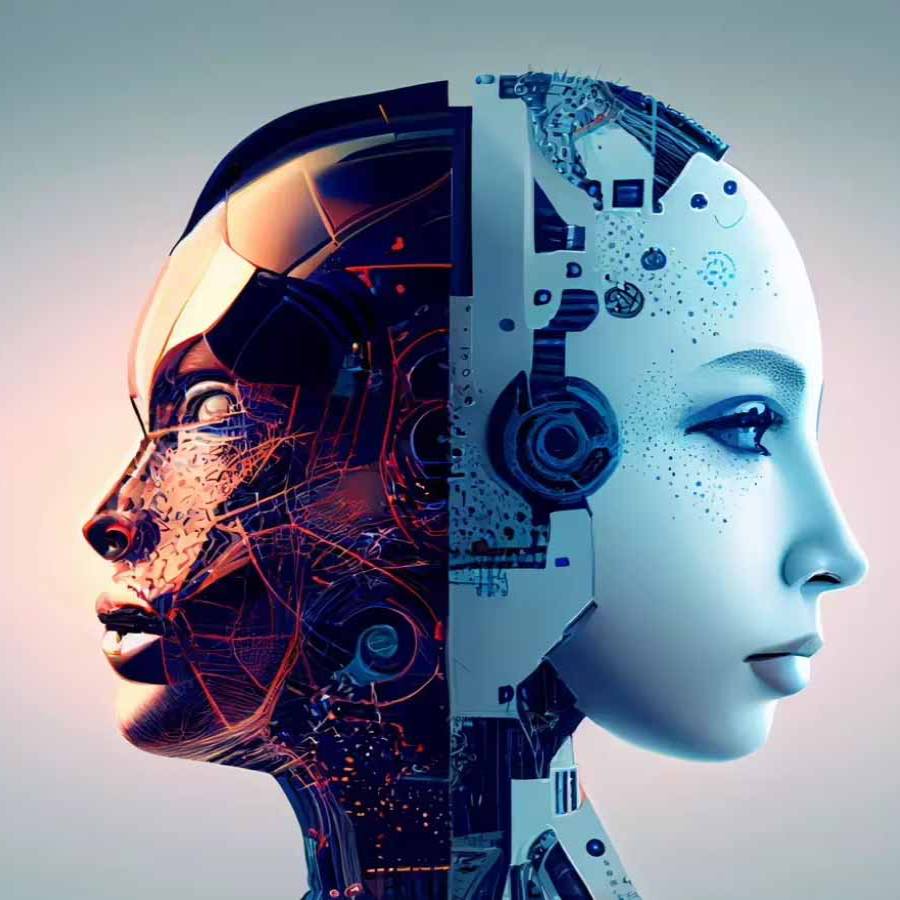
The Role of Machine Learning in Plasma Control
The intersection of artificial intelligence and nuclear fusion isn’t just theoretical; foundational research from Google DeepMind shows it’s possible. A study published in Nature on February 16, 2022, revealed that AI could effectively control the shape of superheated plasma within a tokamak at Switzerland’s TCV reactor.
This ability matters because plasma, reaching temperatures even hotter than the sun’s center, needs to be held in a precise magnetic configuration to avoid touching the reactor walls.
The U.S. Department of Energy recognized this innovation’s potential, allocating around $46 million in 2023 to support eight private fusion energy companies. This milestone-based program aims to speed up the transition from the breakthrough achieved by the National Ignition Facility (NIF) at Lawrence Livermore National Laboratory in December 2022.
During that groundbreaking experiment, NIF researchers used 192 laser beams to deliver energy to a tiny 2-millimeter target capsule, resulting in 3.15 megajoules of output from just 2.05 megajoules of input.
| Project/Facility | Primary Focus | Current Status (as of June 2026) |
|---|---|---|
| NIF (LLNL) | Laser-based inertial confinement | Confirmed ignition achieved (Dec 2022) |
| ITER | Magnetic confinement (tokamak) | Ongoing international collaboration |
| CFS (SPARC) | Compact tokamak fusion | Milestones unconfirmed |
Why Sustained Gain Remains the Ultimate Hurdle
What’s going on in the labs is a shift from achieving “ignition” to maintaining it. Ignition, like the 2022 NIF success, shows that it’s possible, but a commercial reactor needs a steady, repetitive cycle, according to insights from VentureBeat AI.
AI plays a key role here, helping with predictive maintenance and real-time magnetic field tweaks to keep the plasma stable. Researchers are testing whether these algorithms can handle the extreme turbulence present in a high-energy reactor environment.
However, not everyone believes AI alone can close the gap. Some critics argue that plasma stability’s fundamental physics is chaotic, making it tough for digital models to keep up with rapid fluctuations.
That said, supporters highlight the rapid advancements in neural architectures, suggesting that as computing power grows, so does our capability to simulate and control these reactions. The next couple of years will be crucial as private firms transition from theoretical models to operational prototypes, potentially integrating advanced AI layers into their core control systems.
The industry is keenly awaiting the next big announcement from the U.S. Department of Energy’s funded partners, as these companies aim to show that AI can transform experimental physics into a practical energy solution for the grid.
FAQs
Can AI actually control a nuclear fusion reactor?
Research from DeepMind in 2022 showed that AI can effectively manage plasma shape in a tokamak, a crucial step for maintaining the stability needed for fusion.
Has any reactor achieved sustained net energy gain?
While the NIF confirmed a net energy gain in a single laser-based experiment in 2022, no sustained, AI-optimized net energy gain has been verified by scientific authorities.
What is the estimated cost of global fusion efforts like ITER?
The international ITER project, involving 35 nations, has a total estimated cost exceeding $22 billion USD, showcasing the vast scale of current fusion research.
How does Artificial Intelligence improve the efficiency of a Fusion Reactor?
AI enhances the magnetic confinement of plasma by predicting instabilities in real-time, enabling the reactor to make adjustments that prevent energy loss and maintain stable, high-temperature conditions essential for sustained fusion.
When will an AI-Powered Fusion Reactor provide electricity to the power grid?
Though an AI-Powered Fusion Reactor hasn’t achieved sustained net energy gain in laboratory settings as of 2026, experts suggest that commercial integration into the power grid will take more years of infrastructure development and scaling to ensure reliable energy output.


