BAN
 WI235/4 (70 ov)
 AFG
 ZIM326/5 (87 ov)
 MIL0
 FER0
 AND0
 SLZ0
 CRY0
 TSG1
 LEV0
 JAG0
 LSK0
 PLZ1
 NEC0
 OMON0
 AZ
 JUV
 B04
 OLM
 SLB
 LECH
 CEL
 USG
 CEL
 BES
 HBE
 OFI
 STG
 NKC
 SUN
 DZG
 MBSG3
 OFC2
 CHU0
 NEU2
 Dortmund2
 Betis1
 FC Porto4
 Napoli1
 WAR15/0 (2/20 ov, target 139)
 BOL138/5
 DMJIR290 & 134/5 (46 ov) (f/o)
 HYD-R519/8d
 KRBLS280 & 2/1 (2 ov)
 SRB241 & 388/5d
 FSLB259 & 54/1 (26 ov) (f/o)
 PRB503/4d
 LAHW234 & 40/4 (17 ov, target 412)
 FATA362 & 283
 ISB215 & 163/6 (51 ov)
 MUL327
 PCBXI151/8d
 SL223/7d & 121/6 (38 ov)
 ZIM-A
 IRE-A420/9 (90 ov)
 NZ
 IND
 MS-W
 SS-W
 MR-W
 AS-W
 KAY
 SPR
 TUSK
 RHINO
 MOUNT
 ROCKS
 CHR
 POA
 EASTN
 DOLPH
 WI-A123 (16.3/20 ov, target 220)
 LIONS219/7
 ST-W166 (19 ov)
 PS-W183/3
 BH-W184/4
 HH-W154/7
 BIK83
 KAG86/1 (9.4/20 ov, target 84)
 JAB133/8 (20 ov, target 150)
 LUL149/8
 RSO0
 LYON0
 SPP0
 BOU0
 AGF0
 SCB0
 ATA0
 KAI0
 MID0
 AJA0
 THUN0
 HOM0
 Lens1
 Como9
 PSV1
 Club Brugge2
North Korean hackers may be using artificial intelligence to plan and carry out cryptocurrency thefts, including the record Binance breach. That view comes from security experts cited in reports, not confirmed forensic evidence. The FBI calls the state-linked group it holds responsible TraderTraitor.
What Exactly Happened at Binance?
The FBI reportedly issued an alert on Saturday, October 31, 2026, blaming North Korea for stealing more than $6bn from Binance on or around October 29. Binance reportedly puts its losses at about $6.3bn, which would make this the largest crypto theft on record by a wide margin.
The agency blamed TraderTraitor, the same group it linked to the $1.5bn Bybit theft in February 2025. In hindsight, that earlier haul looks less like a high point and more like a rehearsal. The bigger question is how much AI helped the attackers.
Why Do Experts Believe North Korean Hackers Used AI?
On Monday, reports quoted security researchers who pointed to a sharp rise in the precision and complexity of recent attacks. Federico Charosky of Quorum Cyber reportedly told the outlet that a recurring tactic involves approaching exchange engineers with fake job interviews, then convincing them to install malicious code.
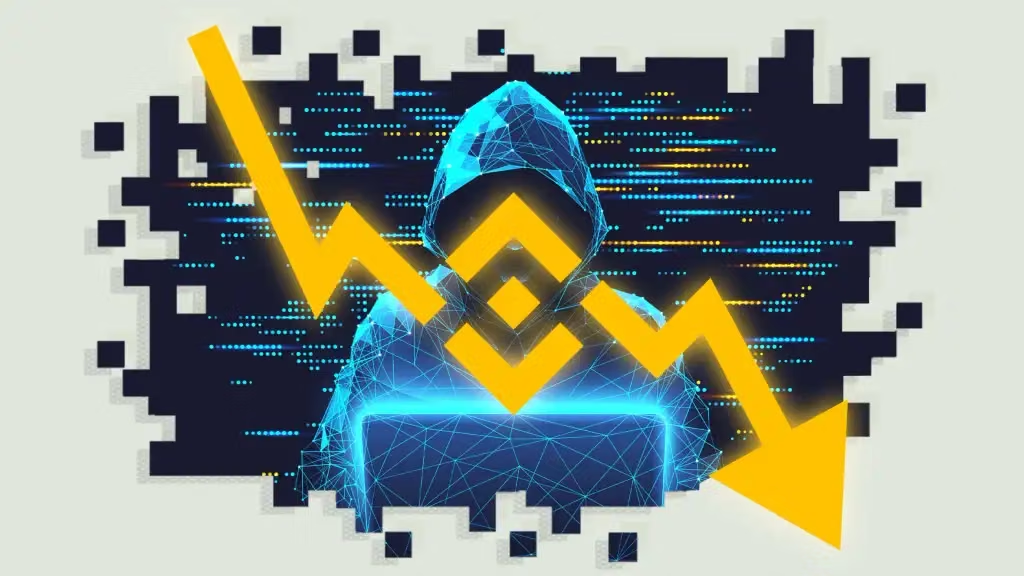
Experts argue that AI models make this kind of social engineering cheaper to run at scale. They can help attackers research a target’s public footprint, identify weak points and write convincing lures. No forensic report has confirmed AI involvement; reports present it as an expert assessment, not established fact. If the theory is right, the way attackers got in matters as much as the tools they used.
How Did the Attackers Get Inside?
Investigators believe the intruders accessed Binance’s withdrawal-processing systems through a software engineer’s laptop. That’s a familiar pattern in TraderTraitor campaigns: compromise one employee’s device, then move through the network until reaching the systems that move money.
One detail stands out. A single laptop between an engineer and a withdrawal engine points to a structural weakness, not just a one-off mistake. The same drop in AI computing costs that helped bring consumer hardware to market, such as Intel’s 480GB GPU: LPDDR5X, also makes large-scale reconnaissance more accessible. That leaves the industry facing an uncomfortable question about its defences.
What Happens Next for Exchanges and Users?
Three things are likely. First, hiring pipelines will face tougher scrutiny, because fake interviews that end with a candidate installing a “coding test” are now a documented attack path. Second, exchanges will face pressure to separate withdrawal systems from everyday engineering endpoints.
Third, regulators will take notice. A $6bn loss dwarfs most previous incidents and will feature in crypto custody debates this quarter. For Indian users, the practical advice hasn’t changed: keep large balances off exchanges, and treat unsolicited recruiter messages on Telegram or LinkedIn as hostile until you verify them. In short, North Korean operators may have sharpened their methods with AI, but the weakness they exploited was human and structural—and it remains open at most exchanges today. For more detail, see Gizmodo.
FAQs
Has AI involvement been proven?
No. Reports describe it as the assessment of security experts, not a confirmed forensic finding. How much did Binance actually lose? The FBI cited more than $6bn, while Binance estimates its own losses at around $6.3bn. What is TraderTraitor? It’s the FBI’s designation for the North Korea-linked group it also tied to the $1.5bn Bybit theft in February 2025. How
Insights on the Heist
North Korean hackers have increasingly turned to sophisticated AI tools to improve their ability to carry out crypto heists, a troubling trend in cybercrime.
ry engineering endpoints. Third, regulators will take notice: a $6bn loss dwarfs most previous incidents and will feature in crypto custody debates this quarter. For Indian users, the practical advice hasn’t changed—keep large balances off exchanges, and treat unsolicited recruiter messages on Telegram or LinkedIn as hostile until you verify them.
In short, North Korean operators may have sharpened their methods with AI, but the weakness they exploited was human and structural—and it remains open at most exchanges today.
FAQs
Has AI involvement been proven? No. Reports describe it as the assessment of security experts, not a confirmed forensic finding.
How much did Binance actually lose? The FBI cited more than $6bn, while Binance estimates its own losses at around $6.3bn. What is TraderTraitor?** It’s the FBI’s designation for the North Korea-linked group it also tied to the $1.5bn Bybit theft in February 2025
Source: The Next Web
Read Next
- Diwali 2026 Tech Gift Guide: 5 Gadgets People Will Use Long After the Festival
- Ewals Cargo Care Boosts Logistics Efficiency with WSO2 Integration
- AAGO Introduces 15W Dual USB DC Charger for Device Power
Was this article helpful?
Your feedback directly improves future articles on this site.