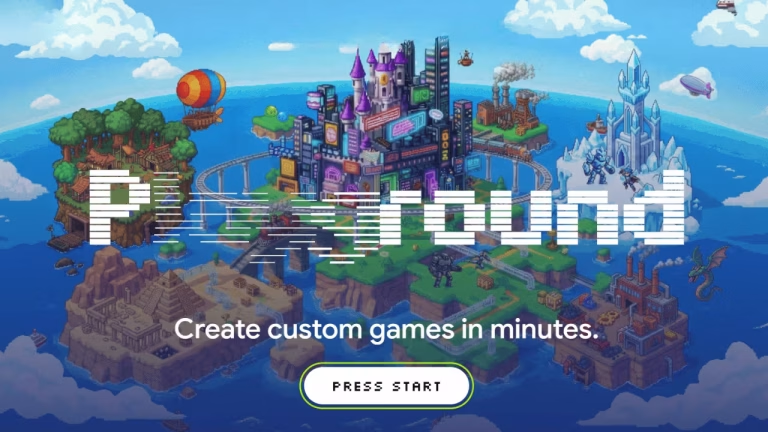
Imagine typing an idea and getting a playable game a few moments later. That is the promise of Google Playground, a new experimental gaming platform where people can create, play and share games using prompts, with no coding needed.
The platform is launching first for users in the United States. For more on how AI is changing play, see our Google Playground tag page.
Google Playground at a Glance
| Feature | Details |
|---|---|
| What it is | Experimental platform to create, play and share games with prompts |
| Coding needed | No |
| Ways to start | Blank canvas, starter prompts or guided help |
| Sharing | Share a link or publish to the Explore gallery |
| Social features | Leaderboards, multiplayer in select genres, Play Games profile |
| Safety | Safety screening of content |
| Unity | Unity Spark integration coming, closed beta soon |
| Availability | US users aged 18+ at playground.google |
| Creation access | Tiered by Google AI subscription |

How You Make a Game
You can begin with a blank canvas, pick a starter prompt or ask for guided help. After that, you describe changes in plain language and the game updates. Because there is no code, the tool opens game making to people who have ideas but not programming skills.
Sharing and Playing With Others
Finished games can be shared through a link or published to the Explore gallery, where others can browse and play. Leaderboards add competition, and select genres support multiplayer. Players use their Play Games profile, and Google says content goes through safety screening before it is shared.
Unity Spark Plans
Google says an integration with Unity Spark is coming, with a closed beta planned soon. Unity is one of the best-known game engines, described at Wikipedia. That link could bring more advanced creation tools to the platform, but details have not been shared.
Who Can Use It Right Now?
Only US users aged 18 and above can use the platform at launch through playground.google. Creating games is available in tiers that depend on your Google AI subscription, so free users may get limited access. Players in India cannot count on access yet.
What Is Not Confirmed
Google has not shared pricing for each tier, the date for wider regions or the Unity Spark release timing beyond “soon”. It is also unclear how complex the games can get or how well the safety screening will work in practice, so early reviews will matter.
Why This Matters for Gamers and Creators
Game making has long been limited to people who can code or learn a complex engine. A prompt-based tool lowers that barrier and could let hobbyists, students and small creators test ideas in minutes. It could also flood the gallery with simple or low-quality games, so the quality of the Explore page will depend on how well Google curates it. The safety screening is meant to keep harmful content out, but how strict it is remains to be seen.
The Unity Spark plan hints at a path from quick prototypes to more serious projects. If creators can start with a prompt and later refine a game in a full engine, Playground could become a useful first step for new developers. For now, treat it as an experiment, since Google itself calls it that and access is limited to adults in the US.
Google has not said when the platform will reach other countries, so readers in India should watch the official page for updates.
FAQs:
How You Make a Game?
You can begin with a blank canvas, pick a starter prompt or ask for guided help. After that, you describe changes in plain language and the game updates. Because there is no code, the tool opens game making to people who have ideas but not programming skills.
Who Can Use It Right Now?
Only US users aged 18 and above can use the platform at launch, through playground.google . Creating games is available in tiers that depend on your Google AI subscription, so free users may get limited access. Players in India cannot count on access yet.
What Is Not Confirmed?
Google has not shared pricing for each tier, the date for wider regions or the Unity Spark release timing beyond “soon”. It is also unclear how complex the games can get or how well the safety screening will work in practice, so early reviews will matter.
Why This Matters for Gamers and Creators?
Game making has long been limited to people who can code or learn a complex engine. A prompt-based tool lowers that barrier and could let hobbyists, students and small creators test ideas in minutes.