
You’ve probably seen the headlines: “Long waits between seasons are killing TV viewership.” It sounds intuitive, almost obvious. But a fresh analysis of Netflix’s own Engagement Reports suggests the real story is far messier, and far more interesting, than a simple countdown clock.
Table of Contents
Netflix Big Picture : Overview
| Finding | What It Means |
|---|---|
| No show ever “gains” viewers | Season 1, Episode 1 is always the most-watched episode; later “spikes” are just measurement illusions |
| Zero-wait shows still lose viewers | House of Cards, OITNB and 13 Reasons Why all shed audience season to season despite instant availability |
| Quality matters more than wait time | Well-reviewed shows retain audiences regardless of gap length |
| Long waits help “Event” shows | Squid Game, Stranger Things and Wednesday build hype through scarcity |
| Long waits hurt “Everyday” shows | Average shows with 18+ month gaps often get forgotten entirely |
| Crisis shows suffer most from delays | Poor reviews, cast changes, or anthology formats compound with long waits |
The Illusion of “Growing” Viewership
Here’s the trick that fools a lot of viewership analysis: nobody discovers a Netflix show by jumping into Season 2. Everyone starts at Episode 1, which means it will always be the most-watched entry point of any series. When Squid Game appears to have “gained” viewers each season based on opening-weekend numbers, that’s really just hype building, not audience growth. Zoom out to a 91-day window, and Season 1 still vastly outperforms Seasons 2 and 3.
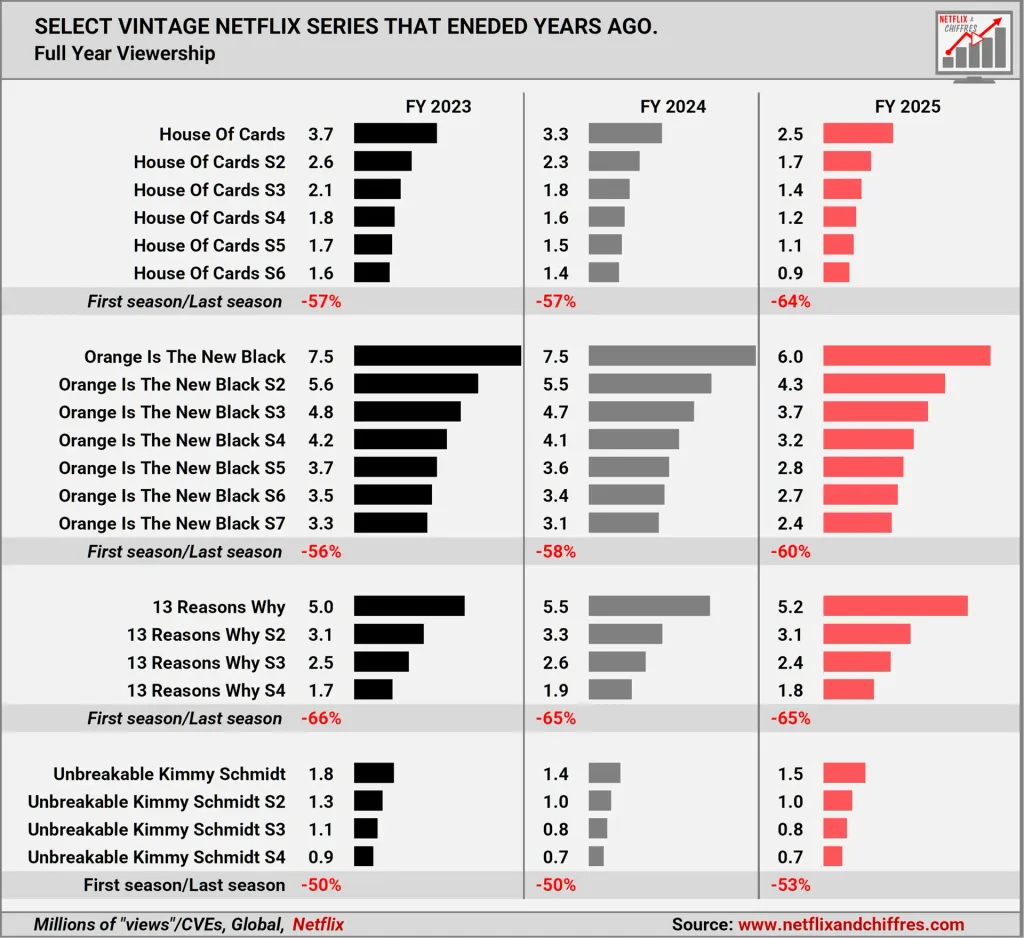
Even shows with zero wait time between seasons, where every episode dropped simultaneously, still bleed viewers. House of Cards, Orange Is the New Black and Unbreakable Kimmy Schmidt all lost millions of viewers season after season, proving that audience decay happens with or without a wait.
So What Actually Drives Viewers Away?
The analysis argues that quality, not wait time, is the real culprit. Shows are sorted into four categories based on IMDb ratings and retention patterns: Elite (high quality, high retention), Comfort Traps (lower quality but easy binge-watching), Polarizing (high quality, niche appeal), and Danger Zone (poor quality, poor retention). The biggest audience crashes consistently hit shows in the Danger Zone or Polarizing categories, regardless of how long fans waited.
Squid Game Proves Long Waits Can Be a Weapon
Squid Game had the longest gap between its first two seasons of any show studied, yet posted the biggest surge in opening-weekend viewership for its return. For a genuine cultural phenomenon, scarcity built anticipation rather than killing it.
Compare that to The Lincoln Lawyer, which suffered when a mediocre Season 2 failed to bring fans back for Season 3, even though the wait time between seasons stayed consistent. When Season 3 turned out to be genuinely strong, Season 4 saw a massive viewership spike, proving perceived quality outweighs scheduling.
The Real Rule: It Depends on the Show’s Tier
The analysis lands on a nuanced conclusion. For major “Event” shows like Stranger Things or Wednesday, long waits build anticipation and turn premieres into cultural moments. For “Everyday” shows with average reviews, anything longer than an 18-month gap tends to be fatal, viewers simply forget the show exists. And for shows already in crisis, whether from cast departures, poor reviews, or format changes, a long wait accelerates the decline rather than causing it.
This kind of data-driven analysis reflects a broader shift in how streaming platforms and audiences alike are rethinking what actually drives sustained engagement, beyond simple release scheduling.
For more Netflix data deep dives and viewership analysis, keep exploring Techno Sports, and check our latest streaming insights to stay ahead of the trends.
FAQs
Q1. Do long gaps between Netflix seasons always hurt viewership?
No. For major “Event” shows, long waits build hype; for average shows, they can cause viewers to forget the series exists.
Q2. What matters more than wait time for a show’s success?
Perceived quality and audience satisfaction with the previous season are stronger predictors of retention than the length of the gap.