
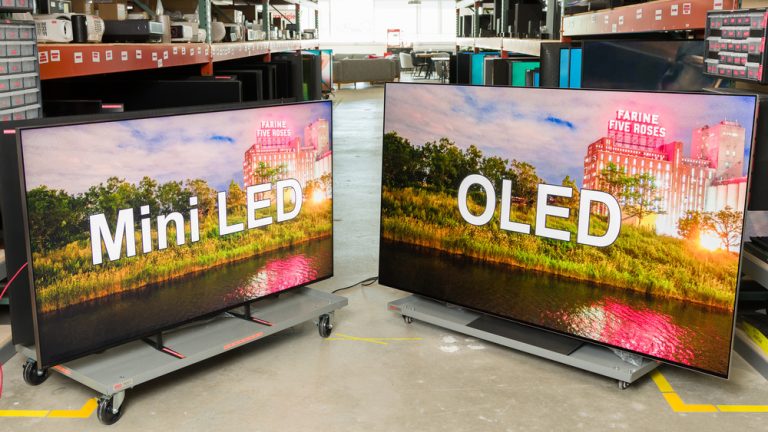
By September 2026, gamers in India and global markets can choose from advanced monitors using either OLED or Mini-LED technology. The shift matters because the two panel types now target the same premium gaming audience while solving different problems: OLED prioritises pixel-level contrast and speed, while Mini-LED pushes sustained brightness.
Some figures, including infinite contrast, 2,000-nit brightness and 100,000-hour lifespan claims, are market specifications rather than universal guarantees.

OLED vs Mini-LED Before the 2026 Gaming Monitor Shift
Until recently, choosing a gaming display often meant accepting a clear compromise. OLED panels delivered near-instant response and deep blacks, but buyers had to consider brightness limits and possible image retention. LCD gaming monitors avoided those concerns, yet their backlights could not switch each pixel off individually. OLED displays use individually lit pixels.
Each pixel can turn completely off, producing an infinite contrast ratio in ideal conditions. That makes dark scenes in games such as horror titles, space simulations and cinematic RPGs look more precise because black areas do not rely on a shared backlight. OLED response times are traditionally measured at approximately 0.1 milliseconds. That figure can reduce visible smearing during fast camera movement, although a monitor’s refresh rate, motion processing and game frame rate still affect the final experience. Our earlier coverage of OLED Evolution: Four explains why self-emissive pixels became central to modern display design.
The Mini-LED Catalyst: Brightness and More Dimming Control
Mini-LED changed the LCD argument by replacing a conventional backlight with thousands of much smaller LEDs. Modern high-end gaming monitors released in 2026 can include more than 2,000 local dimming zones, allowing sections of the screen to brighten or darken independently.
That design does not give every pixel its own light source, so Mini-LED cannot match OLED’s pixel-level control. It can, however, deliver higher sustained full-screen brightness than standard white OLED panels. Peak brightness on top-tier Mini-LED gaming displays can reach up to 2,000 nits, according to the supplied market specifications. This advantage matters in bright Indian rooms, HDR games and scenes containing large areas of sunlight, fire or snow. Mini-LED can also make desktop use more comfortable for people who keep static windows, taskbars or game interfaces visible for long sessions.
OLED vs Mini-LED in Real Gaming Use
The modern choice is no longer between a fast display and a bright display. Premium OLED monitors now combine approximately 0.1 ms response times with high refresh rates, while Mini-LED screens bring stronger HDR brightness to LCD hardware. OLED remains the better fit for competitive gamers who value motion clarity, low pixel persistence and dark-room contrast.
Mini-LED is more suitable for mixed use, bright environments and games with long HDR highlights. A modern OLED display is rated for up to 100,000 hours before brightness degrades by half, although usage patterns and static content still influence long-term performance. Storage does not change panel quality, but a large game library can make high-speed expansion useful; our guide to Sandisk PRO Gamers covers that related upgrade path. Buyers comparing a gaming monitor with a premium phone should also avoid treating OLED branding as identical across devices, since panel tuning and brightness targets vary.
| Feature | OLED | Mini-LED |
|---|---|---|
| Black level | Pixels switch off individually | Thousands of local dimming zones |
| Response time | Approximately 0.1 ms | Depends on LCD panel type |
| Peak brightness | Usually lower sustained full-screen output | Up to 2,000 nits on top-tier models |
| Static content | Requires sensible usage habits | Generally more flexible |
| Best fit | Competitive and dark-room gaming | HDR, bright rooms and mixed use |
Which Display Should Gamers Choose Next?
If you play competitive shooters in a darker room, pick OLED for its approximately 0.1 ms response time and pixel-level blacks. If you play HDR games in daylight, keep desktop windows open or want stronger full-screen brightness, pick Mini-LED. For more detail, see Gizmodo.
The next buying decision will focus less on panel labels and more on local dimming behaviour, HDR calibration, refresh rate and warranty coverage in India. The best display is the one that matches your room, game library and tolerance for static interface elements. Choose OLED for speed and blacks; choose Mini-LED for brightness and flexible everyday gaming.
FAQs
Is OLED faster than Mini-LED for gaming?
OLED panels are traditionally measured at approximately 0.1 milliseconds, giving them an advantage in pixel response and motion clarity. Mini-LED performance depends on the underlying LCD panel.
Can Mini-LED produce true black?
Mini-LED can create very dark areas by controlling thousands of local dimming zones, but it cannot switch off every individual pixel like OLED. Small bright objects may also create some blooming around dark areas.
Is Mini-LED brighter than OLED?
Mini-LED backlighting supports higher sustained full-screen brightness than standard white OLED panels. Top-tier Mini-LED gaming displays can reach up to 2,000 nits under specified conditions.
Should gamers worry about OLED lifespan?
Modern OLED displays are rated for up to 100,000 hours before brightness falls by half, but static content and usage patterns can affect long-term results. Warranty terms remain important when buying an OLED monitor.
Was this article helpful?
Your feedback directly improves future articles on this site.




