NAP2
 ROMA0
 CHE0
 TOT0
 VAL1
 VIL0
 DOR0
 SGE0
 Samsunspor1
 Amed SFK2
 WIL0
 CAM3
 ALV0
 FCA0
 RIY
 TAA
 LAZ
 PAR
 RCL
 PAR
 MEX-W
 ARG-W
 ATM
 DEP
 UAE
 NED
 PAK
 ENG
 IND-W
 ZIM-W
 KHO0
 ETT3
 RAC2
 ESP1
 ARS2
 EVE0
 KNGHT126/6
 MPUMA2/0 (0.5/20 ov, target 127)
 NZ-A135/3 (41 ov)
 IND-A113
 SYL
 KHU
 MYMS299/4 (87 ov)
 CHATT
 DHA293/3 (84.1 ov)
 RAJ
 RAN320/5 (80 ov)
 BAR
 GMB
 LES
 MOZ
 ZMB
 NGA
 UGA
 NAM321/6
 IRE290 (47.3/50 ov, target 322)
 NZ180/5
 IND181/6 (19.5 ov)
 BHA1
 WHU0
 Inter Milan
 Fiorentina
 Churchill
 Punjab FC
 Athletic
 Getafe
 C Palace
 Newcastle
 COV0
 FUL1
 OFC0
 NEU0
 NEOM2
 ABH0

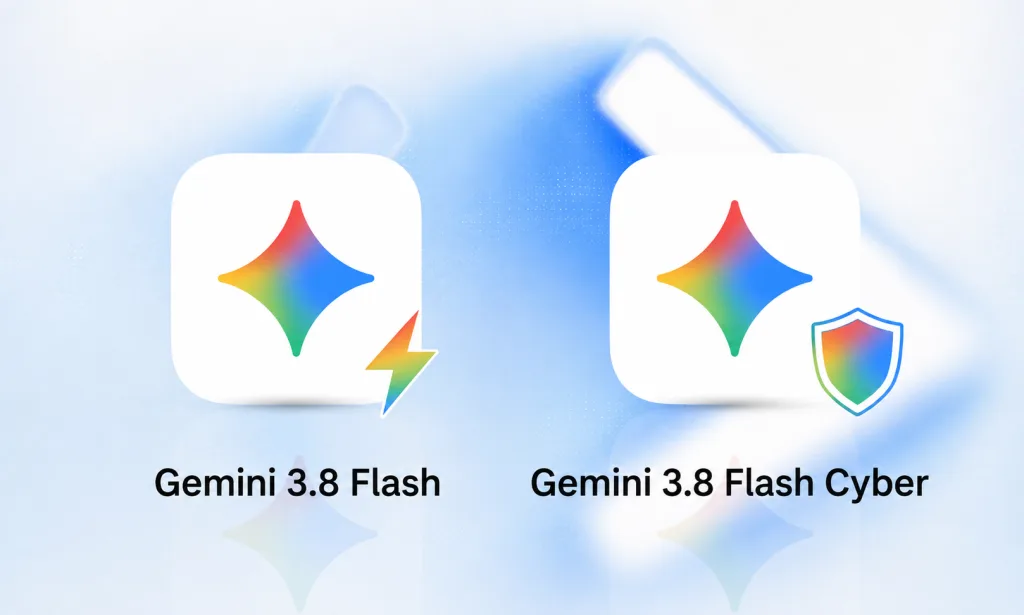
Google has dropped its third Gemini Flash model in just six weeks, signaling an aggressive acceleration in its AI release cadence. Gemini 3.8 Flash arrives with two variants—a workhorse for general tasks and a Cyber version tuned for security work.
Here’s what developers and businesses need to know about Google‘s latest compact powerhouse.
What Makes Gemini 3.8 Flash Different From Previous Flash Models?
Gemini 3.8 Flash represents Google’s most capable reasoning and coding model in the Flash lineup to date. The standard variant functions as what Google calls a “workhorse” model, suitable for agentic tasks, software development, and general-purpose AI workloads.
The second variant, Gemini 3.8 Flash Cyber, builds on the same foundation but has been specifically tuned for vulnerability detection and mitigation in codebases. This dual-variant approach gives developers choice based on their use case—general productivity versus security-focused applications.
Google hasn’t released a frontier-level Gemini Pro model since early 2026, making this Flash-focused cadence somewhat unexpected. The company appears to be betting that rapid iteration on smaller, more affordable models serves the market better than waiting for flagship Pro releases.
How Much Does Gemini 3.8 Flash Cost to Use?
Google is offering API access at an introductory rate through the end of 2026: $0.75 per million input tokens and $3.75 per million output tokens.
Once the promotional period ends, pricing shifts to $1.50 per million input tokens and $7.50 per million output tokens—doubling the introductory rates.
This pricing strategy reflects the competitive pressure in the AI market, where other labs have been cutting token costs to retain business customers who have grown more cautious about AI spending.
The introductory pricing makes Gemini 3.8 Flash one of the more affordable options for high-quality reasoning and coding capabilities, particularly attractive for startups and developers building AI-powered applications on tight budgets.
Why Is Google Releasing So Many Flash Models Recently?
The six-week window has now seen three distinct Flash model releases, a pace that suggests Google is prioritizing volume over waiting for Pro-level breakthroughs. This strategy likely stems from market dynamics: businesses want usable AI now, not theoretical improvements promised for future flagship models.
By continuously refreshing the Flash line, Google keeps its brand visible in the conversation while capturing developers who need reliable, affordable AI right now.
The rapid release cadence also helps Google maintain competitive pressure on rivals like OpenAI and Anthropic, who have also been releasing new model variants at aggressive intervals.
Each Flash release serves as a reminder that Google remains actively in the AI game, even if its flagship Pro models have been quiet.
What Benchmarks Does Google Cite for Gemini 3.8 Flash?
Google has published benchmark numbers claiming strong performance for Gemini 3.8 Flash across reasoning and coding tasks. While specific scores vary by benchmark, the company positions this model as its best-performing Flash variant for technical work.
These claims align with the broader industry trend where even smaller models are achieving remarkable results on coding and reasoning benchmarks, largely due to improved training techniques and data quality.
The Cyber variant specifically targets vulnerability detection, an area where enterprises are increasingly investing as software supply chain attacks grow more sophisticated.
Should Developers Switch to Gemini 3.8 Flash From Older Models?
For developers currently using earlier Flash variants or competing models from other labs, it represents a meaningful upgrade—particularly for coding and reasoning tasks.
The introductory pricing through year-end makes it cost-effective to experiment, and the dual-variant structure allows teams to choose between general-purpose capability and security-focused performance.
However, teams with existing deployments should weigh migration costs against the incremental performance gains, as not every application will see dramatic improvements. More on Google Gemini Flash as the story develops.
Related Articles
- Google AI Introduces Env Harness: A Prog Layer in 2026
- Gemini’s Agent Video Analysis Cuts Token Usage by 88% in 2026
FAQs
When was Gemini 3.8 Flash released?
Google released Gemini 3.8 Flash on Thursday, September 3, 2026.
How many Flash models has Google released in six weeks?
Google has released three Flash models in six weeks, making this the fastest model release cadence in the company’s AI history.
What are the two variants of Gemini 3.8 Flash?
The two variants are standard Gemini 3.8 Flash (a general-purpose workhorse) and Gemini 3.8 Flash Cyber (tuned for vulnerability detection and security work).
Was this article helpful?
Your feedback directly improves future articles on this site.