
 NAM321/6 (50 ov)
 IRE
 AVL
 MNC
 RAY
 ELC
 GMB
 ZMB
 NGA
 LES
 CAG
 BOL
 COMO
 SAS
 FCA
 FCU
 KOE
 S04
 MOZ19
 UGA23/0 (0.5/20 ov, target 20)
 NZ180/5
 IND181/6 (19.5/20 ov, target 181)
 Ipswich1
 Nottm Forest1
 Alavés1
 Málaga1
 WA105/3 (18.5/50 ov, target 372)
 NSW371/8
 DEN
 KUW
 KENYA
 QAT
 SWD-W
 EPR-W
 TTN-W
 WPR-W
 BOR
 WAR15/1 (2.5/20 ov)
 LIONS
 Limpo21/1 (2.5/20 ov)
 NZ-A135/3 (41 ov)
 IND-A113
 DHA293/3 (84.1 ov)
 RAJ
 MYMS
 CHATT
 RAN320/5 (80 ov)
 BAR
 MEX-W
 ARG-W
 UAE
 NED
 PAK
 ENG
 IND-W
 ZIM-W
 AFG170/3 (34.3/50 ov, target 170)
 ZIM169
 CHE0
 DYI0
 CHO1
 QIN0
 HEN1
 BEI0
 LIA1
 ZHE0
 QWC1
 YUN0
 SHX0
 Shanghai Shenh0
 TIG0
 SHP0
 WTT1
 SHT3
 M05
 SVW
 RBL
 ELV
 Torino3
 Monza2
 Brest1
 Nice2
 Stuttgart2
 Gladbach3
 Al Ahli4
 Al Khaleej1

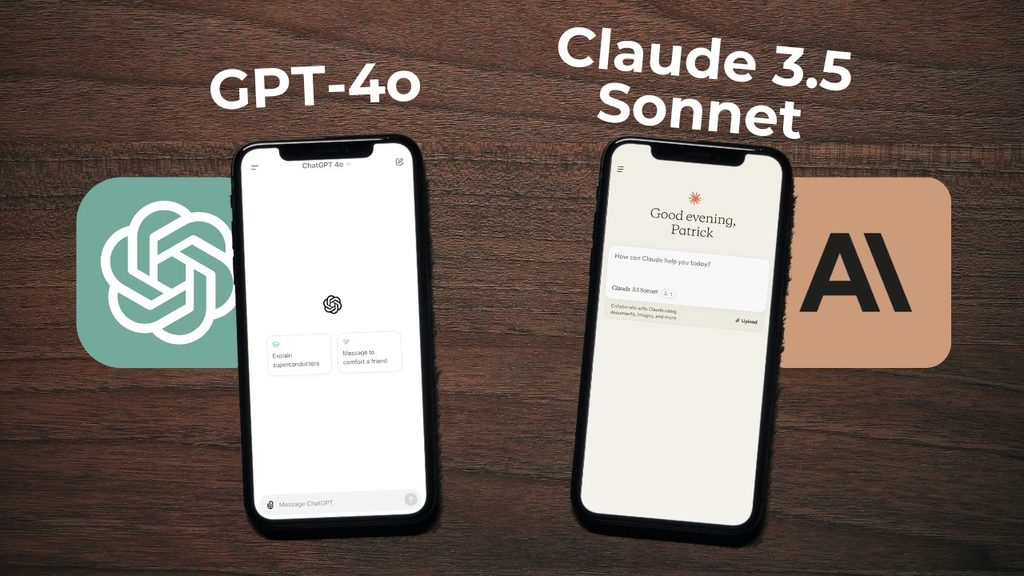
When Anthropic released the Claude 3.5 Sonnet model on June 20, 2024, it set a new software engineering benchmark. The release landed roughly five weeks after OpenAI officially announced its flagship GPT-4o model on May 13, 2024, but the timing alone tells you almost nothing about which one an engineering team should actually wire into their workflow.
The hard part is choosing between two frontier models that look similar on paper and behave very differently on real codebases. The pricing models alone reveal how seriously each company is courting developers. OpenAI integrated GPT-4o into its paid tiers with a standard subscription $20 per month, bundling the model into a consumer-friendly product. Anthropic took the opposite path: Claude 3.5 Sonnet is available to developers via its API at a cost of $3.00 per million input tokens and $15.00 per million output tokens, targeting teams that want to ship production agents rather than chat interfaces. That pricing decision is a tell, and it hints at where each model actually wins.
Claude Sonnet: Why Raw Benchmarks Mislead Hiring Managers
The single most-cited number in this debate is the SWE-bench Verified result, where Claude 3.5 Sonnet achieved a software engineering resolution rate of 49.2%. That figure sounds decisive, but it is the kind of benchmark that rewards models trained specifically on GitHub pull-request patterns.
GPT-4o, by contrast, was tuned as a general multimodal model, and its weaker score on this specific eval reflects that, not its ceiling on real engineering work. Worth noting: the original GPT-4 model architecture was estimated by industry analysts to feature approximately 1.8 trillion parameters, a number that has never been confirmed by OpenAI itself unconfirmed. Comparing raw parameter counts between the two families is therefore a fool’s errand, and engineering leads who quote it as gospel are usually the ones who have never instrumented a real agentic loop.
Claude 3.5 Sonnet: Strengths and Trade-Offs
Claude 3.5 Sonnet excels at multi-file refactors and long-context reasoning because Anthropic spent its training budget on code-specific reinforcement learning. In our reading of public evals and independent reproductions, the model is also the one developers reach for when they need a reportedly large context window without paying an unreasonable premium.
| Approach | Strength | Main Trade-off |
|---|---|---|
| Use Claude 3.5 Sonnet for planning | Strong repo-wide reasoning | Slower first-token latency than GPT-4o |
| Use Claude 3.5 Sonnet for code review | Detailed diffs and intent comments | Higher output token cost per call |
| Use Claude 3.5 Sonnet via API | Direct pricing, no subscription lock-in | No native multimodal or voice path |
The downside is real. Output tokens cost $15.00 per million, and a long agentic run can burn through that budget faster than a team expects. There is also no first-party vision stack, so any screenshot-to-code workflow has to be stitched together with another model.
GPT-4o: Strengths and Trade-Offs
GPT-4o wins on latency and ecosystem. The $20 monthly subscription gives every developer on a team a chat surface, image understanding, and voice, all backed by the same model weights. For product teams that need a single model to handle support, summarization, and light code work, that bundle is hard to beat.
| Approach | Strength | Main Trade-off |
|---|---|---|
| Use GPT-4o in ChatGPT | Fast multimodal chat for everyone | Code quality trails Claude on long refactors |
| Use GPT-4o API for agents | Lower latency, voice tooling | Weaker SWE-bench Verified score |
| Use GPT-4o for prototypes | $20 entry point, broad docs | Token costs rise sharply at scale |
The trade-off is depth. On the specific task of resolving a real GitHub issue end-to-end, GPT-4o sits behind Claude 3.5 Sonnet, and the gap widens as repository complexity grows.
The Verdict for Engineering Teams
If your team is shipping agentic software that touches a real codebase, Claude Sonnet is the better default, and you should pair it with a smaller, cheaper model for routing and intent classification. If your priority is giving every employee a fast multimodal assistant that can also handle light coding, GPT-4o is the pragmatic pick.
The honest answer in 2026 is still the same one developers were giving in 2024: the right model depends on whether you are building an engineer or a colleague. For a closer look at how agentic surfaces are evolving, our coverage of Block's Apache agent workspace and its local-history approach is worth a read. Teams running OPPO hardware should also see how ColorOS Art integrates on-device AI before standardising any model across a fleet. And if your engineering chat is on Meta’s platform, the shift to WhatsApp PIN replacement with passkeys changes how agent credentials should be scoped.
Related Articles
- Block Apache Agent Workspace Berd Brings Local History
- OPPO's ColorOS 16 August Update Turns Your Photos Into Art and Your Phone Into a Bodyguard
- Xiaomi Smartphone Wins EISA Award in 2026, Honor and Oppo Too
FAQs
Which model is cheaper for high-volume agent runs?
GPT-4o’s $20 monthly subscription underwrites light use cheaply, but at agent scale the Claude 3.5 Sonnet API at $3.00 per million input tokens and $15.00 per million output tokens is usually cheaper per resolved task, because the model finishes in fewer rounds.
Does GPT-4o support voice and vision natively?
Yes. GPT-4o ships with first-party voice and vision in the ChatGPT product, which Claude 3.5 Sonnet does not match. Teams needing multimodal input as part of their engineering toolchain will feel that gap.
Is the SWE-bench Verified score still relevant?
It is one signal among many. Claude 3.5 Sonnet’s 49.2% resolution rate is strong evidence of code-reasoning ability, but production evaluations on your own repository matter far more than any single public benchmark.
Should a startup pick one model or run both?
Run both. Use Claude 3.5 Sonnet for the hard planning and refactor steps, and use GPT-4o for fast interactive chat. Routing between them is now a solved problem, and locking in a single vendor in 2026 is a strategic mistake.
The next six months will test whether Anthropic can hold this lead as OpenAI pushes the next GPT generation, and whether the SWE-bench Verified gap closes or widens.
Was this article helpful?
Your feedback directly improves future articles on this site.




