Why does this matter? Because Shaye’s gambit exposes a tension that runs through every legacy horror franchise: the creatives who built the mythology are often the first to be cut out when the money people start asking whether the brand still moves the needle.
Without her intervention, Insidious 6 may have joined the growing graveyard of half-planned sequels that die in development limbo.
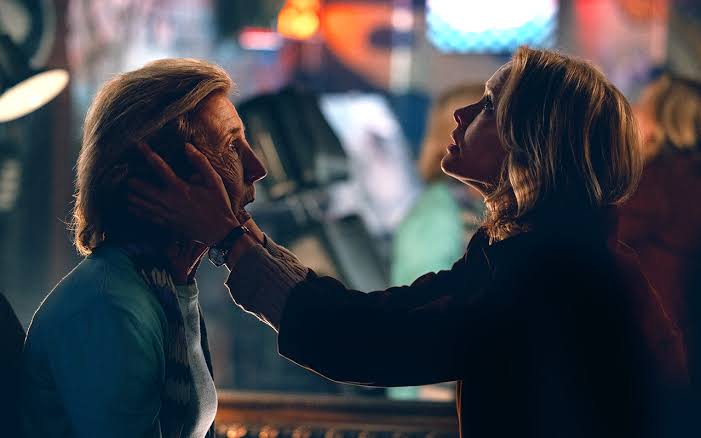
The Problem: A Franchise on Pause
Insidious had become one of horror’s most reliable mid-budget properties. Insidious: The Red Door — the fifth film, which served as Patrick Wilson’s feature directorial debut — grossed approximately $189 million worldwide against a $16 million production budget, according to verified box office figures.
That return on investment, north of 10x, should have made Insidious 6 a no-brainer. Instead, the project stalled. The reason? Inside Blumhouse Productions and Sony, the calculus on whether the franchise still commanded theatrical viability became a moving target — a pattern that has killed plenty of mid-budget horror sequels in the post-2023 marketplace.
The Root Cause: Franchise Fatigue vs. Built-In Audience
The argument against greenlighting Insidious 6 centred on a familiar industry worry: that the audience had moved on. Five films in fifteen years is a long runway, and Wilson’s pivot to directing signalled a possible natural endpoint.
The counter-argument, the one Shaye evidently made in her letter, is that Elise Rainier anchors a fanbase that doesn’t track Rotten Tomatoes scores — they track Shaye’s presence.
Horror franchises built around a single performer (think Tony Todd in Candyman or Brad Dourif in Chucky) survive precisely because the audience forms a parasocial bond with the actor, not the IP. Removing the linchpin often kills the property faster than any algorithm.
The Solution: A Star-Led Campaign Forces Sony’s Hand
Shaye’s letter to Vinciquerra worked because it reframed the question. Rather than asking Sony to gamble on an unproven concept, she argued that the brand was being abandoned at the exact moment Blumhouse’s track record showed franchise horror could thrive on lean budgets and built-in audiences.
The trade-off is real. Star-driven lobbying can rescue a project but it also sets a precedent where actors expect to influence corporate greenlight decisions — a power dynamic most studios actively resist.
There’s also no guarantee Insidious 6 matches the 10x multiplier of The Red Door; horror legs are notoriously hard to predict, and a soft opening could vindicate the executives who wanted to scrap it.
The Comparison: Three Paths Sony Could Have Taken
| Path | Upside | Downside |
|---|---|---|
| Continue with Shaye | Built-in audience, proven ROI track record | Star-power dependency, rising salary demands |
| Soft reboot with new cast | Fresh start, lower talent costs | Alienates legacy fans, loses brand equity |
| Streamer-only release | Cheaper rollout, data-driven marketing | Cedes theatrical prestige, weaker ancillary value |
The Outlook: What Shaye’s Win Means for Legacy Horror
Shaye’s victory is bigger than one sequel. It tells every mid-tier horror star that an old-fashioned letter to a CEO can still move the needle in an era of algorithmic decision-making. For Sony and Blumhouse, the lesson is that the franchise’s theatrical distribution leverage remains strongest when Elise Rainier is in the frame — especially after The Red Door proved the brand can still clear $189 million on a $16 million spend. For more detail, see OpenAI Blog.
If you build a horror franchise around a single performer, keep that performer central. If you shelve it, expect a fight. Frequently Asked Questions Was Insidious 6 actually scrapped before Lin Shaye intervened? Yes. The project was shelved internally before the actress sent her letter to Tony Vinciquerra, according to her own account. Who produces the Insidious franchise? The series is produced by Jason Blum’s Blumhouse Productions, with theatrical distribution handled by Sony Pictures Releasing or Universal Pictures depending on the installment. How much did Insidious: The Red Door make worldwide? Approximately $189 million globally on a $16 million budget, per verified box office reporting. Who directed Insidious: The Red Door? Patrick Wilson, making his feature-length directorial debut. The film opened on July 7, 2023. For more detail, see ArXiv AI.
What motivated Lin Shaye to write a letter to Sony’s CEO?
Lin Shaye was motivated by her passion for the “Insidious” franchise and her desire to see “Insidious 6” continue production. She felt strongly about the project and wanted to express her frustration over its cancellation, believing that the film had potential and a dedicated fan base.
How did Sony’s CEO respond to Lin Shaye’s letter?
Sony’s CEO, Tony Vinciquerra, took Lin Shaye’s letter seriously and recognized her commitment to the franchise. Her passionate plea contributed to a reevaluation of the project’s status, ultimately leading to the revival of “Insidious 6.”
Related Articles
Was this article helpful?
Your feedback directly improves future articles on this site.