MEX-W
 ARG-W
 CRY0
 NEW2
 HUL1
 BRE1
 LIV2
 BHA0
 MAN0
 BOU3
 ATA4
 FRO3
 GEN1
 VEN0
 MON0
 LILL1
 UDI
 MIL
 BAR
 RMA
 Mohun Bagan
 Chennaiyin
 PSG
 Lyon
 Sevilla
 Osasuna
 NED
 OMA
 CDN
 SCB
 RAFC
 FCF
 NGA148
 UGA147/9 (20 ov, target 149)
 ATH4
 GET0
 INT2
 FIO1
 CHU2
 PFC3
 LIMWn
 NW-W
 NCWmn
 FsWm
 NWEST22/3 (3.1/20 ov, target 181)
 NCAPE180/3
 BOL137/9 (20 ov)
 TITNS137/8
 NZ-A317
 IND-A113 & 106/2 (36 ov)
 SYL280/2 (84 ov)
 KHU
 MYMS465/7d
 CHATT134/2 (40 ov)
 DHA521
 RAJ103/6 (26 ov)
 RAN402
 BAR179/3 (56.1 ov)
 BRB
 MOW
 TOK
 MIS
 SIKM
 NAGA
 JHK
 DELHI
 ODSA
 SVCS
 CGR
 AP
 GMB112/9
 LES109 (19.5/20 ov, target 113)
 MOZ110/7 (19/20 ov, target 110)
 ZMB109/9
 IND-W328/6
 ZIM-W207 (48.5/50 ov, target 329)
 PAK243/9 (47.1/50 ov, target 242)
 ENG241
 UAE244/8
 KER0
 MCFC0
 TSG0
 B040
 CEL0
 BET0
 Goztepe2
 Çorum FK0
 BIR1
 CHA0
 AZ
 TWE
 Atlético1
 Deportivo0
 Lazio2
 Parma1
 Lens2
 Paris FC1

Yashasvi Jaiswal got fined by the ICC after a flare-up in the Colombo Test, and former India players like Cheteshwar Pujara didn’t hold back—insisting the opener should’ve kept his cool.
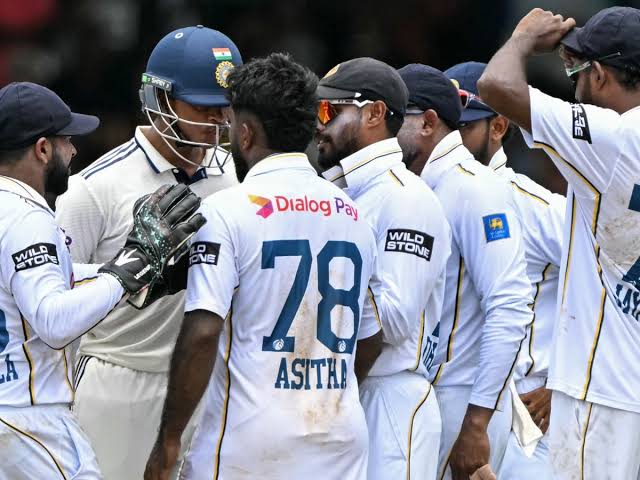
The moment, captured on Day 1 at Sinhalese Sports Club Ground, instantly sparked talk of a “headbutt.” Yet multiple replays suggested a shove or at best slight contact with his helmet still on.
That cocktail of anger and ambiguity, plus a disciplinary call, has fans and teams asking tough questions about conduct, context, and what comes next.
What exactly happened to Yashasvi Jaiswal in Colombo?
The clash went down during the second Test between India and Sri Lanka at the Sinhalese Sports Club Ground in Colombo, on Day 1. The flashpoint arrived in the 17th over of India’s first innings, right after Jaiswal was dismissed for 45 off 53 balls, and then things boiled over with Asitha Fernando.
Fernando’s delivery ignited a heated reaction, and the argument escalated into physical contact. Sri Lanka captain Dhananjaya de Silva stepped in to separate them, while Devdutt Padikkal also tried to pull Jaiswal away as things simmered down.
Why did ex-cricketers like Pujara call it unacceptable?
Cheteshwar Pujara didn’t mince words on Sony Sports Network, saying “you need to control your emotions” and describing the body contact as “not acceptable on the field.” For the old guard, the problem isn’t just what was said or felt in the heat of the moment—it’s the optics, the escalation, and the fact that once a helmet’s on and contact happens, you’re suddenly in a disciplinary gray zone.
ESPN framed it as a confrontation that looked more like a shove or slight head contact than a deliberate headbutt. Still, the criticism stuck: frustration might be understandable, but you’ve got to manage your reactions.
What did the ICC decision change for Yashasvi Jaiswal and Sri Lanka?
The ICC hit both Jaiswal and Asitha Fernando with a 25 per cent match-fee fine apiece, and handed each 1 demerit point under Level 1 of the ICC Code of Conduct.
Here’s the thing: the match referee was set to review the incident before any further disciplinary decision, so this wasn’t the final chapter. That review process matters—it can shape how future incidents get treated, possibly triggering additional charges depending on what the referee sees. For now, the fine and demerits gave official weight to an argument that had already split ex-players and fans.
What happens next for India’s opener and Sri Lanka’s captain?
That review step is where the real impact sits. The referee’s follow-up could keep the incident as simple Level 1 conduct, or it could open the door to harsher scrutiny.
For Jaiswal, the public reaction is already part of the story—he defended himself on social media, saying nobody knows what was actually said to him out in the middle.
For teams, the lesson is practical: in Test cricket, a single over can’t erase the precedent set by an on-field flashpoint. India’s camp will want cooler decision-making under pressure, while Sri Lanka will want clear lines around confrontation management.
Related Articles
- SL vs IND 2026: Aakash Chopra blames Rahul for Jaiswal run-out
- Jaiswal run-out ‘Rahul’s fault’ explains how momentum flipped
- Jasprit Bumrah Injury Update 2026: Top Fear and Best Timeline
FAQs
Did the incident look like a deliberate headbutt?
The confrontation came across more as a shove or slight head contact than a deliberate headbutt, with Jaiswal’s helmet still on.
What punishment did the ICC impose after the Colombo clash?
The ICC slapped a 25% match-fee fine on both players and gave each 1 demerit point under Level 1 of the Code of Conduct.
Did anyone else try to separate the players?
Yes. Sri Lanka captain Dhananjaya de Silva stepped in, and Devdutt Padikkal also tried to pull Jaiswal away during the separation.
Is the disciplinary process over?
The match referee was slated to review the incident before any further disciplinary decision, so the process wasn’t treated as fully closed right away.
Yashasvi jaiswal you: Bottom line
Yashasvi Jaiswal may have had his reasons for reacting, but the ICC action and Pujara’s “control your emotions” message show how fast frustration turns into consequence in Test cricket. Stay tuned for more on Yashasvi Jaiswal—and the fallout from this one.
Was this article helpful?
Your feedback directly improves future articles on this site.