UAE168/3 (37.5/50 ov)
 NED
 PAK
 ENG7/1 (2.2/50 ov)
 Inter Milan
 Fiorentina
 Churchill
 Punjab FC
 NGA
 UGA
 Athletic
 Getafe
 MEX-W
 ARG-W
 C Palace
 Newcastle
 Hull
 Brentford
 Liverpool
 Brighton
 ATM1
 DEP0
 LAZ2
 PAR1
 RCL2
 PAR1
 MOUNT6/0 (4.5/50 ov)
 TUSK
 ROCKS
 EAGLE65/0 (8.4/50 ov)
 NZ-A317
 IND-A113 & 106/2 (36 ov)
 SYL
 KHU
 MYMS299/4 (87 ov)
 CHATT
 DHA293/3 (84.1 ov)
 RAJ
 RAN320/5 (80 ov)
 BAR
 BOL
 TITNS
 EASTN
 SA-EM
 KZNIN
 WPR
 NWEST
 NCAPE
 SIKM
 NAGA
 JHK
 DELHI
 GMB93/9
 ZMB97/2 (11.4/20 ov, target 94)
 LES62
 MOZ19
 NAM321/6
 IRE290 (47.3/50 ov, target 322)
 Man United
 Bournemouth
 Atalanta
 Frosinone
 RIY2
 TAA1
 CHE0
 TOT2
 VAL1
 VIL2

Why does one finger-injury recovery turn into a selection headache? India captain Shubman Gill has reached the opening Test at Galle International Stadium, Galle, starting August 15, 2026, but his comments suggest the bigger tension is inside the XI shortlist. That matters because the first Test in a two-match series can set the tempo for everything that follows across the World Test Championship 2025-27 push.
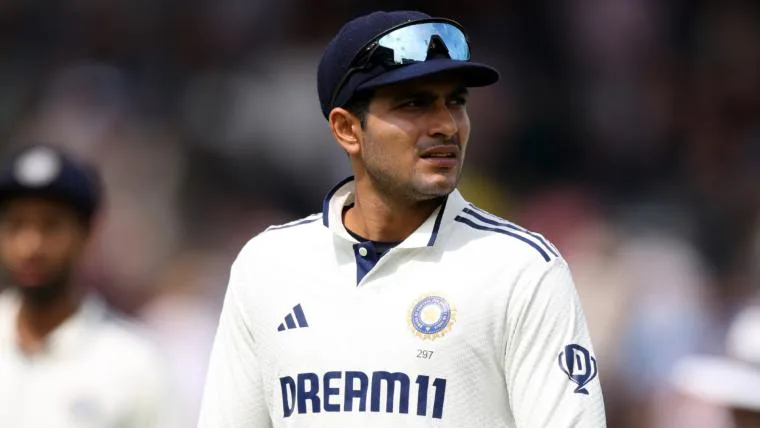
Problem: Gill’s “tough call” signals a high-stakes XI battle
Gill didn’t just talk about conditions—he framed selection as a genuine contest. According to Crictracker, Gill described the decision between Gurnoor Brar and Prasidh Krishna as “a tough call,” pointing to different strengths for the role India needs on day one in Galle. The crux is pace-vs-bounce thinking with the new ball: Gill also indicated that Prasidh Krishna would likely share the new-ball burden with Mohammed Siraj, which pushes the attack plan in a specific direction.
This is where the problem becomes bigger than one match. India’s squad composition includes a blend of experience and competition: Yashasvi Jaiswal, Rishabh Pant, Sai Sudharsan, Dhruv Jurel, Ravindra Jadeja, Kuldeep Yadav, Manav Suthar, Mohammed Siraj, Prasidh Krishna, Gurnoor Brar, Devdutt Padikkal, Saransh Jain, and Auqib Nabi. In that mix, a small bowling-role tweak can ripple into batting order balance, field placements, and even how long spinners are kept for later overs.
Worth noting: Gill’s own fitness story adds pressure to selection clarity. He suffered an impact injury to his right ring finger on August 6, 2026, missed the first two days of the warm-up match, and later returned after being declared fit, with India’s spin-bowling coach Sairaj Bahutule saying Gill was “absolutely fine” and training after the precautionary rest period. If the captain’s body is ready, the coaching staff’s margin for error on XI selection shrinks.
Root cause: balancing old-ball extraction, new-ball burst, and player development
The root cause is a classic Test-team dilemma: do you pick for “what the pitch offers early” or “what your bowling unit can develop through the series”? Gill’s framing of Brar’s old-ball value versus Krishna’s current form points to that trade-off directly. He said Brar is excellent with the old ball because he can extract bounce at a good pace, while Krishna has been bowling well of late in the warm-up work India watched.
But selection doesn’t happen in a vacuum. India’s Test squad has also seen adjustments from injury concerns. Jasprit Bumrah was ruled out in one report, while other reports said he and Sai Sudharsan were included subject to fitness clearance from the BCCI Centre of Excellence (CoE). Meanwhile, Saransh Jain has joined the squad as a replacement in the wider reshuffle, which means bench depth may be part of the captain’s tactical thinking from day one.
That’s why Gill’s statement about a likely new-ball pairing—Prasidh Krishna with Siraj—isn’t just a throwaway line. It signals that India may want two bowlers to attack the seam-and-swing envelope early, then shift Brar’s role into a phase where bounce becomes harder to smother.
Solution options (with downsides)
| Selection angle | Why it helps | Trade-off / downside |
|---|---|---|
| Play Gurnoor Brar as the specialist old-ball bounce option | Converts overs later when batsmen tire and footwork tightens | If early movement is limited, Brar can look “late” in impact and leak runs before the plan kicks in |
| Stick with Prasidh Krishna for new-ball responsibility alongside Siraj | Uses a bowler with proven Test wicket output; aligns with Gill’s form reading | If he doesn’t get enough assistance, India risks losing penetration early and over-relying on spinners |
| Choose based on conditions first (pace/bounce reading) and accept broader development costs | XI feels pitch-specific, increasing odds in Galle | If conditions don’t match expectations, the “right role” logic can fail and selection looks reactive |
Performance outlook: what to watch in Galle before the decision hardens
In a first Test, momentum often depends on who controls the “first 20 overs” phase—before the game settles into partnerships and attrition. Gill’s hints effectively tell us what that control could look like. If Krishna is given the new ball with Siraj, the early plan is likely to be pressure through attacking lengths and testing timing, rather than waiting for bounce to arrive later.
That makes Galle’s surface reading critical. The captain’s emphasis on old-ball bounce suggests the pitch might give purchase after the shine dulls. If that happens, Brar’s bounce role becomes valuable because batsmen defending on the back foot can misjudge the carry. If it doesn’t, Krishna’s wicket-taking runway becomes the safer bet—especially given his 7 Tests and 25 wickets already as a benchmark.
However, the bigger selection test may be how India manages workload across the two-match tour. The second Test is scheduled for August 23-27, 2026 at SSC, Colombo, so team management will also think beyond one pitch. At the same time, a first-Test XI that “saves” someone for Colombo can backfire if the series starts badly.
From a strategy standpoint, Gill’s captaincy tone is clear: selection is not just about picking the fastest bowler or the most recent performer. It’s about sequencing—who bowls when the ball does what it needs to do.
Verdict: if XI debate is between Brar and Krishna, choose role clarity
Here’s the thing: Gill has practically drawn the roadmap himself. If India’s pitch read on Galle points to seam lessening and bounce increasing as the ball ages, the logic for Brar’s old-ball extraction strengthens. If the opening hour demands immediate penetration, the captain’s own suggestion that Prasidh Krishna may take the new ball alongside Siraj becomes the cleaner path.
Worth noting: Gill’s injury comeback is already handled, and his own “absolutely fine” status has been publicly supported by the spin-bowling coach. So the team’s real risk is not batting readiness—it’s tactical fit. If X equals “new-ball impact matters most,” choose Krishna + Siraj; if X equals “bounce becomes the match lever,” choose Brar to own the old-ball phase.
Related Articles
- Gill and Jaiswal get in their drills ahead of Sri Lanka Tests (2026)
- Sai Sudharsan ruled out of the Sri Lanka Test series in 2026: what next?
- Who is Shubman Gill Wife in 2026? Is it official with Sara Tendulkar?
FAQs
What did Shubman Gill say about selection ahead of the 1st Sri Lanka Test?
Gill indicated the choice between Gurnoor Brar and Prasidh Krishna is a “tough call,” explaining that Brar can extract bounce as the ball gets older, while Krishna has been bowling well of late and may share the new ball with Mohammed Siraj.
Why is the Galle Test XI decision so important?
The opening Test often sets how India structures bowling phases and batting tempo. A wrong XI balance—new ball vs old ball—can change how quickly the match tilts into pressure periods.
How does Gill’s finger injury affect these decisions?
Gill suffered an impact injury to his right ring finger on August 6, 2026, missed part of the warm-up, and returned after being declared fit. The coaching staff, including Sairaj Bahutule, said Gill was training after the precautionary rest period, so selection can focus on roles rather than his availability.
Is this series a single Test or multiple matches?
It’s a two-match Test series. The first Test starts August 15, 2026 at Galle, and the second is scheduled for August 23-27, 2026 at SSC, Colombo.
Was this article helpful?
Your feedback directly improves future articles on this site.