RIY1
 TAA0
 LAZ0
 PAR0
 RCL0
 PAR0
 MEX-W
 ARG-W
 ATM0
 DEP0
 MTL0
 NSH1
 ADO0
 HEE0
 Mirassol0
 São Paulo0
 UAE
 NED
 PAK
 ENG
 IND-W
 ZIM-W
 GMB
 LES
 MOZ
 ZMB
 Inter Milan
 Fiorentina
 Churchill
 Punjab FC
 NGA
 UGA
 CHE0
 TOT2
 VAL1
 VIL2
 DOR1
 SGE0
 NAP3
 ROMA3
 NZ-A135/3 (41 ov)
 IND-A113
 SYL
 KHU
 MYMS299/4 (87 ov)
 CHATT
 DHA293/3 (84.1 ov)
 RAJ
 RAN320/5 (80 ov)
 BAR
 DEN
 PNG
 NAM321/6
 IRE290 (47.3/50 ov, target 322)
 NZ180/5
 IND181/6 (19.5/20 ov, target 181)
 Vitória0
 Athletico-PR0
 VEN0
 JPN1
 ZAM0
 FRA1
 Athletic
 Getafe
 C Palace
 Newcastle
 Hull
 Brentford
 Liverpool
 Brighton
 Man United
 Bournemouth
 Atalanta
 Frosinone
 KHO0
 ETT3
 RAC2
 ESP1
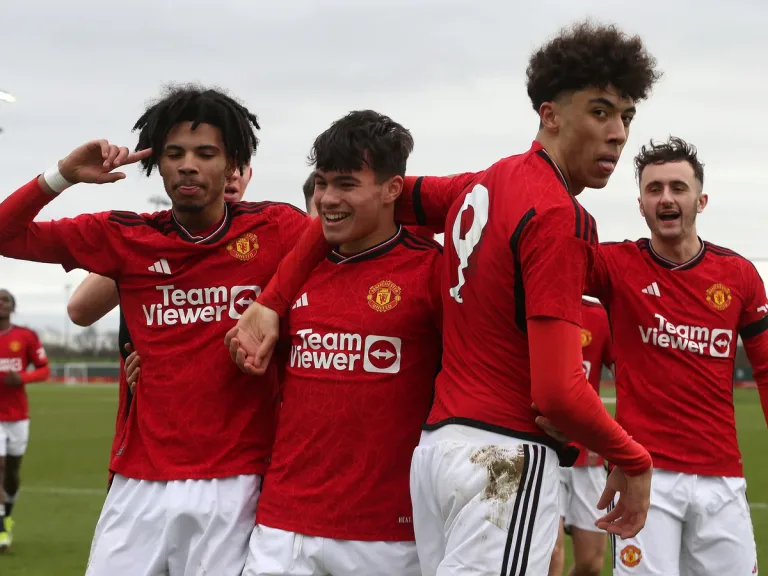
Inside Carrington’s high-tech sports science lab, data analysts track heart-rate variability and cognitive loads of teenage prospects. This blend of biomechanical metrics and psychological coaching shows how Manchester United is reshaping elite athlete development—moving well beyond traditional pitch-based training.
Shaping Future Stars Through Data and Tradition
Manchester United’s academy isn’t just successful by accident. The club ranks as England’s most productive academy over the last 10 years, according to Premier League data. That success stems from an 85-year legacy of youth development, guided by Head of Academy Nick Cox.
Here’s what makes it work: they’ve merged historical values with modern analytics. This approach has kept at least one academy graduate in every matchday squad since 1937—a staggering record that shows the club’s unique cultural identity. It’s the kind of consistency you’ll rarely find when you look at the most successful football institutions in history.
Tactical Integration Under Erik ten Hag
Erik ten Hag’s first team serves as the ultimate testing ground for academy prospects. Players like Alejandro Garnacho, Kobbie Mainoo, and Tyler Fredricson aren’t just filling spots—they’re integral parts of a tactical system that demands intensity and technical skill.

This pathway from academy to senior squad matters for sustained Premier League success. The academy’s won the FA Youth Cup 10 times across 14 final appearances, so the talent pipeline is clearly working. Worth noting: the academy traces back to the 1930s and the Manchester United Junior Athletic Club (MUJAC).
As the club moves forward, they’re blending academy graduates with international signings. That balance is the foundation of their long-term strategy, making sure the next generation of legends—following Paul Scholes and David Beckham—stays ready to take the pitch.
FAQs
How long has the academy been producing talent?
The academy’s roots go back to the 1930s with the Manchester United Junior Athletic Club. It was formally established in 1998 after youth football reorganization in England.
Which players are currently involved in the first team?
Academy graduates like Alejandro Garnacho, Kobbie Mainoo, and Tyler Fredricson are actively playing in the first-team squad under Erik ten Hag.
What is the academy’s most impressive record?
The club has featured at least one academy graduate in every single matchday squad since 1937. It’s a record that’s unmatched in England.
What is the primary focus of Manchester United’s Youth Academy?
The Youth Academy develops young talent by combining traditional coaching with modern data-driven techniques.
How does data science play a role in player development at the academy?
Data science tracks player performance and development metrics. Coaches use this information to tailor training programs for each player’s potential.
What age groups does the Youth Academy cater to?
The academy works with players aged 8 to 18, providing structured skill development at different growth stages.
Are there opportunities for players to advance to the first team?
Yes. The academy actively promotes talented players to the first team, with a proven track record of successfully integrating youth players into the senior squad.
How does the academy balance tradition with modern techniques?
They blend their rich history and values with innovative training methods. This ensures players get well-rounded development both on and off the pitch.