If you’ve ever had to shell out for a brand-new inverter just because you upgraded your battery, V-Guard just solved your problem. On April 15, 2026, V-Guard Industries launched what it claims is India’s first Multi-Ion Inverter — and the core idea is refreshingly simple: one inverter that works with every battery type, now and in the future.
Table of Contents
V-Guard’s Problem It’s Actually Solving
Here’s a frustration most Indian households know too well. You buy an inverter, it works great for years — but the moment you want to switch from an old Lead-Acid battery to a modern Lithium-Ion one, your inverter becomes obsolete. Not because it stopped working, but because it just wasn’t built for the new battery chemistry.
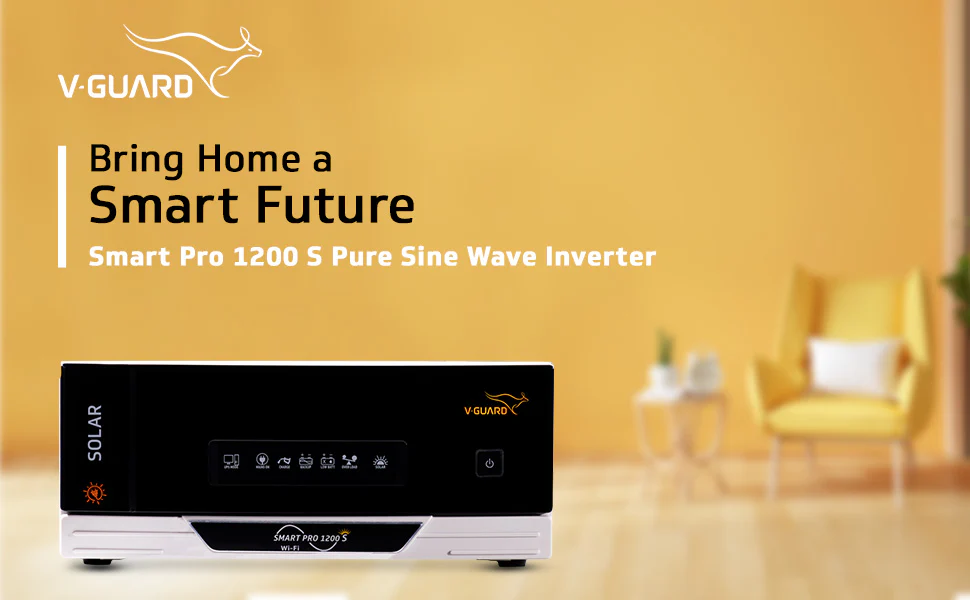
That’s a lot of unnecessary spending. V-Guard’s Multi-Ion Inverter tackles this head-on.
As Lithium-Ion battery technology becomes mainstream in home energy backup — offering faster charging, longer lifespan, and better safety — the need for a truly universal inverter has never been greater.
What Makes the Multi-Ion Inverter Different?
| Feature | What It Means for You |
|---|---|
| Universal Battery Compatibility | Works with Lead-Acid and Lithium-Ion batteries |
| Smart Auto-Detection | Detects connected battery type and self-optimises |
| Future-Ready Design | Pre-engineered for V-Guard’s upcoming Multi-Ion battery |
| Investment Protection | No need to replace the inverter when upgrading batteries |
| Lower Total Cost of Ownership | One inverter serves multiple battery upgrade cycles |
The inverter doesn’t just passively support multiple battery types — it actively detects the connected battery chemistry and automatically adjusts its internal parameters for peak efficiency. That’s the smart adaptation piece that sets it apart from conventional models.
What V-Guard’s MD Has to Say?
Mithun K Chittilappilly, Managing Director of V-Guard Industries, put it plainly: consumers deserve the freedom to upgrade their battery without the burden of replacing their inverter. That’s exactly the gap this product fills — and it’s a gap that’s only going to grow as India’s home energy landscape shifts.
V-Guard has also confirmed it’s developing its own next-generation Multi-Ion battery chemistry, meaning this inverter is already engineered to be compatible with it when it launches.
Why This Matters Right Now?
India’s power backup market is at an inflection point. More households are moving toward Lithium-Ion batteries for their efficiency and longevity, but the inverter ecosystem hasn’t kept up — until now. A product that future-proofs your investment is rare in this category, and at a time when energy costs and smart home adoption are both rising, the timing couldn’t be better.
Want to understand how home inverters work and which type suits your needs? Read our in-depth inverter buying guide on TechnoSports before making a decision.
The V-Guard Multi-Ion Inverter is available now across authorised V-Guard dealers and retail networks pan-India. Pricing hasn’t been officially disclosed, so check with your nearest dealer for the latest figures.
Also read: Best Home Inverters in India 2026 — TechnoSports
FAQs
Q: Can the V-Guard Multi-Ion Inverter work with my existing Lead-Acid battery?
Yes, it is fully compatible with conventional Lead-Acid batteries and automatically optimises itself based on the battery chemistry it detects.
Q: Will I need to buy a new inverter when I upgrade to a Lithium-Ion battery in the future?
No — that’s precisely what the Multi-Ion Inverter is designed to prevent, saving you the cost and hassle of replacing a perfectly functional unit.