The World Cup is all about numbers. Goals scored, points accumulated, knockout stages reached. In marketing, the same logic applies: which brand has the biggest market capitalisation, and who’s selling the most?
At the 2026 World Cup, that competition is taking place across advertising platforms, storefronts, social media channels, and every square metre of kit worn by competing nations. Nike and Adidas are spending extraordinary sums to win the attention of billions of football fans — and the battle between them has never been more visible.
It always comes back to the numbers.
Table of Contents
The Adverts: Hollywood Budgets, A-List Casts
Both brands have produced major commercial campaigns for 2026 that look more like Hollywood blockbusters than traditional sports advertisements.
Nike’s campaign — Rip the Script — features Kylian Mbappé, Erling Haaland, Cristiano Ronaldo, and LeBron James among its cast. Adidas’ offering — Backyard Legends — counters with Lamine Yamal, Jude Bellingham, Lionel Messi, and Zinedine Zidane. There is even an AI-generated David Beckham making an appearance.
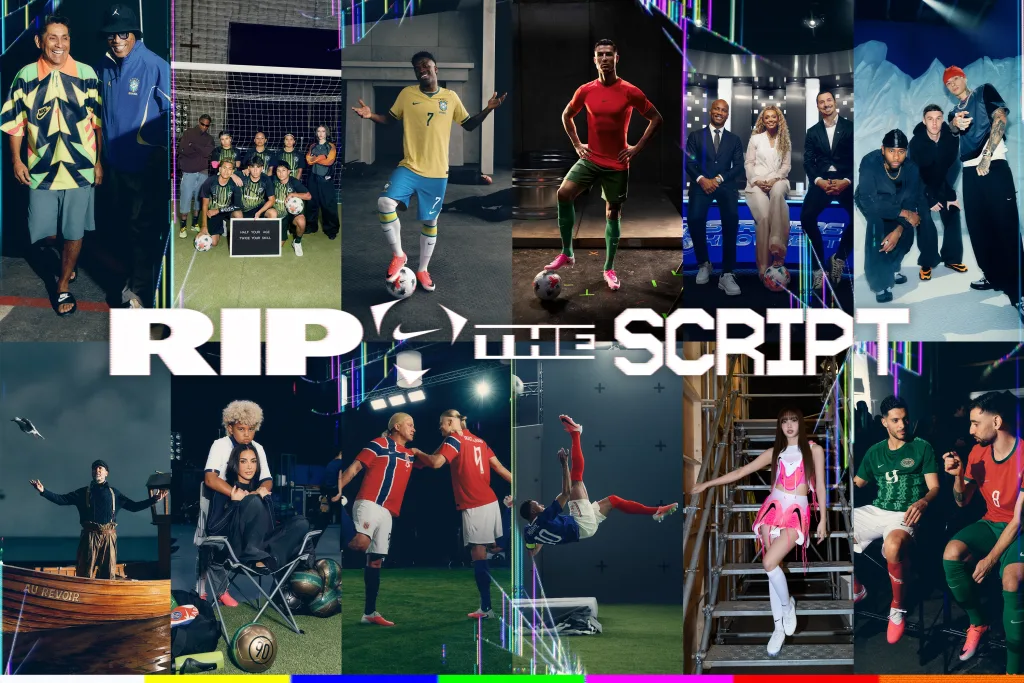
The costs reflect the ambition. Adidas reportedly spent £50 million producing their campaign, according to reports. Neither company will publicly disclose exact figures — both declined when asked — but budgets of this scale are now simply the cost of entry for major World Cup advertising.
The YouTube Verdict (So Far)
If YouTube views are the measure, there is a clear early winner.
| Brand | Campaign | YouTube Views (at time of writing) |
|---|---|---|
| Nike | Rip the Script | 76 million |
| Adidas | Backyard Legends | ~7 million |
Nike’s digital reach has been dramatically larger in pure viewing numbers. But the brand itself is measured about what that means.
Camilo Andrade, vice-president and general manager of Nike Global Football, said: “What has changed is the speed and shape of culture. In the digital age, stories travel faster, fragment faster, and get reinterpreted faster. That means the old model of one polished film doing all the work is no longer enough.”
“With Rip The Script, we’ve built something broader: a football universe that lives both digitally and in real life. Success was never going to be measured only by how many people watched a film, but rather how we open the world up to give fans, players and creators something they could interpret, remix and take further themselves. When that starts happening, you know the work is moving beyond advertising and becoming part of football culture.”
Florian Alt, Adidas’ vice-president of marketing communications, framed his brand’s approach differently: “Our campaign, Backyard Legends, featured a scene familiar to anyone who has played football — a local pitch, an unbeatable crew and some stories that become legends. We meet consumers where they are — whether they are watching on TV, following their favourite athletes on social media, or engaging with the culture created by the sport.”

On the Ground: Adidas Ahead in New York City
Beyond the digital battle, the physical presence of both brands on the streets of the host nation tells its own story — and in New York City, Adidas appears to have made the stronger early impression.
In Soho, the contrast between the two giants is striking. Adidas and Nike’s flagship stores sit opposite each other on the same street, but only one feels fully immersed in the tournament. Adidas has covered its store in World Cup branding, with football shirts and tournament merchandise front and centre. Across the street, Nike’s focus remains, understandably, on the New York Knicks following their recent NBA title success — a different sporting priority absorbing the American brand’s retail attention.
The difference extends beyond those two stores. Around Manhattan, Adidas branding has been hard to miss — from dedicated World Cup pop-ups to promotional stands and advertising across the city. Its activations have felt more ambitious, creating a stronger sense of tournament presence.
Part of that is connected to how Adidas has positioned its football products within fashion and streetwear culture.
Shirts as Identity: Fashion, Diaspora and Cultural Currency
Adidas’ recent kit designs have found an audience that extends well beyond traditional football circles. Away shirt designs — particularly for nations with significant diaspora communities in the host country — have become statements of cultural identity as much as team merchandise.

Shirts such as Japan’s and Curaçao’s have resonated strongly with younger fans from football diaspora communities, blurring the line between football apparel and everyday fashion. On the streets of New York and other major cities, those shirts appear more visible than Nike equivalents — even given Nike’s prominent role in producing the United States national team’s jersey.
Sports brand strategist James Kirkham explains the dynamic: “Football and fashion are now completely entwined. Whether players are stepping out in Hugo Boss, or whether it’s Jude Bellingham with Gucci or whatever, that crossover is everywhere. It’s expected and normal — and football shirts are at the heart of it.“
“It’s very normal that young fans follow at least four different nations — they definitely pursue individual players and that translates into shirt sales.”
Kit Count: Who Dresses More Teams?
When it comes to World Cup kits, Adidas holds a narrow edge over its rival.
| Brand | Number of World Cup 2026 Teams |
|---|---|
| Adidas | 14 |
| Nike | 12 |
| Puma | 11 |
| Other (New Balance, etc.) | Remainder |
Fourteen nations wearing Adidas kits versus twelve in Nike — a marginal but meaningful advantage in terms of visibility across the entire tournament.
Boot Deals: Where the Real Money Is
Kit contracts are significant, but boot endorsements — or shoes, in North American parlance — represent some of the most lucrative individual sponsorship deals in sport.
Both Nike and Adidas invest heavily in signing the biggest names to footwear contracts, and the pay cheques reflect the scale of those players’ global commercial value.

According to Bloomberg, Cristiano Ronaldo holds a decade-long deal with Nike worth almost $18 million per year — one of the most valuable individual endorsement relationships in the sport’s history. Other elite players carry similarly substantial arrangements with both brands.
These deals matter because they ensure that regardless of which team’s shirt a player wears on the pitch, a specific brand’s logo remains on their boots for 90 minutes — broadcast to billions of viewers around the world.
The History: Adidas and the World Cup
Adidas has a unique historical connection to the World Cup that no competitor can replicate. They have been associated with the tournament since 1970, when they created the iconic Telstar match ball for the Mexico edition — the ball that defined how the sport looked on television for a generation. That relationship has continued through every tournament since.
Why Football Still Dominates Everything
Both brands are emphatic about why the World Cup remains the defining commercial opportunity in global sport.
Adidas’ Alt: “The FIFA World Cup is the biggest sporting event on the planet so it’s very important to us as a sports brand to perform at our best.”
Nike’s Andrade: “When the biggest football tournaments begin, the data is always a reminder of the same thing: football is still the world’s clearest universal connector. Billions versus millions. The world pauses when these moments start. So in pure global scale, emotional intensity and cultural reach, the football remains in a world of its own.”
That language points to something both brands understand deeply: the World Cup is not just a sporting event. It is a cultural moment that reaches audiences no other event comes close to matching.
The Nostalgia Factor and the New Media Reality
Kirkham draws a broader picture of how advertising itself has changed — and how both brands are navigating the shift.
“We talk about those older ads like long lost friends, like films or TV shows — we have nostalgia around them. Nowadays it is completely normalised that we’re seeing Hollywood actors like Timothée Chalamet driving the cab in the Adidas spot.”
The shift from single-film campaigns to multi-platform universe-building reflects how content is consumed in 2026.
“Everyone says TV is dead but the reality is that TV is everything. TV is everywhere. Now it’s like we have a million micro TVs. With Instagram reels, YouTube shorts, TikTok and so on, we have a clip culture. It used to all be about duration and watch time. I think it’s different now. You get something passed on to you and you’ll probably just see parts of it.”
For both brands, that means the 76 million views Nike has accumulated on YouTube are only one dimension of a far larger campaign. Adidas’ more fashion-forward, street-level activation strategy represents a different theory of success — one measured in cultural penetration rather than video view counts.
Kirkham captures the broader cultural context: “Football is the ultimate common denominator. It sits right there with music. It’s the ultimate connective tissue. It can be incredibly uniting, but at the same time it sits at the heart of popular culture. Right now music, fashion, basketball, gaming and design — they all sit around and orbit what football is.”
Who’s Winning? It’s Too Early to Tell
Both Nike and Adidas are ultimately businesses. Market share and revenue sit at the heart of everything they do. But measuring who is selling more sportswear as a result of their World Cup investment will not be possible until long after the trophy has been presented in Budapest on 19 July.

What is clear from the opening stage of the tournament is that both brands are fighting harder, spending more, and operating across more platforms than at any previous edition. Nike has the digital numbers. Adidas has the New York streets and the fashion credibility. Both have the elite players.
It always comes back to the numbers. And right now, those numbers are still being written.
FAQs
How much did Adidas spend on their World Cup 2026 campaign?
Adidas reportedly spent £50 million producing their Backyard Legends campaign, according to reports. Neither Adidas nor Nike publicly disclosed exact spending figures when asked.
Who has more YouTube views — Nike or Adidas at World Cup 2026?
Nike’s Rip the Script campaign had accumulated 76 million YouTube views at the time of writing, compared to approximately 7 million for Adidas’ Backyard Legends. However, Nike itself cautions that view count is only one dimension of campaign success.
Which brand dresses more teams at World Cup 2026?
Adidas kit 14 nations at the 2026 World Cup, narrowly ahead of Nike’s 12. Puma supplies 11 teams, with New Balance and other brands making up the remainder.
What is Cristiano Ronaldo’s Nike endorsement deal worth?
According to Bloomberg, Ronaldo holds a decade-long deal with Nike worth almost $18 million per year — one of the most valuable individual endorsement relationships in the history of the sport.
How has Adidas used fashion to gain advantage at World Cup 2026?
Adidas’ kit designs — particularly away shirts for nations like Japan and Curaçao — have resonated strongly with younger fans in diaspora communities, becoming cultural statements as much as team merchandise. This approach has helped Adidas blur the line between football apparel and everyday streetwear fashion.