NAM321/6 (50 ov)
 IRE
 AVL
 MNC
 RAY
 ELC
 GMB
 ZMB
 NGA
 LES
 CAG
 BOL
 COMO
 SAS
 FCA
 FCU
 KOE
 S04
 MOZ19
 UGA23/0 (0.5/20 ov, target 20)
 NZ180/5
 IND181/6 (19.5/20 ov, target 181)
 Ipswich1
 Nottm Forest1
 Alavés1
 Málaga1
 WA105/3 (18.5/50 ov, target 372)
 NSW371/8
 DEN
 KUW
 KENYA
 QAT
 SWD-W
 EPR-W
 TTN-W
 WPR-W
 BOR
 WAR15/1 (2.5/20 ov)
 LIONS
 Limpo21/1 (2.5/20 ov)
 NZ-A135/3 (41 ov)
 IND-A113
 DHA293/3 (84.1 ov)
 RAJ
 MYMS
 CHATT
 RAN320/5 (80 ov)
 BAR
 MEX-W
 ARG-W
 UAE
 NED
 PAK
 ENG
 IND-W
 ZIM-W
 AFG170/3 (34.3/50 ov, target 170)
 ZIM169
 CHE0
 DYI0
 CHO1
 QIN0
 HEN1
 BEI0
 LIA1
 ZHE0
 QWC1
 YUN0
 SHX0
 Shanghai Shenh0
 TIG0
 SHP0
 WTT1
 SHT3
 M05
 SVW
 RBL
 ELV
 Torino3
 Monza2
 Brest1
 Nice2
 Stuttgart2
 Gladbach3
 Al Ahli4
 Al Khaleej1

India’s sub-4-meter SUV market is no longer a niche—Volkswagen has now formally cleared the path to fight for it with a fresh investment of ₹275 crore, approved for a new local project. That matters because the segment is where volumes concentrate, and every new entrant changes pricing, equipment expectations, and dealer mindshare in the mass market.
Worth noting: while the company has confirmed the ₹275 crore project approval, the platform detail that the SUV will be based on Skoda Kylaq is described as such in the report we’re referencing, and hasn’t been fully spelled out in the same way by Volkswagen in the verified facts provided.
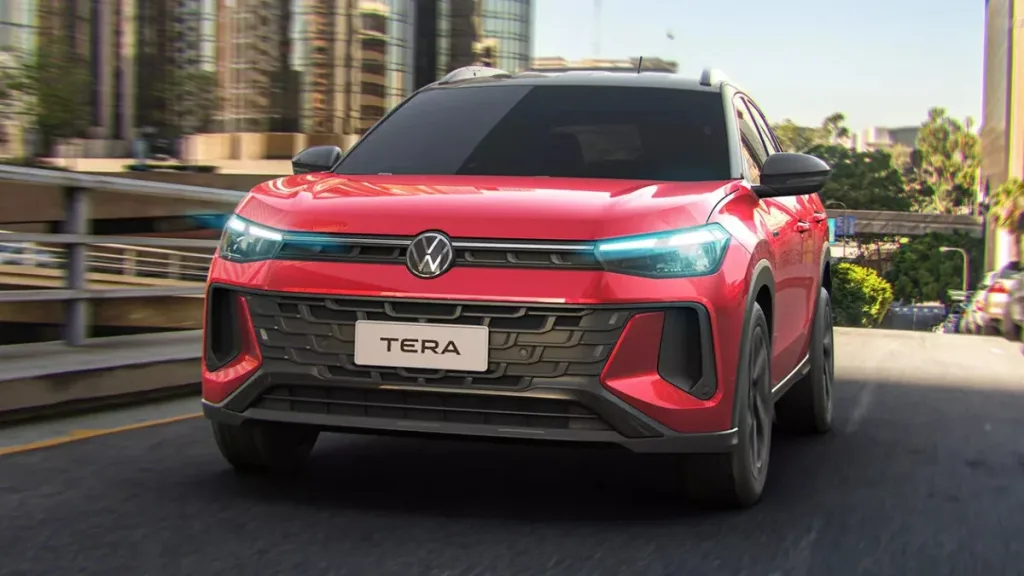
Volkswagen sub-4m suv india: The problem: sub-4m is crowded—and expectations are rising
The sub-4-meter SUV segment in India has been growing fast, and the competition is now intense enough that brands can’t “coast” on brand value alone. In this environment, launching the right product—at the right size, with the right packaging—is what decides whether a brand gains share or simply pays marketing costs.
This is where project-level approvals matter. A ₹275 crore investment signals Volkswagen’s intent to commit seriously to scale, not just do a one-off model experiment. According to Volkswagen’s official announcement in 2026, the project has been approved, and it sits inside the company’s strategy to lean more heavily into growth-driving segments.
The root cause: one platform, many brands—so cost and speed win
The most practical way to enter a fast-moving segment is to reduce development time and keep engineering costs under control. That’s why the report points to a badge-engineered approach: the upcoming Volkswagen SUV would be based on the Skoda Kylaq platform. If that architecture relationship holds as described, it explains how Volkswagen can move from “idea” to “approved factory project” faster—because the underlying design work is already anchored to an existing, proven base.
However, the trade-off is clear: badge engineering can limit how far a brand can differentiate ride/handling, cabin layout, and core engineering feel. Volkswagen will need to work harder through tuning, feature selection, and styling to ensure the “Volkswagen-ness” is felt beyond a front-end change.
Candidate solutions: where Volkswagen can compete in sub-4m (and what each costs)
Here are the realistic options Volkswagen has in this segment context, with the downsides buyers should keep in mind as the launch approaches.
| Solution | What it gives Volkswagen | Downside for buyers |
|---|---|---|
| 1) Kylaq-based sub-4m SUV with Volkswagen branding | Lower time-to-market and cost efficiency; faster scale | If differentiation is limited, the driving feel and packaging may feel too similar to the Kylaq |
| 2) Build a fully unique Volkswagen-only platform | Strong brand differentiation potential | Higher cost and longer timeline—risk of losing the |
| 3) Aggressive variant-led pricing (equipment vs | Helps dealers and customers quickly find value variants | Can squeeze margins and lead to feature skimping on entry trims |
Volkswagen Sub-4m Suv India: The verified facts also state that manufacturing and development will be led under the leadership of Volkswagen Group India. That matters because local program ownership often impacts how quickly a brand can fine-tune for Indian roads, supply chains, and dealer feedback. Stay tuned for more on kylaq based sub.
Recommendation: if Volkswagen truly goes Kylaq-based, choose on value-per-variant
Here’s the thing: in a sub-4-meter SUV fight, the winner is usually the one that nails value per rupee—not just the headline model name. If Volkswagen’s sub-4m SUV is indeed built on the Skoda Kylaq platform, buyers should judge it on three criteria at launch: (1) seat and boot usability in real day-to-day use, (2) variant-by-variant feature content vs rivals, and (3) whether Volkswagen’s tuning and NVH feel meaningfully different from the base it borrows from.
The report also expects the new Volkswagen SUV to rival competitors in the sub-4 meter segment in India, but that rivalry positioning is not confirmed in the verified facts provided. Still, a ₹275 crore approved project—announced by Volkswagen in 2026—suggests the company intends to be a credible contender, not a token addition.
That said, keep expectations realistic: badge-engineered entry can be a smart route to affordability, but it must be backed by strong variant strategy and credible in-car experience.
Related Articles
- Porsche 911 GT3 India Launch: Price Set at Rs 3.33 Crore
- Skoda Kylaq Sportline To Launch In India This Festive Season: 5 Key Details
- Volkswagen ID. ERA 5X SUV reveals the new electric era in 2026
FAQs
What is the ₹275 crore project for, and who approved it?
Volkswagen approved an investment of ₹275 crore for a new sub-4-meter SUV project in India, and the approval was officially announced by Volkswagen in 2026.
Will this Volkswagen sub-4m SUV be based on Skoda Kylaq?
The upcoming SUV is described as being based on the Skoda Kylaq platform in the referenced report, but the verified facts provided here do not include a fully detailed official platform confirmation from Volkswagen.
What does “sub-4m” mean for buyers in India?
“Sub-4m” refers to vehicles that fit under India’s sub-4-meter length classification. This matters because it’s tied to tax benefits and helps manufacturers offer lower effective pricing, making it easier to compete on
Is Volkswagen planning a new model only for India?
The verified facts provided focus on India. The development and manufacturing leadership is under Volkswagen Group India, which points to an India-first execution even if the platform relationship has broader group implications.
How should Indian buyers compare this future Volkswagen against rivals?
Look beyond badges. Compare variant features, pricing, and real usability—and cross-check whether the Volkswagen version meaningfully improves on the base in comfort, cabin practicality, and on-road refinement.
GT3 India Crore and other “big number” headlines can be distracting, but for India’s sub-4m space, the most useful question is simple: will the variant you can actually afford feel better, not just newer?
Was this article helpful?
Your feedback directly improves future articles on this site.