SA329 (82.3 ov)
 AUS
AUS BAN3/0 (4 ov)
 WI
WI IND-W
IND-W ZIM-W
ZIM-W GOA
GOA SC Delhi
 Milan
Milan Bologna
 Parma
Parma Udinese
 Venezia
 Inter Milan
 Genoa
Genoa Juventus
 Monza
Monza Napoli
 UAE
UAE OMA
OMA ROMA4
ROMA4 CAG2
CAG2 TOR1
TOR1 COMO3
COMO3 SAS2
SAS2 LAZ6
LAZ6 AFG177
 ZIM140 (19.1/20 ov, target 178)
 AUCK
AUCK CANT
CANT CD
CD ND
ND SIKM184
 NAGA187 & 79/5 (50 ov)
 JHK131/4 (47 ov)
 DELHI515/5d
 ODSA194
 SVCS13/0 (5 ov)
 BRODA616
 J & K6/0 (4 ov)
 CHD685/5d
 HP49/0 (14 ov)
 CGR216/8 (95 ov)
 AP231
AP231 HYD193/2 (54 ov)
 PNJB431
 KNTKA297/7 (95 ov)
 TPURA194
 ENG
ENG SL
SL DEN
DEN QAT
QAT KENYA
KENYA KUW
KUW POA
POA SPR
SPR BRB
BRB VAG
VAG PAK110
 NAM316/7
 IRE253 (44.5/50 ov, target 317)
 NZ198/3
 IND199/4 (13.2/20 ov, target 199)
 NED371/5
 JAB113 (19.3/20 ov, target 133)
 KAY132/9
 Al Khaleej
 Al Hazem
 Gamba Osaka
 Buriram
 ABH0
ABH0 ALF1
ALF1 Sevilla2
 Osasuna0
 PSG2
PSG2 Lyon0
Lyon0
Visual effects costs have skyrocketed to jaw-dropping levels, with industry insiders now revealing the true price tag behind Hollywood’s most ambitious productions. A recent exposé from veteran VFX supervisors pulls back the curtain on budgets that rival entire film production budgets themselves, raising serious questions about sustainability in an era where digital spectacle has become mandatory for box office success.
📋 In This Article
Here’s What Happened
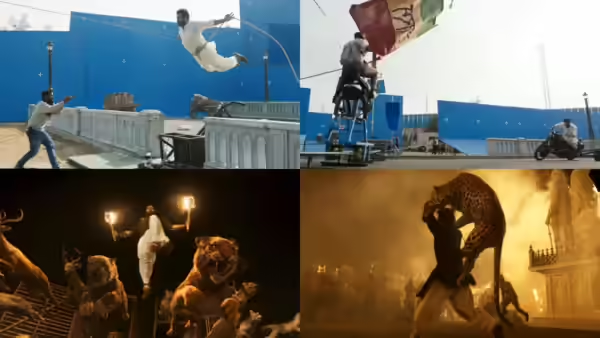
A coalition of anonymous VFX artists and supervisors has leaked budget breakdowns from major studios. The numbers are eye-opening: visual effects now eat up 30-40% of total production budgets for tentpole films. These figures were once locked away as trade secrets.
The leaked data shows a single blockbuster can spend $50-100 million on VFX alone. Some productions have crossed the $150 million mark. Studios defend these costs by pointing to what audiences expect: photorealistic creatures, massive action sequences, and immersive world-building that define modern cinema.
The Real Impact on Studio Budgets
Escalating visual effects costs are forcing studios into tough decisions. Smaller productions get greenlit less often because budgets balloon the moment VFX becomes essential. Independent filmmakers and streaming platforms struggle most—our guide to indie creators in the digital era covers how emerging talent navigates these constraints.
Mid-budget dramas that used to thrive are getting shelved. Studios now focus on franchise installments that can justify massive visual effects spending through guaranteed box office returns. The pressure ripples through post-production too, where rendering farms run 24/7 to meet release schedules.
Visual Effects Costs: Breaking Down the Numbers
Let’s talk specifics. A single photorealistic character costs $2-5 million to develop and animate across a feature film. Battle sequences routinely run $10-20 million per scene. The rendering infrastructure—the computing power to process digital imagery—adds another $5-15 million to visual effects costs per project.
Outsourcing to international VFX studios in India, Canada, and the UK is now standard. Even with lower labor costs abroad, the sheer volume of work drives expenses up. One insider revealed that a recent superhero blockbuster spent $8 million on a single 90-second sequence showing a digital city getting destroyed.
What VFX Professionals Are Saying
VFX supervisors don’t all agree on what’s happening. Some argue that visual effects costs reflect genuine technical complexity and deserve higher budgets. Others warn the industry is pricing itself into collapse—smaller studios can’t keep up, and burnout among artists is accelerating due to impossible timelines.
The VentureBeat coverage of AI in production suggests automation might ease pressure on visual effects costs. That’s still speculative territory though.
The Future of Digital Production
Studios are testing AI-assisted rendering to cut visual effects costs, though concerns about quality persist. Expect smaller VFX houses to fold as financial pressure mounts. Netflix and Prime Video are building in-house VFX capabilities instead of outsourcing—a direct attempt to control visual effects costs themselves.
People Also Ask
Why have visual effects costs increased so dramatically?
Audience expectations have shifted. Digital spectacle is now essential for theatrical releases, and creating photorealistic imagery has become exponentially more complex.
Can streaming platforms compete with theatrical visual effects costs?
They can, but selectively. Netflix and Amazon invest heavily in prestige projects while keeping visual effects costs lower for mid-tier content through smart outsourcing choices.
Are visual effects costs sustainable long-term?
Industry experts aren’t optimistic. Without major technological breakthroughs or cost-cutting innovations, current spending levels could become impossible for everyone except the biggest studios.
How do visual effects costs compare across regions?
Indian VFX studios typically charge 30-40% less than US counterparts, though quality varies. That’s why outsourcing has become standard practice worldwide.