
Voxel51 unveiled its next-generation platform, Voxel51 3.0, on October 18, 2026. The update aims to bring visual, time-series and sensor data together for physical AI, giving teams one place to annotate, evaluate and run agent-driven workflows. Critical hardware specifications, however, remain unverified.
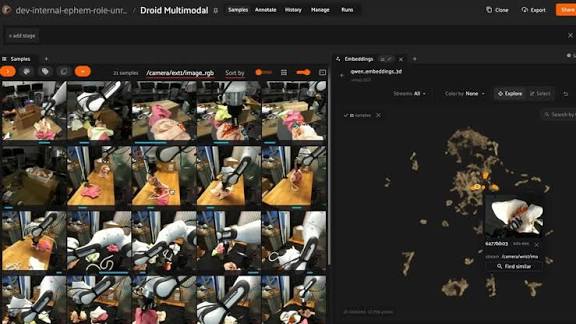
Before Voxel51 3.0: a platform rooted in visual data
Before this release, Voxel51’s platform focused on visual data. That worked for AI teams using images and video, but physical AI projects also rely on sensor inputs from robots, vehicles and factories.
Bringing those streams together creates a broader data-management challenge than handling visual assets alone. Teams need to find useful moments in large collections, prepare data for model training and check annotation quality. With this release, Voxel51 aims to handle more of that work in one environment. Time-series workflows now sit alongside visual data in the same platform.
The Voxel51 3.0 catalyst: broader data and agent tools
Voxel51 announced version 3.0 on October 18, 2026. Reports say the release adds time-series multimodal support, unified annotation, Voxel51 Agent, a data-provenance layer and free self-service access. Teams can inspect multiple sensor streams on a shared timeline, while segment-level embeddings help them find specific moments in longer recordings.
Annotation now covers 2D, 3D, video and multimodal data. It also includes automated quality checks, annotator metrics and human review. Voxel51 Agent reportedly comes with more than 45 Model Context Protocol (MCP) tools, over 80 operators and 18 open-source skills. Teams can use a hosted web app or self-host in cloud, hybrid, on-premises or air-gapped environments. The free tier reportedly provides 30,000 inference requests and 30 compute hours per month. It reportedly allows up to three datasets, each with up to 10,000 samples, and 20 GB of storage.
After the update: requirements for physical AI workloads
Reported deployment guidance sets a higher bar than a basic development workstation. Physical AI workloads need at least 64 GB of RAM, while enterprise storage starts at 2 TB NVMe SSD. Processing requires an NVIDIA H100 GPU or an equivalent accelerator.
These figures remain provisional, so teams should confirm them with Voxel51 before planning a deployment. That distinction matters to smaller research groups and companies deciding between self-hosting and the hosted app. A powerful accelerator and large storage pool can be costly, but the free tier lets teams explore the workflow within clear dataset and storage limits. Voxel51 has published no product benchmarks, leaving no verified performance figures to compare with other platforms.
Voxel51 3.0 before and after
This isn’t just a longer feature list. Voxel51 is moving from a visual-data focus toward connected workflows for sensor-rich physical AI projects, with agent tools and provenance features added. The comparison below sets out the earlier focus, the new capabilities and the reported deployment requirements.
| Area | Before Voxel51 3.0 | Voxel51 3.0 |
|---|---|---|
| Data focus | Visual data | Visual, time-series and multimodal data |
| Annotation | Visual-data workflows | 2D, 3D, video and multimodal annotation |
| Data discovery | Visual data focus | Segment-level embeddings for long recordings |
| Agent tools | Not specified in the release account | 45+ MCP tools, 80+ operators, 18 open-source skills |
| Reported hardware | Not specified | 64 GB RAM, 2 TB NVMe SSD, H100 or equivalent |
For teams working with robot, vehicle or factory sensor data, one multimodal data platform could cut down the separate steps needed to search, prepare and evaluate datasets.
Still, without published benchmarks, buyers can’t compare performance, and the stated hardware needs could make self-hosting a major commitment. Want a hosted way to explore multimodal workflows? Start with the free tier. If you need controlled infrastructure for physical AI data, assess self-hosting only after Voxel51 confirms the final requirements.
FAQs
What is Voxel51 3.0?
Voxel51 3.0 is a multimodal data platform for searching, cu
Does Voxel51 3.0 support time-series data?
Yes. Teams can inspect multiple sensor streams on a shared timeline and use segment-level embeddings to find moments in longer recordings.
What hardware does it require?
Reported requirements include at least 64 GB of RAM, 2 TB NVMe SSD storage and an NVIDIA H100 GPU or equivalent accelerator. Voxel51 hasn’t officially confirmed those details.
Source: Marktechpost
Was this article helpful?
Your feedback directly improves future articles on this site.