POR2
POR2 CLT2
CLT2 SD1
SD1 SEA2
SEA2 UAE
UAE NED
NED PAK
PAK ENG
ENG IND-W
IND-W ZIM-W
ZIM-W GMB
GMB LES
LES MOZ
MOZ ZMB
ZMB Inter Milan
 Fiorentina
 Churchill
 Punjab FC
 NGA
NGA UGA
UGA MEX-W23 (9.3/20 ov, target 189)
 ARG-W188/5
 ATM1
ATM1 DEP0
DEP0 LAZ2
LAZ2 PAR1
PAR1 RCL2
RCL2 PAR1
PAR1 NZ-A317
 IND-A113 & 75/2 (24.5 ov)
 SYL
SYL KHU
KHU MYMS299/4 (87 ov)
 CHATT
CHATT DHA293/3 (84.1 ov)
 RAJ
RAJ RAN320/5 (80 ov)
 BAR
BAR DEN
DEN PNG
PNG NAM321/6
 IRE290 (47.3/50 ov, target 322)
 Athletic
 Getafe
 C Palace
 Newcastle
 Hull
Hull Brentford
 Liverpool
 Brighton
 Man United
 Bournemouth
 Atalanta
 Frosinone
 RIY2
RIY2 TAA1
TAA1 CHE0
CHE0 TOT2
TOT2 VAL1
VAL1 VIL2
VIL2
The Right to Disconnect Bill: In an era defined by constant digital connectivity, the line between professional and personal life has become increasingly blurred. Workers around the world, tethered to their inboxes and messaging apps by smartphones, are reporting unprecedented levels of burnout and stress.
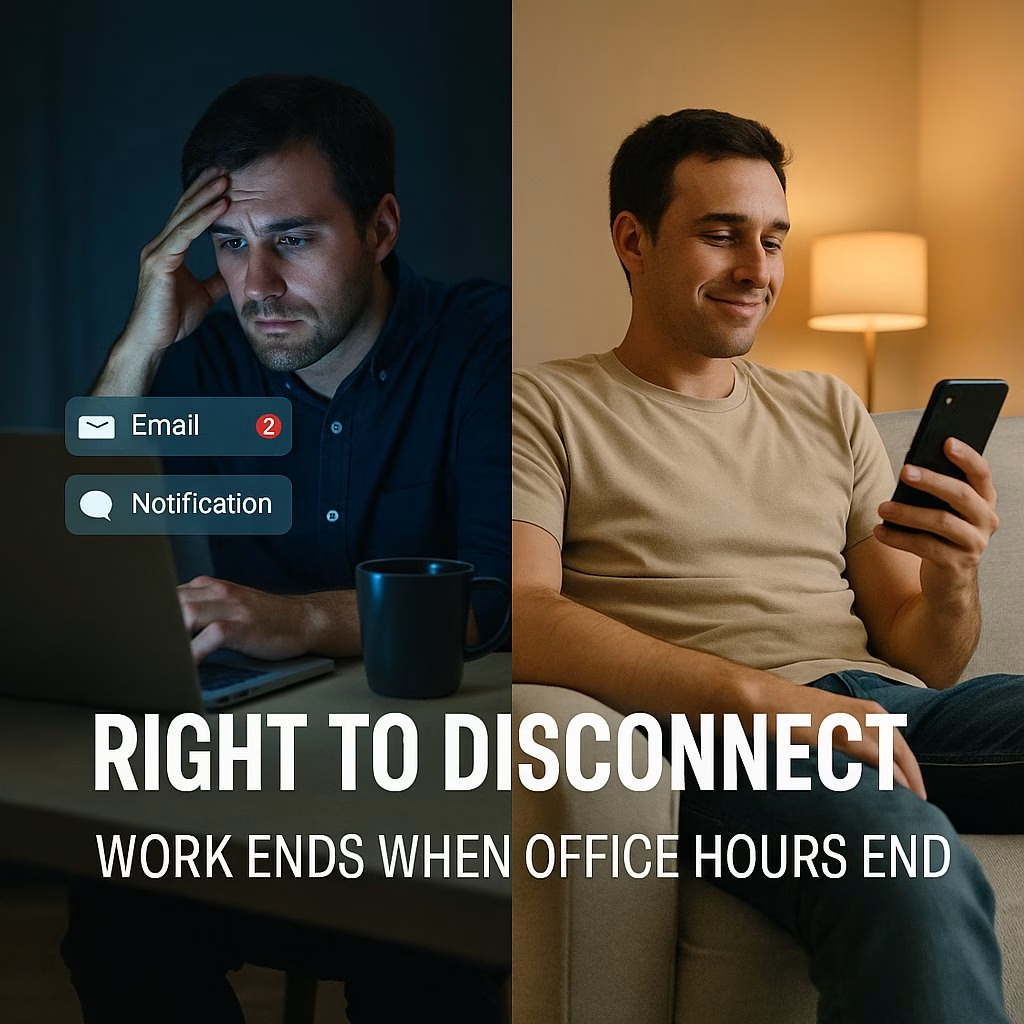
This growing exhaustion has fueled a significant international legislative movement: the “Right to Disconnect” bill, a proposal aiming to grant employees the legal freedom to ignore work-related communication outside of scheduled working hours without fear of penalty. This is not just a theoretical discussion; it is rapidly becoming a legal reality in numerous countries, forcing companies to fundamentally re-evaluate their ‘always-on’ cultures.
The Global Push for the Right to Disconnect
What is the Right to Disconnect Bill?
At its core, the Right to Disconnect establishes a legal boundary on digital communication between employers and employees outside of defined work periods. The intention is to safeguard an employee’s personal time, ensuring they can fully rest and recuperate.
Though specific provisions vary by jurisdiction, common elements seen in proposed and enacted legislation worldwide include:
- Protection from Reprisal: Employees are legally protected from disciplinary action, negative performance reviews, or other penalties for not responding to calls, emails, or messages after hours.
- Mandatory Policy Creation: Companies, particularly those above a certain size threshold (e.g., over 10 or 50 employees), must establish and negotiate clear written policies detailing off-hour communication rules.
- Compensation for After-Hours Work: If an employee chooses to respond or is required to respond to a communication, that time must be compensated as overtime, often by mutual consent.
- Emergency Carve-Outs: Laws typically include reasonable exceptions for true emergencies, where a response is necessary to prevent significant harm or operational disaster.
A Growing Global Reality: Pioneers in Legislation
The concept of digital disconnection is far from new. France is widely considered the pioneer, having introduced the right to disconnect into its Labour Code in 2017. This move set a precedent for protecting mental well-being in the face of advancing technology.
Since then, the momentum has only grown, with similar laws taking effect in a variety of countries:
- Australia: Legislation passed in 2024 grants millions of workers the right to ignore unreasonable contact from their employers or third parties outside of work hours.
- Belgium and Portugal: These European nations have passed laws that penalize companies for contacting staff outside of set working hours, particularly for remote workers or civil servants.
- Canada: The province of Ontario requires employers with 25 or more employees to have a written policy on disconnecting from work.
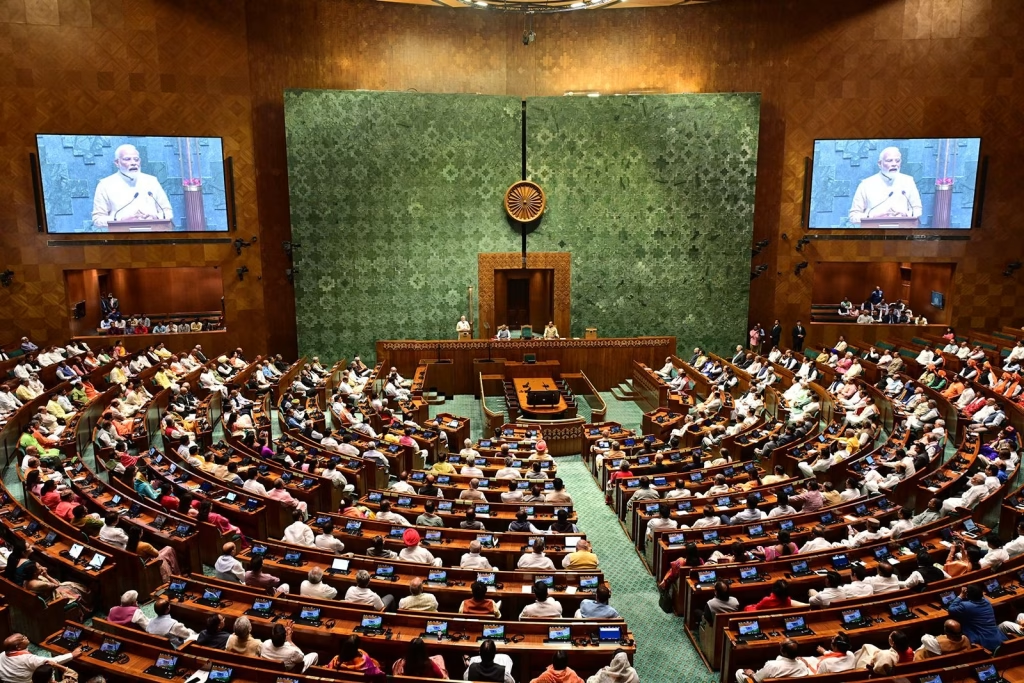
The debate is currently active in Asia, with a bill proposed in India in 2025 seeking to formalize this right, indicating a truly global shift.
The United States Status: Stalled Bills and State Action
Despite the international trend, the United States has yet to enact any federal or statewide “Right to Disconnect” law. The conversation, however, is very much alive.
California, often a bellwether for US labour law, saw a high-profile attempt with Assembly Bill 2751. This proposal, which would have required employers to create a written policy guaranteeing the right to disconnect, ultimately stalled in a legislative committee. Similar proposals have also been floated in New Jersey and previously in New York City and Washington State. The primary resistance often centers on concerns over reduced business flexibility, especially for global companies operating across time zones.
Impact on Businesses and Employee Well-being
Proponents of the legislation argue that the benefits are clear and far-reaching.
Benefits of the Right to Disconnect
- Improved Mental Health: By reducing “telepressure”—the compulsion to check and respond to digital communications—workers experience less stress and burnout.
- Increased Productivity: Employees who are well-rested and feel respected are often more focused and efficient during actual work hours.
- Better Retention: Companies that enforce a healthy work-life balance culture often see higher employee satisfaction and reduced turnover.
Challenges for Employers
The transition is not without complexity, particularly for businesses in fast-paced or client-facing industries.
For employers, the introduction of a new legal framework presents several management challenges:
- Establishing consistent communication protocols across diverse teams and time zones.
- Ensuring continuity in customer service and critical operations.
- Auditing current policies to ensure non-exempt employees are not performing unpaid work by answering after-hours messages.
Ultimately, the Right to Disconnect movement by the Indian government signals a profound cultural reckoning for the modern workplace. It is a powerful legal response to the digital age, demanding that the flexibility afforded by technology not come at the cost of personal time and mental health.