

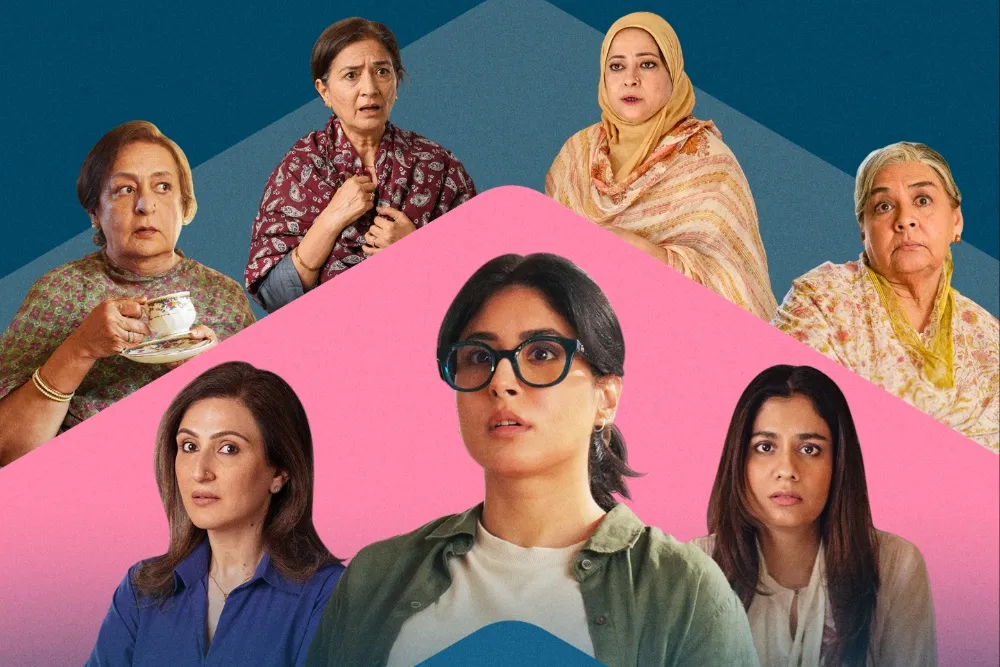
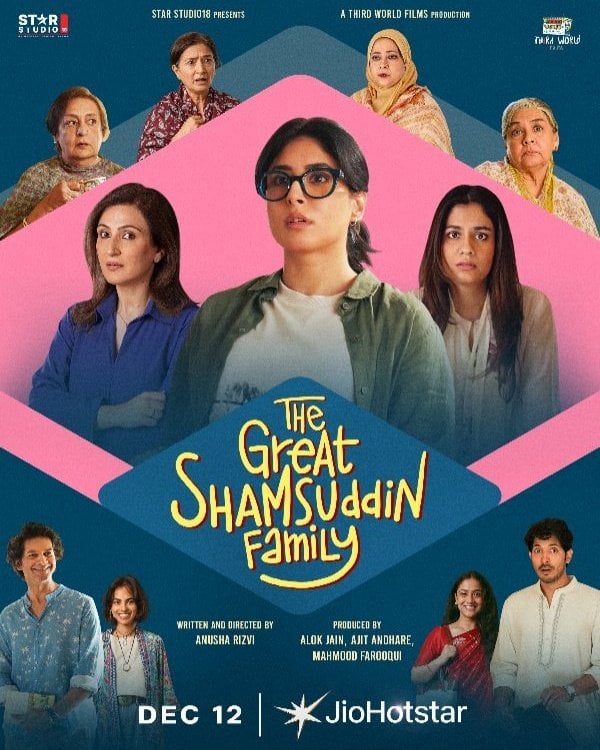
After a 15-year hiatus from feature filmmaking, acclaimed director Anusha Rizvi is making her much-anticipated return with “The Great Shamsuddin Family,” a heartwarming comedy-drama that examines the beautiful chaos of modern Indian family dynamics. The film, set to premiere exclusively on JioHotstar on December 12, 2025, marks Rizvi’s first directorial venture since her groundbreaking 2010 debut “Peepli Live,” which garnered international acclaim and became India’s official entry to the Academy Awards that year.
“The Great Shamsuddin Family” promises to deliver a relatable, intimate portrait of contemporary Indian family life, wrapped in humor and heart. Set entirely over one chaotic day in Delhi, the film explores universal themes of family obligation versus personal ambition, generational conflict, and the inescapable ways our relatives shape who we are—even when they drive us absolutely mad.
Table of Contents
The Premise: One Day, One Deadline, Total Chaos
At the heart of “The Great Shamsuddin Family” is Bani Ahmed, portrayed by Kritika Kamra, a writer facing what could be the most important 12 hours of her professional life. With a career-defining deadline looming, Bani needs nothing more than peace, quiet, and uninterrupted time to focus on her work—precisely the things she’s about to lose completely.
As fate would have it, Bani’s apartment becomes ground zero for a full-blown family crisis just as she needs solitude most. Mothers, aunts, cousins, and even former romantic interests begin descending on her home, each arriving with their own emergencies, dramas, and demands on her time and attention. What follows is a single-location comedy that unfolds entirely under one roof, creating what actress Sheeba Chaddha describes as “a world that’s both intimate and wildly entertaining.”
The narrative structure—confining all the action to one day in one location—creates a pressure-cooker environment where tensions, humor, and emotions intensify with each passing hour. As Bani attempts to juggle her professional obligations with the mounting family chaos, she must navigate interfaith complexities, generational conflicts, and the weight of family expectations. The stakes escalate as she faces a fundamental choice: pursue international career opportunities that could transform her professional life, or remain anchored to the family that defines her identity.
This setup allows Rizvi to explore deeper questions about identity, duty, and belonging while keeping the tone light and accessible. The single-day timeframe creates natural urgency, while the confined setting forces characters to confront each other without escape routes—a recipe for both comedy and genuine emotional moments.
Anusha Rizvi’s Vision: Family as Inescapable Force
For director Anusha Rizvi, “The Great Shamsuddin Family” represents more than just a return to filmmaking—it’s a deeply personal exploration of how family shapes us, for better or worse. Her directorial approach emphasizes authenticity and emotional truth beneath the comedic chaos.
“At its core, the film isn’t just about interruptions; it’s about how family, even at its most exasperating, shapes us in ways we can’t escape,” Rizvi explained in a statement accompanying the film’s announcement. “Through Bani’s day of glorious madness, I hope audiences recognize glimpses of their own mothers, aunts, siblings, and that one relative who always shows up at the wrong moment but with the right heart.”
This philosophy—finding the heart beneath the havoc—distinguishes “The Great Shamsuddin Family” from mere farce or slapstick. Rizvi aims to capture something essential about Indian family dynamics: the way relatives can be simultaneously maddening and essential, intrusive yet irreplaceable. The film acknowledges that family members often appear at the worst possible times, yet their presence, however inconvenient, comes from a place of genuine care and connection.
Rizvi’s long absence from feature filmmaking makes this return particularly significant. After “Peepli Live” earned critical acclaim for its satirical take on media sensationalism and rural poverty, many expected Rizvi to quickly follow up with another project. Instead, she spent years developing this intimate family portrait, suggesting a deliberate choice to wait for the right story rather than rushing into production with material that didn’t resonate personally.
The decision to tell this particular story now—a comedy about family obligations and personal dreams—feels especially timely in an era when many Indians, particularly women, navigate competing demands between traditional family structures and modern career aspirations. Rizvi’s choice to center this tension in a Muslim family adds layers of specificity while maintaining universal relatability.
Kritika Kamra: The Burden of Being the Eldest Daughter
Leading “The Great Shamsuddin Family” is Kritika Kamra, known primarily for her television work, in what represents a significant film role. Kamra plays Bani Ahmed, and her understanding of the character reveals the film’s emotional depth beneath its comedic surface.
“She’s the quintessential eldest daughter in a middle-income family who prioritizes others’ needs over her own ambitions,” Kamra said of her character. “She’s quietly dependable, endlessly responsible, and always putting herself last, even when all she wants is a single day to focus on her own future.”
This description immediately resonates with anyone familiar with Indian family dynamics, where the eldest daughter often carries disproportionate responsibility for family harmony and caretaking. Bani represents a generation caught between honoring traditional family obligations and pursuing modern, individualistic goals. Her struggle is less about rejecting family than about finding space to exist as herself within familial structures that constantly demand her attention and service.

Kamra’s casting suggests Rizvi’s interest in bringing fresh faces to the center of her narrative while surrounding them with established veterans. Kamra’s television background gives her strong instincts for sustained character work and emotional authenticity—crucial qualities for carrying a film that depends on audience investment in Bani’s predicament.
The 12-hour deadline device creates external pressure that makes Bani’s situation urgent rather than merely frustrating. Every interruption doesn’t just annoy—it literally threatens her professional future. This structure ensures the audience remains sympathetic to Bani even when she might wish her family would simply disappear, because we understand the stakes of what she’s losing with every distraction.
An Ensemble of Familiar Faces and Fresh Dynamics
“The Great Shamsuddin Family” boasts an impressive ensemble cast that combines Bollywood veterans with contemporary talent, creating a multi-generational portrait that reflects real Indian family composition.
The legendary Farida Jalal, whose career spans decades of iconic supporting roles in films like “Dilwale Dulhania Le Jayenge” and “Kuch Kuch Hota Hai,” brings instant warmth and credibility. Her presence immediately signals to audiences that this film values authentic Indian family dynamics, as Jalal has spent her career perfecting the art of playing mothers, aunts, and grandmothers who embody traditional values while remaining fully human and complex.
Similarly, Dolly Ahluwalia, known for her memorable roles in films like “Vicky Donor” and “Shubh Mangal Saavdhan,” adds another layer of veteran authenticity. These actresses don’t just play characters—they carry decades of cultural memory and audience goodwill that enriches any project they join.
Purab Kohli, an actor who has successfully navigated between commercial and independent cinema, describes the film as “a mirror reflecting typical Indian family dynamics. That’s exactly what makes it so relatable and so warm.” His perspective as someone with experience in both mainstream and arthouse projects suggests “The Great Shamsuddin Family” achieves something genuinely Indian rather than catering to international festival circuits or purely commercial considerations.
Shreya Dhanwanthary, who has gained recognition for intense dramatic roles in projects like “Scam 1992,” takes on comedy for the first time. “This is my first time doing comedy after a run of serious, heavy-handed dramatic roles,” she noted. In “The Great Shamsuddin Family,” she plays Bani’s impulsive younger sister who turns to her sibling during crises—a character type that will resonate with anyone who has experience as the “responsible one” constantly cleaning up after more spontaneous family members.
The ensemble also includes Juhi Babbar, Sheeba Chaddha, Natasha Rastogi, and Nishank Verma, creating a full household of distinct personalities and competing agendas. This casting approach—filling the frame with recognizable character actors rather than relying solely on star power—suggests Rizvi prioritizes authenticity and ensemble chemistry over individual star vehicles.
Single Location, Maximum Impact
One of the most distinctive choices in “The Great Shamsuddin Family” is its single-location setting. The entire narrative unfolds within Bani’s apartment over the course of one day, a constraint that becomes a creative strength rather than a limitation.
Sheeba Chaddha emphasized this aspect of the production: “Everything—the humor, the conflicts, the emotions—unfolds under one roof, creating a world that’s both intimate and wildly entertaining.” This approach has several advantages that serve both the story and the viewing experience.
First, the confined setting creates escalating tension. Characters can’t escape each other, forcing confrontations and conversations that might otherwise be avoided or postponed. When family members arrive with their various emergencies, they’re all stuck in the same space, creating a natural collision of needs, personalities, and agendas.
Second, the single location allows for detailed world-building. Rather than spreading attention across multiple settings, Rizvi can craft one fully realized environment that feels lived-in and authentic. Every detail of Bani’s apartment—from the furniture arrangement to the family photos to the way different relatives claim different spaces—can contribute to character and story.
Third, this approach creates a theatrical intimacy that suits streaming platforms perfectly. Unlike big-budget spectacles that lose impact on smaller screens, “The Great Shamsuddin Family” is designed for close viewing, where audiences can appreciate subtle performances and the overlapping conversations of ensemble scenes.
The single-day timeframe complements the single-location setting, creating what amounts to classical dramatic unity. These constraints, far from limiting the story, give it focus and urgency. Every minute counts, every interruption matters, and the audience experiences Bani’s mounting frustration in real time as her deadline approaches and her family shows no signs of settling down.
Themes: Tradition, Modernity, and the Muslim Family Experience
“The Great Shamsuddin Family” operates on multiple thematic levels, addressing both universal family dynamics and specifically Indian cultural contexts. The film’s willingness to center a Muslim family navigating modern challenges adds important representation to Hindi cinema, where Muslim characters often remain relegated to supporting roles or problematic stereotypes.
The synopsis mentions that Bani navigates “interfaith complexities” alongside generational conflicts and family expectations. This suggests the film addresses religious identity and intercommunal relationships without making them the sole focus. For many Indian Muslim families, questions of tradition versus modernity, religious practice, and maintaining identity in a multicultural society are everyday realities rather than dramatic plot points.
By centering these experiences matter-of-factly within a comedy framework, Rizvi normalizes Muslim family life in ways that Hindi cinema rarely attempts. The family isn’t defined solely by religion, nor are religious elements erased for mainstream palatability. Instead, faith becomes one thread among many in the complex tapestry of family identity.
The film also explores gendered expectations, particularly the pressure on daughters to sacrifice personal ambitions for family needs. Bani’s situation—needing to choose between international career opportunities and remaining with family—reflects real choices that educated Indian women increasingly face. The film doesn’t necessarily provide easy answers but creates space to examine the tension between individual fulfillment and family duty.
Generational conflicts add another layer, as older family members’ expectations clash with younger generations’ aspirations. These conflicts aren’t presented as simple generation-gap comedy but as genuine struggles over values, priorities, and what constitutes a meaningful life.
From ‘Peepli Live’ to ‘The Great Shamsuddin Family’: Anusha Rizvi’s Directorial Journey
To understand the significance of “The Great Shamsuddin Family,” it’s essential to revisit Anusha Rizvi’s groundbreaking debut, “Peepli Live,” and recognize what her 15-year absence from feature filmmaking represents.
Released in 2010, “Peepli Live” was a satirical comedy-drama that tackled serious issues—farmer suicides, media sensationalism, government indifference—with dark humor and biting social commentary. The film followed a poor farmer who becomes a media sensation when news spreads that he plans to commit suicide to qualify his family for government compensation. What follows is a savage critique of how media, politicians, and NGOs exploit rural poverty for their own agendas.
“Peepli Live” was produced by Aamir Khan, giving it significant promotional muscle and mainstream visibility despite its independent spirit. The film received widespread critical acclaim, won the National Film Award for Best First Film of a Director, and became India’s official entry to the Academy Awards for Best Foreign Language Film. It grossed over 700 million rupees worldwide, proving that intelligent, socially conscious cinema could also be commercially viable.
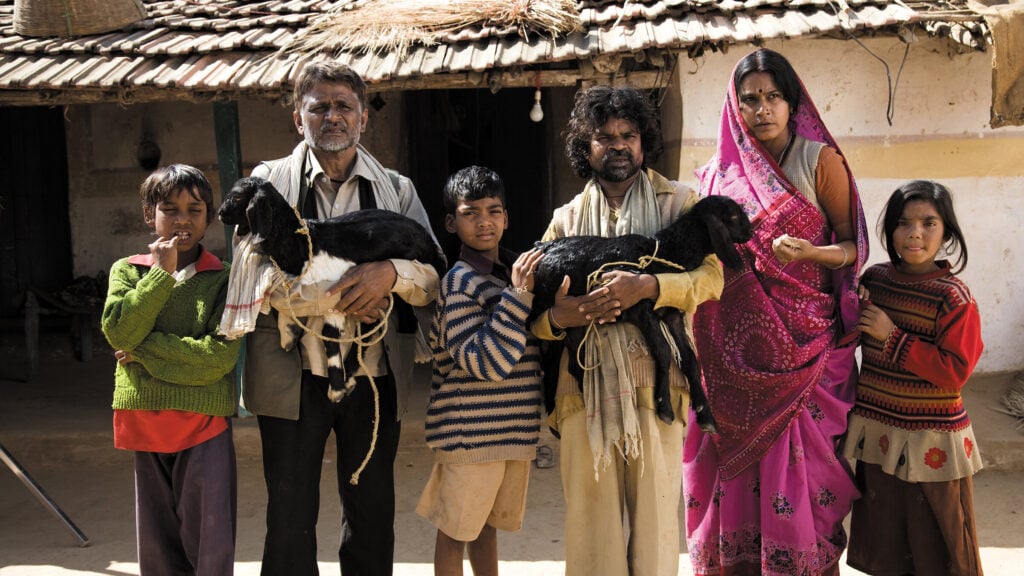
Given this success, many expected Rizvi to become a prominent voice in Indian independent cinema, releasing socially engaged films regularly. Instead, she largely disappeared from feature filmmaking, leading to speculation about industry barriers, personal choices, or simply the difficulty of securing funding for director-driven projects in Bollywood’s star-dominated ecosystem.
Her return with “The Great Shamsuddin Family” suggests a deliberate evolution rather than a retreat. Where “Peepli Live” was overtly political, examining systemic failures through satire, this new film turns inward, exploring personal and familial struggles. The shift from rural poverty to urban middle-class life, from national issues to domestic drama, might seem like a narrowing of scope—but it could also represent a maturation of perspective, recognizing that the personal is also political.
The 15-year gap between films is both unusual and revealing. While some directors work constantly, churning out projects regularly, others take time to find stories that genuinely compel them. Rizvi’s long gestation period suggests she values quality and personal connection to material over mere productivity.
The JioHotstar Advantage: Streaming as Creative Freedom
“The Great Shamsuddin Family” premieres on JioHotstar, India’s largest streaming platform, rather than pursuing theatrical release. This distribution strategy reflects the current reality of Indian entertainment and offers both opportunities and challenges.
JioHotstar (the merged entity of Jio and Disney+ Hotstar) has become a dominant force in Indian streaming, offering a vast library that combines international content, Bollywood films, and original programming. For a filmmaker like Rizvi, streaming distribution provides several advantages over theatrical release.
First, it removes pressure to conform to commercial formulas designed to fill multiplexes. Streaming audiences are more accepting of quieter, character-driven narratives than theatrical audiences trained to expect spectacle. “The Great Shamsuddin Family,” with its single-location intimacy and focus on domestic drama, is arguably better suited to home viewing than theatrical presentation.
Second, streaming platforms provide access to vast audiences without the geographical limitations of theatrical distribution. A theatrical release might struggle to find screens in smaller towns or secure sustained runs, but streaming makes the film instantly available across India and internationally to Indian diaspora audiences.
Third, the economics of streaming can be more favorable for mid-budget films. Rather than gambling on theatrical box office, filmmakers receive licensing fees from platforms eager for content, providing guaranteed revenue and reducing financial risk.
However, streaming also means the film forgoes the cultural moment that theatrical releases can create. There’s no opening weekend buzz, no box office numbers to generate headlines, no communal viewing experience that makes cinema a social event. For a filmmaker returning after 15 years, this might mean less visibility than a theatrical release could provide.
That said, JioHotstar’s vast reach and aggressive promotion of originals means “The Great Shamsuddin Family” will likely find substantial viewership. The platform has successfully launched numerous original films and series, creating stars and building audiences for diverse content.
Why This Film Matters Now
“The Great Shamsuddin Family” arrives at a moment when Indian cinema is experiencing both creative renaissance and commercial uncertainty. The success of diverse, content-driven projects on streaming platforms has proven audiences hunger for stories beyond formulaic blockbusters, yet theatrical releases increasingly polarize between massive franchise films and struggling mid-budget projects.
Rizvi’s return film addresses contemporary anxieties about family, identity, and modernity in ways that feel timely rather than dated. The central tension—balancing personal ambitions with family obligations—resonates across cultures but carries particular weight in Indian society, where family structures remain strong even as economic and social changes accelerate.
The decision to center a Muslim family navigating modern life also matters in the current Indian cultural climate, where Muslim representation in mainstream media remains limited and often problematic. By presenting Muslim family life as relatable and universal rather than exotic or threatening, Rizvi makes an implicit argument for inclusive storytelling.
Moreover, the film’s focus on female experience—particularly the eldest daughter’s burden of responsibility—addresses issues that remain underexplored in Hindi cinema. While recent films have increasingly centered female protagonists, the specific dynamic of family duty versus personal ambition for Indian women deserves more attention than it typically receives.
FAQs
When does The Great Shamsuddin Family release?
The Great Shamsuddin Family premieres exclusively on JioHotstar on December 12, 2025. It will be available to stream for all JioHotstar subscribers on that date.
Who is Anusha Rizvi and what is she known for?
Anusha Rizvi is an Indian filmmaker best known for directing “Peepli Live” (2010), a satirical comedy-drama about farmer suicides and media sensationalism. The film became India’s official entry to the Academy Awards and won the National Film Award for Best First Film of a Director. “The Great Shamsuddin Family” marks her return to feature filmmaking after 15 years.
What is The Great Shamsuddin Family about?
The film follows Bani Ahmed, a writer racing against a 12-hour career-defining deadline when her apartment becomes ground zero for a family crisis. Set over one day in Delhi, the story explores modern Indian family dynamics as relatives descend with their emergencies, forcing Bani to choose between international career opportunities and family obligations.
Who stars in The Great Shamsuddin Family?
The ensemble cast includes Kritika Kamra as lead character Bani Ahmed, along with veteran actors Farida Jalal and Dolly Ahluwalia. Other cast members include Purab Kohli, Shreya Dhanwanthary, Juhi Babbar, Sheeba Chaddha, Natasha Rastogi, and Nishank Verma.
Is The Great Shamsuddin Family getting a theatrical release?
No, The Great Shamsuddin Family is premiering exclusively on JioHotstar and will not receive a theatrical release. This direct-to-streaming strategy is increasingly common for mid-budget Indian films, providing broader reach through India’s largest streaming platform.