Details like the exact mechanical layout and final production spec of the McL 6GT are based on what McLaren has shared around the concept. The headline is that this becomes McLaren’s first manual supercar since the F1, more than 30 years after that era-defining machine. The company’s naming also nods to its current Formula 1 chassis style while borrowing the M6 spirit from Can-Am history.
McLaren manual supercar: What happened, and why is McLaren betting on a stick
Mc Laren’s announcement arrived with a clear message during Monterey Car Week, where the company revealed the McL 6GT.
Here’s the thing: supercars went automatic-first not because manuals disappeared as an enthusiast preference but because packaging, emissions strategy, and modern safety/drive-by-wire calibration make “three pedals” harder to perfect at extreme performance. Mc Laren is choosing to fight that trend again.
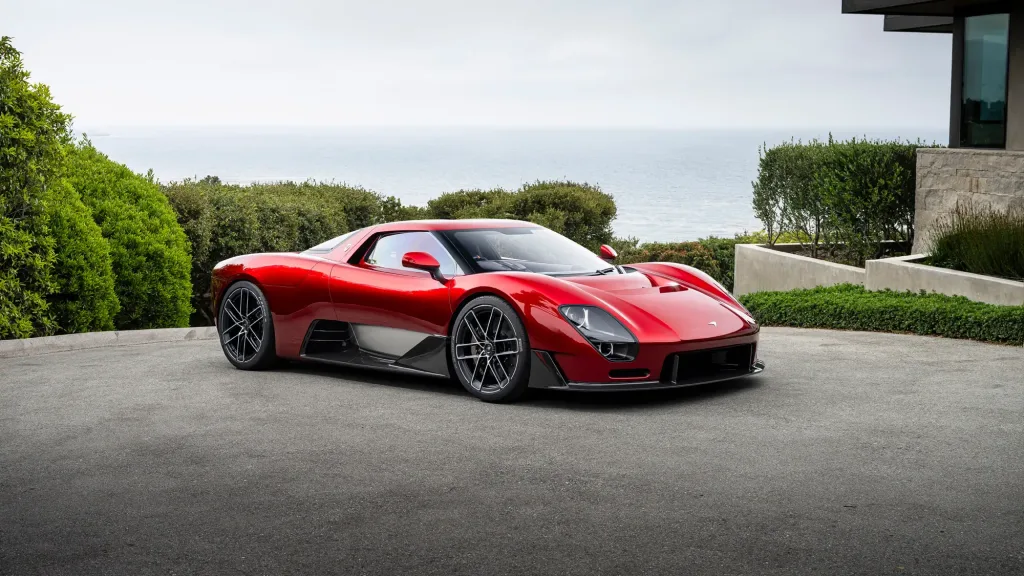
Key Details: The manual return, the concept’s promise, and the trade-offs
McLaren’s MCL 6GT is positioned as a concept, but it’s paired with a production intent: entering production in 2028 with a stick shift. The Drive’s coverage highlights the concept’s gated shifter and three-pedal layout as the emotional core of the car, not just an ornamental throwback.
That said, a manual in a modern supercar is never “pure nostalgia”. Even if the driving experience is the goal, the engineering compromises are real:
- A manual gearbox and clutch add mass and parasitic complexity versus a dual-clutch transmission.
- Gear selection at high load needs precision calibration, especially under traction-limited conditions.
- Marketing a manual can reduce the addressable audience, because many buyers prioritize automation for city driving and effortless launches.
Still, there’s a specific performance-and-feel upside manufacturers often overlook in the auto-only era. A well-graded manual can make throttle response feel more connected, and it can turn power delivery into something the driver actively shapes rather than merely commands.
For broader context on why enthusiasts still debate manual vs dual-clutch supercars, Car and Driver and MotorTrend frequently track the consumer side of the argument across test cycles and model updates (for example, their ongoing coverage of transmission trends at https://www.caranddriver.com and https://www.motortrend.com).
Context: The root cause of why manuals vanished—and the problem McLaren is solving
Here’s the diagnostic: modern supercar makers didn’t abandon manuals because nobody wanted them. They often moved away because manuals became harder to align with the whole stack—emissions regulations, repeatable high-speed launches, gearbox durability under track abuse, and the expectation of consistent performance across buyers who may never master heel-and-toe.
For McLaren specifically, there’s also brand history pressure. Mc Laren has built a reputation on high-performance engineering, from the days when the F1 made the manual feel like part of the design language to today’s focus on shaping driving dynamics with advanced electronics. The challenge McLaren is addressing now is that, in a world of paddle-shifts and software-tuned behaviour, the manual experience can feel like a relic even in cars that claim to be driver’s machines.
And yes, critics will argue there’s a compromise: if you’re paying supercar money, why accept anything that risks being less fast, less convenient, or harder to operate than a modern dual-clutch? That argument has a point—especially for buyers who mostly drive in traffic or want maximum lap-to-lap repeatability.
But our counter is that “best” depends on the driver. A manual can be the most honest interface between car and human hands—when executed properly.
What’s Next: Candidate solutions, their downsides, and Mc Laren’s likely path
So what are the options in this broader manual/supercar debate? Here are three real candidate approaches, with the trade-offs spelled out.
| Solution | What it gives drivers | Downside |
|---|---|---|
| Dual-clutch (keep modern norm) | Fast, consistent launches and low effort in traffic | Feels less like an intentional driver tool |
| CVT/auto for efficiency (less likely here) | Packaging ease and predictable smoothness | Typically mismatched to “supercar mechanical engagement” |
| Manual revival (Mc Laren’s path with McL 6GT) | Gated-shifter engagement and tactile involvement | More complexity, higher learning curve, and potentially fewer buyers |
Mc Laren Manual Supercar: Mc Laren’s choice effectively treats the transmission as part of the car’s identity, not a spreadsheet variable. That’s why the company’s 2028 intent matters—production planning is how a concept becomes either a niche novelty or a genuine platform decision.
Our recommendation is straightforward: if you want a supercar that prioritizes driver interaction as much as acceleration, choose the manual revival—but only if the final production calibration (clutch feel, shift gate precision, and launch behavior) meets the bar you expect from Mc Laren. If McLaren can deliver that “connected” feel without making the car frust Stay tuned for more on mc laren.
Related Articles
- Drift-Spec Dodge Charger 750 HP Manual: The Real Deal
- Corvette That Bedeviled Shelby’s Cobras Could Fetch $13 Million
- Kia PV5 Cargo vs Passenger Electric Van 2025: Best Fit?
FAQs
Will McLaren’s McL6GT definitely have a manual gearbox in production?
McLaren’s manual concept plan is reported with an aim to enter production in 2028, and The Drive’s coverage frames it as a first stick-shift supercar since the F1. However, production hardware details are not fully confirmed in the information we have here, so final confirmation should come from Mc Laren closer to launch.
What does “revised manual” actually mean in supercar terms?
It means using a true gated shifter with three pedals, so the driver selects gears mechanically rather than relying on paddles or full automation. In practical terms, it changes how you modulate power—especially on throttle transitions and when traction is limited.
Is this just a marketing stunt for McLaren?
The risk of that critique is real: a manual concept can be dismissed as theatre if the production spec doesn’t match the promise. Still, McLaren is tying the announcement to a production 2028 target, which is a stronger signal than a one-off display car.
Was this article helpful?
Your feedback directly improves future articles on this site.