NAM321/6 (50 ov)
 IRE
 AVL
 MNC
 RAY
 ELC
 GMB
 ZMB
 NGA
 LES
 CAG
 BOL
 COMO
 SAS
 FCA
 FCU
 KOE
 S04
 MOZ19
 UGA23/0 (0.5/20 ov, target 20)
 NZ180/5
 IND181/6 (19.5/20 ov, target 181)
 Ipswich1
 Nottm Forest1
 Alavés1
 Málaga1
 WA105/3 (18.5/50 ov, target 372)
 NSW371/8
 DEN
 KUW
 KENYA
 QAT
 SWD-W
 EPR-W
 TTN-W
 WPR-W
 BOR
 WAR15/1 (2.5/20 ov)
 LIONS
 Limpo21/1 (2.5/20 ov)
 NZ-A135/3 (41 ov)
 IND-A113
 DHA293/3 (84.1 ov)
 RAJ
 MYMS
 CHATT
 RAN320/5 (80 ov)
 BAR
 MEX-W
 ARG-W
 UAE
 NED
 PAK
 ENG
 IND-W
 ZIM-W
 AFG170/3 (34.3/50 ov, target 170)
 ZIM169
 CHE0
 DYI0
 CHO1
 QIN0
 HEN1
 BEI0
 LIA1
 ZHE0
 QWC1
 YUN0
 SHX0
 Shanghai Shenh0
 TIG0
 SHP0
 WTT1
 SHT3
 M05
 SVW
 RBL
 ELV
 Torino3
 Monza2
 Brest1
 Nice2
 Stuttgart2
 Gladbach3
 Al Ahli4
 Al Khaleej1

Before August 12, 2026, teams building long-running AI agents and code assistants still had to fight context limits that forced frequent summarization and brittle handoffs. SpaceXAI’s release of Grok 4.6 on August 12, 2026, shifted the trade-off: fewer “forgetting” checkpoints, more continuous work streams—especially for coding and knowledge work.
Here’s the thing: the practical value won’t come from the biggest number alone; it will come from how reliably the model reasons across 500K tokens without losing accuracy.
SpaceXAI Grok: What changed: the Grok 4.6 catalyst (and why long context matters
The Grok 4.6 headline is an expanded context window of 500K tokens, tuned for long-running agents, coding, and knowledge work. In the release materials, SpaceXAI stated the architecture includes improvements designed to maintain high reasoning accuracy on tasks exceeding 100,000 tokens of continuous input—exactly where many “big context” models start to drift.
This is also where pricing becomes a real operational decision. SpaceXAI lists API access at $5.00 per million input tokens and $15.00 per million output tokens for Grok 4.6, which means context-heavy workflows can become predictable to budget—if your prompts and outputs are engineered for cost control.
Grok 4.6 ranked: 10 uses where 500K context actually pays off
Below is a practical rank-order of what Grok 4.6 is best positioned to do, based on the stated 500K-context tuning and continuous-input design goal (not vibes). For developers and ops teams, the key question is always: does longer context reduce rework, or does it just increase token spend?
1) Long-horizon coding agents (repo-wide reasoning)
When an agent needs to track architectural choices across thousands of files, 500K context can reduce the number of “reset cycles” where code understanding gets lost. Worth noting: the model’s stated design target is staying accurate over 100,000+ continuous tokens.
2) Multi-week knowledge-work assistants
Instead of re-reading the same documents every session, teams can keep meeting notes, decisions, and drafts in one continuous working context. That makes “follow-ups” less about re-uploading context and more about incremental changes.
3) Debugging with full execution traces
Large traces and logs often exceed typical context limits; Grok 4.6 is positioned for continuous-input workflows. That’s the difference between narrowing down once and repeatedly reconstructing what happened earlier.
4) Specification-to-implementation bridging
Coding tasks stall when specs get summarized too aggressively. A 500K window helps preserve intent, edge cases, and constraints so the model can keep mapping requirements to code changes over long iterations.\
5) Agentic research with living notes
Long-running agents can carry forward definitions, citations, and evolving hypotheses without constantly compacting. This is especially useful when research spans multiple drafts of a plan and a report.
6) Contract and policy alignment for software systems
Teams can maintain a long “policy memory” (internal guidelines, external constraints, compliance notes) while gene
7) Refactor planning with historical design context
Refactors are risky when you lose original rationale. With Grok 4.6’s approach to long continuous input, teams can keep the “why” alongside the “what” during iterative transformations.
8) Unit-test and harness generation across large suites
Large test suites come with hidden coupling; longer context can help keep assumptions consistent. The model’s coding orientation is reinforced by the release’s engineering benchmarks.
9) Advanced software engineering benchmark focus
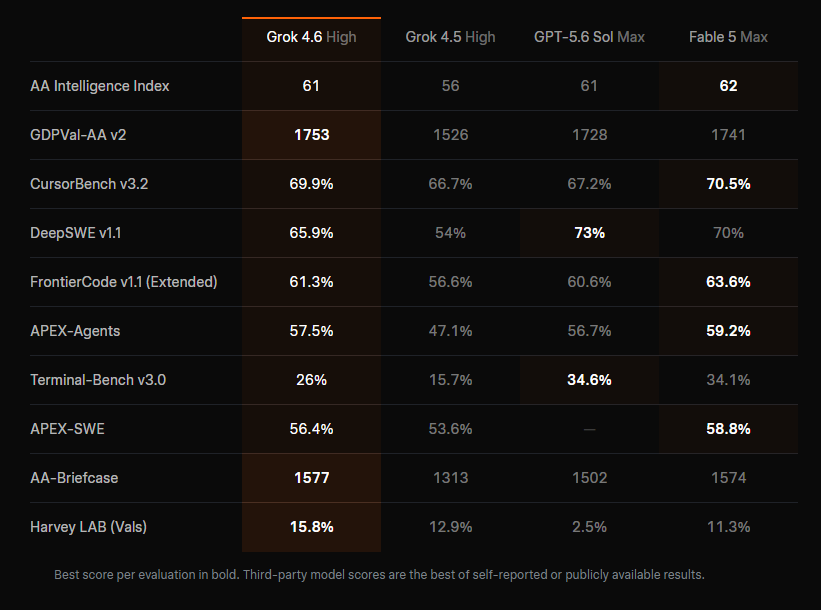
SpaceXAI’s release report states Grok 4.6 hits 94.2% on advanced software engineering test suites unconfirmed. In plain terms: it’s not only meant for chat—it’s meant to score well where code correctness is evaluated.
10) Cost-aware agent orchestration (fewer re-uploads, tighter loops)
Long context can actually reduce total workflow churn: less manual curation, fewer broken agent loops, and fewer repeated prompt scaffolds. Critics will argue that longer context raises spend, but with per-token pricing, you can enforce token budgets and output caps.
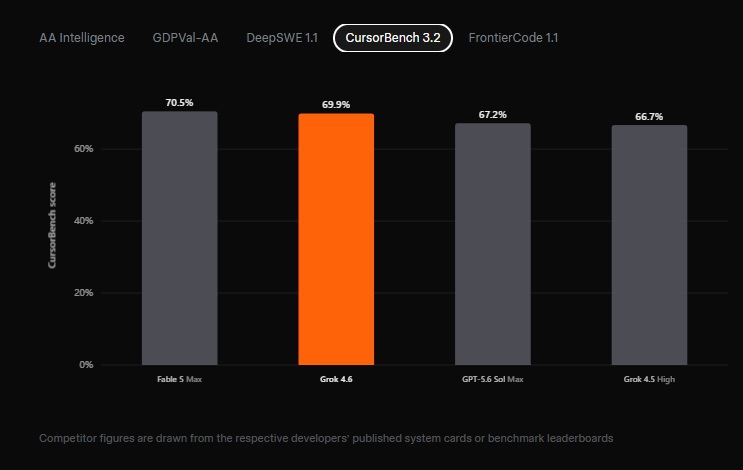
Side-by-side: how Grok 4.6 changes the practical workflow
| Workflow need | Before (typical) | After (with Grok 4.6) |
|---|---|---|
| Context retention | Summaries and truncation | 500K-token continuous context |
| Long reasoning stability | Drift after many turns | Targeted accuracy past 100,000 tokens |
| Coding continuity | File-by-file re-mapping | Repo-wide reasoning continuity |
| Cost predictability | Variable overhead from rework | Budgetable token economics |
| Agent design | Many handoff boundaries | Fewer “reset” moments |
Spacexai Grok: Worth noting: if your workflow is short and narrowly scoped, you may not need 500K context. But if you’re running agents that “stay on the problem” for long stretches, pick Grok 4.6 when continuity matters more than occasional freshness. Stay tuned for more on Releases Grok.
Performance and benchmarks: what SpaceXAI claims—and what to watch
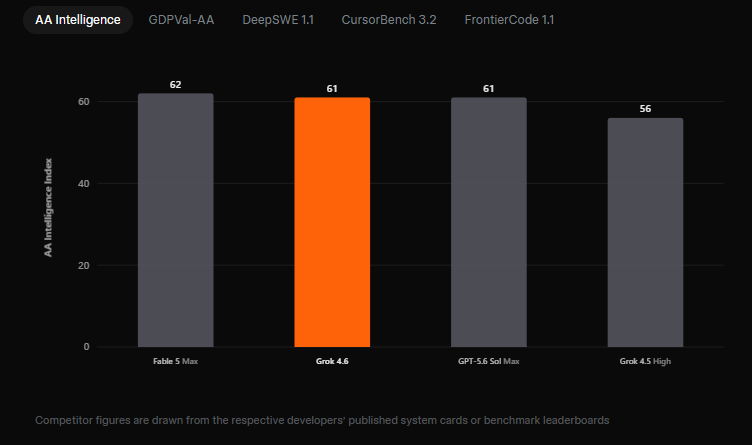
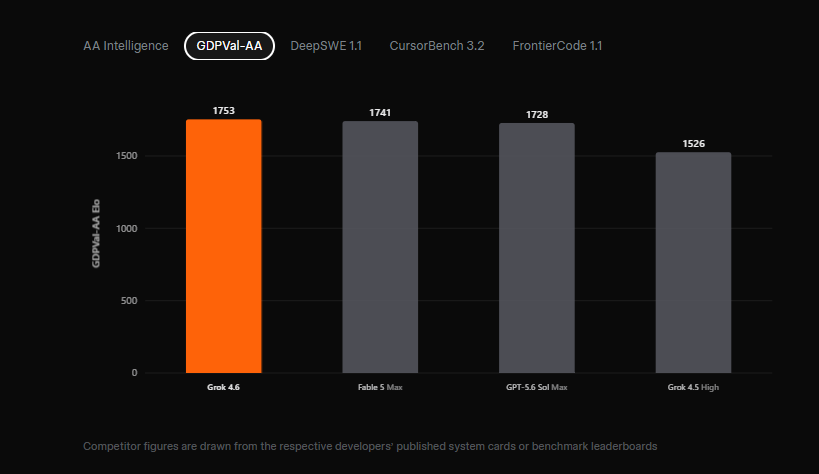
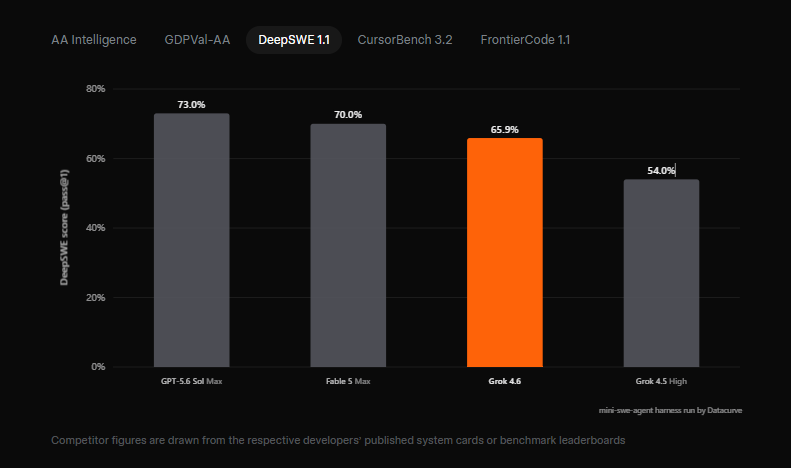
The release report claims 94.2% on advanced software engineering test suites unconfirmed, which is the strongest signal for teams deciding whether Grok 4.6 is useful beyond context size. That said, benchmark numbers only matter when they match your usage pattern: coding tasks with persistent constraints, iterative edits, and long dependencies.
Here’s the reliability question engineering teams should ask: will the model preserve correctness as the working set grows? SpaceXAI’s stated goal—high reasoning accuracy across inputs exceeding 100,000 tokens—is aimed directly at this failure mode. For extra context on how frontier models are being evaluated across the industry, see coverage in VentureBeat AI reporting and technical updates similar to OpenAI’s research blog format on model behavior.
How to choose: pick Grok 4.6 if you build long-running agents (not just chat)
If you run agent pipelines where “memory” is really a working set—code, specs, decisions, logs—Grok 4.6 is designed to make that set stay intact. If your tasks are naturally short or you already summarize aggressively with high accuracy, you can save cost by using smaller context budgets.
The forward-looking advantage is simple: fewer context resets can mean faster convergence, less rework, and cleaner audit trails in knowledge work. And as frontier model APIs keep becoming a platform, the teams that win will be the ones that engineer context and outputs like a product—starting now with Grok 4.6.
Related Articles
- 11X Cheaper ChatGPT: 150M Model, BDH-CQ, Proves Smart
- Apple’s 20th-anniversary iPhone 2026 survived cancellation scare
- Apple Tests CXMT Memory Chips for iPhones in 2026 Power Shift
FAQs
What is Grok 4.6’s main upgrade?
Grok 4.6’s standout feature is a 500K-token context window tuned for long-running agents, coding, and knowledge work, with improvements aimed at accuracy across 100,000+ tokens of continuous input.
Is Grok 4.6 good for coding tasks?
SpaceXAI frames Grok 4.6 around coding and engineering evaluations. The release report claims 94.2% on advanced software engineering test suites unconfirmed, which indicates strong alignment with code correctness tests.
How much does Grok 4.6 cost to use via API?
SpaceXAI lists $5.00 per million input tokens and $15.00 per million output tokens for Grok 4.6 API access unconfirmed. For cost control, teams typically cap output length and design prompts to minimize repeated reasoning.
Will 500K context eliminate prompt summarization?
It can reduce summarization frequency, but it doesn’t always eliminate it. For best results, many teams still maintain structured notes and only rely on long context to preserve key constraints, traces, and decisions.
What kind of agents benefit most?
Agents that require continuous reasoning over large working sets—like debugging with long logs, repo-wide refactors, and research with evolving notes—benefit most from Grok 4.6’s context-focused design.
What should teams monitor after adopting Grok 4.6?
Track correctness over long runs, output length distribution, and total token spend per completed task. If cost rises without improving task completion time, the workflow likely needs prompt budgeting and tighter agent step design.
Was this article helpful?
Your feedback directly improves future articles on this site.