Game-changer for NVIDIA users! Samsung confirms its entire 2026 OLED lineup—TVs and Odyssey monitors—now supports G-Sync Compatible, ending screen tearing across the board.
Table of Contents

G-Sync Finally Arrives on Samsung OLEDs
Samsung announced that all 2026 OLED TVs (S95H, S90H, S85H) and new Odyssey G6 monitors (G60H, G61SH) are officially NVIDIA G-Sync Compatible, synchronizing display refresh rates with GeForce GPU frame rates for tear-free gaming.
Samsung 2026 G-Sync Compatible Lineup
| Model | Type | Refresh Rate | Special Features |
|---|---|---|---|
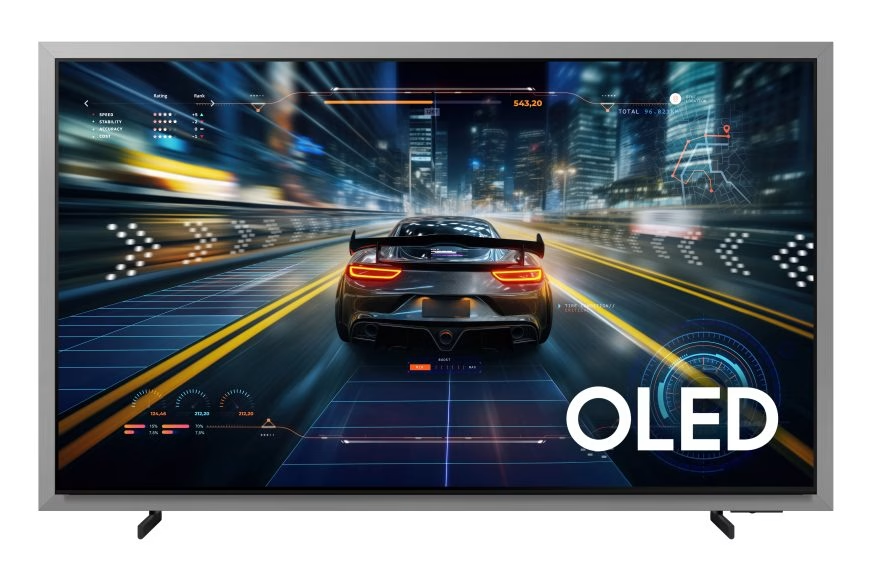
| S95H OLED TV | TV | Up to 165Hz | Glare Free, HDR10+ Advanced |
| S90H OLED TV | TV | Up to 165Hz | Glare Free, HDR10+ Advanced |
| S85H OLED TV | TV | Up to 120Hz | HDR10+ Advanced |
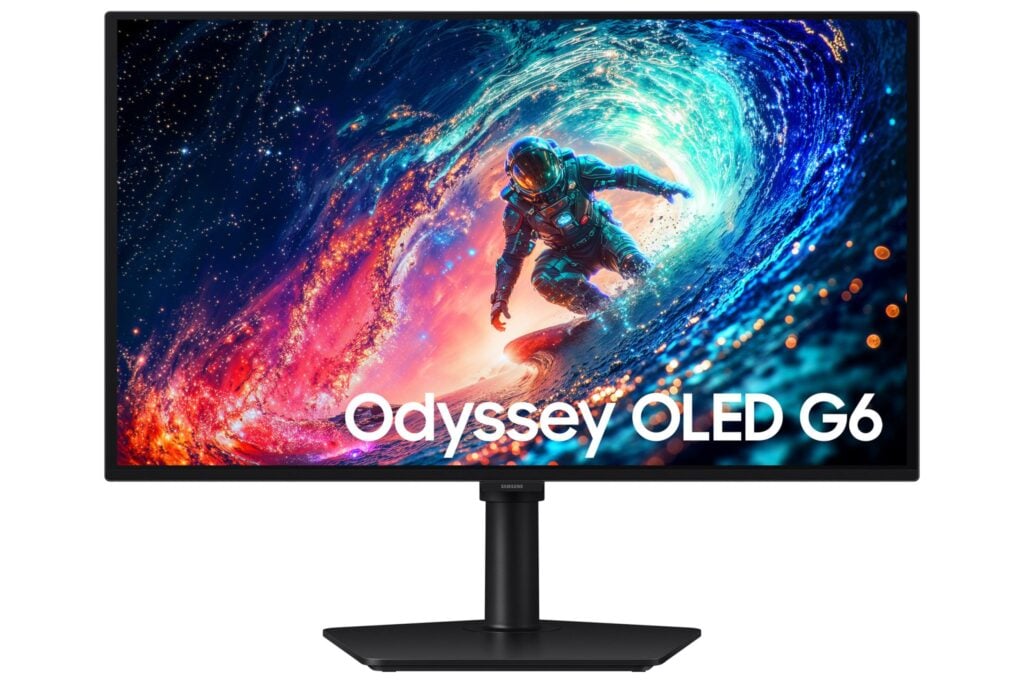
| Odyssey G6 (G60H) | Monitor | 1,040Hz @ HD, 600Hz @ QHD | Dual Mode |
| Odyssey G6 (G61SH) | Monitor | 240Hz @ QHD | QD-OLED, 0.03ms GTG |
Why This Matters for Gamers
G-Sync has been standard on gaming monitors and select LG TVs since 2019, but Samsung resisted until now. The technology eliminates visual artifacts when GPU frame rates don’t match display refresh rates—critical for graphics-intensive games on high-refresh displays.
Kevin Lee, Samsung’s Executive VP of Visual Display, stated the goal is delivering consistent gaming experiences “no matter what you play or where you play it.”
OLED TVs: Living Room Gaming Evolved
The flagship S95H and S90H support 165Hz refresh rates—exceptional for TVs—while the S85H hits 120Hz. All three models support AMD FreeSync Premium Pro alongside G-Sync, ensuring compatibility across NVIDIA and AMD ecosystems.
Samsung’s proprietary Glare Free technology (S95H/S90H only) reduces reflections without compromising OLED picture quality, while HDR10+ Advanced improves brightness, contrast, and motion clarity.
Odyssey Monitors: Speed Demons
The Odyssey G6 (G60H) breaks records with 1,040Hz refresh rate at HD resolution via Dual Mode, dropping to native QHD at 600Hz. For context, most competitive gamers max out around 360-500Hz—this is overkill for 99% of users but positions Samsung as the spec leader.
The QD-OLED variant (G61SH) takes a different approach: stunning visual quality with QHD at 240Hz, 0.03ms response times, and vibrant quantum dot colors. This model targets gamers prioritizing immersion over extreme frame rates.
The Big Screen Gaming Trend
This announcement aligns with rising PC gaming on TVs, driven by Steam Deck-style handhelds docking to living room displays. With NVIDIA GeForce RTX 50 series pushing higher frame rates, G-Sync on 165Hz OLED TVs makes big-screen PC gaming significantly smoother.
For India availability and pricing, check Technosports and explore our gaming monitor buying guide for comparisons!
FAQs
Does G-Sync Compatible work as well as native G-Sync monitors?
Nearly identical—G-Sync Compatible uses DisplayPort Adaptive-Sync without dedicated hardware, certified by NVIDIA for quality.
Do these Samsung OLEDs support both G-Sync and FreeSync simultaneously?
They support both technologies, but only one can be active at a time depending on your GPU.