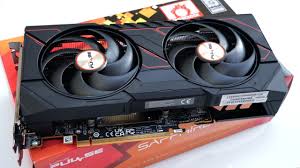

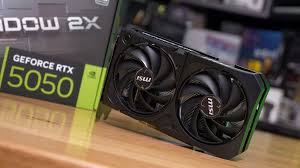
Nvidia’s entry-level Blackwell lineup presents a classic dilemma: save $30-50 with the RTX 5050 at $249, or invest in the RTX 5060 at $280 for significantly better performance? With both cards targeting 1080p gaming but differing in compute power, memory technology, and real-world framerates, choosing the right GPU requires understanding where that price difference actually matters.
Table of Contents
RTX 5050 vs RTX 5060: Specs Breakdown
| Specification | RTX 5050 | RTX 5060 |
|---|---|---|
| Architecture | Blackwell | Blackwell |
| CUDA Cores | Base count | 50% more cores |
| Memory Type | GDDR6 | GDDR7 |
| Memory Bandwidth | Standard | 40% larger |
| Compute Power | 13.2 TFLOPS | 19.2 TFLOPS (40% faster) |
| Power Draw | Under 150W | Under 150W |
| DLSS Support | DLSS 4 with MFG | DLSS 4 with MFG |
| Current Price | $249 | $280-$330 |
Performance: Where the Gap Becomes Critical
At 1080p resolution, the RTX 5050 averages 61 FPS across modern titles—respectable performance for a $250 card. However, the RTX 5060 delivers substantially higher framerates across the board, with a crucial advantage: it maintains playable performance in demanding titles like Mafia The Old Country where the 5050 struggles.
This playability threshold matters more than raw numbers. As new games launch in coming months, the performance gap will increasingly separate smooth gameplay from stuttering frustration.
For detailed GPU benchmarks and gaming performance analysis, check our graphics card reviews.
Value Proposition: FPS Per Dollar Analysis
Here’s where the decision becomes clear-cut. The RTX 5050 delivers 0.245 FPS per dollar, while the RTX 5060 achieves 0.27 FPS per dollar—approximately 10% better value despite the higher price tag.
Why the RTX 5060 Wins on Value:
- Better framerates in all tested games
- Playable performance in more demanding titles
- 50% more CUDA cores for future-proofing
- GDDR7 memory provides bandwidth headroom
- 40% higher compute power (19.2 vs 13.2 TFLOPS)
The $30-50 premium translates directly to measurably better gaming experiences rather than just marginal improvements.
Blackwell Architecture Benefits
Both cards leverage Nvidia’s latest Blackwell architecture, providing tighter hardware integration for superior upscaling performance. DLSS 4 with multi-frame generation comes standard, though the newer Transformer-based upscaling models and 3x/4x MFG presets can introduce stuttering despite high average framerates.
This means both cards benefit equally from Nvidia’s AI-powered features, but the 5060’s superior raw horsepower handles the computational overhead more gracefully.
For DLSS optimization guides and graphics settings recommendations, visit our gaming optimization hub.
Power Efficiency Advantage
Both GPUs draw under 150W, making them ideal for entry-level builds with modest power supplies. This efficiency allows builders to allocate budget toward other components like faster storage or better cooling without upgrading PSUs.
For official driver updates and feature announcements, visit Nvidia’s official site.
Current Pricing and Availability
The RTX 5050 maintains its $249 MSRP consistently, while Black Friday deals pushed the RTX 5060 down to $280 for base models. Premium triple-fan variants reach $330, but even at that price, the performance advantage justifies the investment for most gamers.
The Verdict: RTX 5060 Wins
Despite the RTX 5050’s appeal as a budget option, it simply isn’t cheap enough to justify the performance compromises. The RTX 5060’s superior compute power, GDDR7 memory, and 10% better FPS-per-dollar value make it the objectively smarter purchase for anyone building a gaming PC in late 2025.
Choose RTX 5060 if:
- You want maximum 1080p performance
- Future-proofing matters for your build
- $30-50 extra fits your budget
- You play demanding AAA titles
Choose RTX 5050 only if:
- Your budget absolutely cannot stretch
- You play less demanding esports titles exclusively
- You plan to upgrade within 12 months
For complete GPU buying guides and PC building tips, explore our hardware section.
Future-Proofing Considerations
As games continue pushing graphical boundaries, the RTX 5060’s 40% compute advantage and GDDR7 memory provide significantly better longevity. The RTX 5050 risks becoming inadequate for new releases within 12-18 months, while the 5060 should maintain playable framerates for 2-3 years.
FAQs
Is the RTX 5060 worth $30-50 more than the RTX 5050?
Absolutely. The RTX 5060 delivers 10% better FPS-per-dollar value (0.27 vs 0.245), 50% more CUDA cores, faster GDDR7 memory, and 40% higher compute power (19.2 vs 13.2 TFLOPS). Most importantly, it maintains playable framerates in demanding games where the 5050 struggles. The $30-50 premium translates to measurably better gaming experiences and superior future-proofing.
Will the RTX 5050 handle 1080p gaming in 2025-2026?
For current esports titles and older games, yes. However, the RTX 5050 already struggles with demanding releases like Mafia The Old Country, averaging only 61 FPS across tested titles. As more graphically intensive games launch, the 5050’s 13.2 TFLOPS compute power will increasingly become a bottleneck. If you plan to play AAA releases over the next two years, the RTX 5060’s superior hardware justifies the investment.