SA329 (82.3 ov)
 AUS
AUS BAN
BAN WI
WI IND-W
IND-W ZIM-W
ZIM-W GOA
GOA SC Delhi
 Milan
Milan Bologna
 Parma
Parma Udinese
 Venezia
 Inter Milan
 Genoa
Genoa Juventus
 Monza
Monza Napoli
 ROMA4
ROMA4 CAG2
CAG2 TOR1
TOR1 COMO3
COMO3 SAS2
SAS2 LAZ6
LAZ6 AFG177
 ZIM140 (19.1/20 ov, target 178)
 AUCK
AUCK CANT
CANT CD
CD ND
ND SIKM184
 NAGA187 & 46/4 (34 ov)
 JHK131/4 (47 ov)
 DELHI515/5d
 ODSA194
 SVCS13/0 (5 ov)
 BRODA616
 J & K6/0 (4 ov)
 CHD685/5d
 HP49/0 (14 ov)
 CGR216/8 (95 ov)
 AP231
AP231 HYD193/2 (54 ov)
 PNJB431
 KNTKA297/7 (95 ov)
 TPURA194
 KER101/6 (35 ov)
 BENG350
 UAE
UAE OMA
OMA ENG
ENG SL
SL DEN
DEN QAT
QAT KENYA
KENYA KUW
KUW POA
POA SPR
SPR BRB
BRB VAG
VAG PAK110
 NAM316/7
 IRE253 (44.5/50 ov, target 317)
 NZ198/3
 IND199/4 (13.2/20 ov, target 199)
 NED371/5
 JAB113 (19.3/20 ov, target 133)
 KAY132/9
 Gamba Osaka
 Buriram
 Kashima
 Pohang Steelers
 ABH0
ABH0 ALF1
ALF1 Sevilla2
 Osasuna0
 PSG2
PSG2 Lyon0
Lyon0
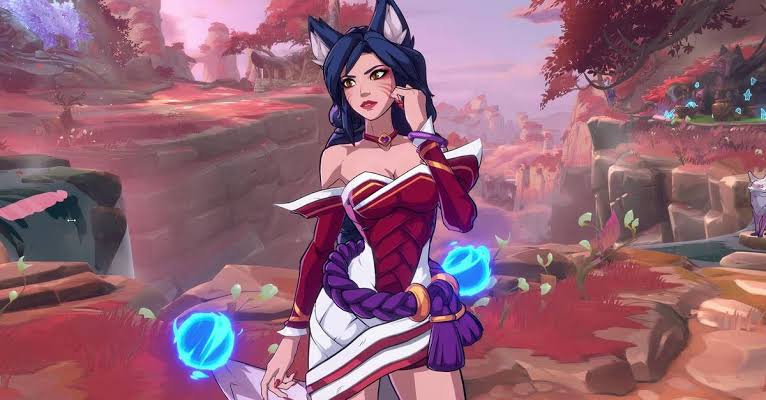
Riot Games, the studio behind League of Legends with over 150 million registered accounts, is betting big on its untitled MMO project set in the Runeterra universe — a venture CEO Nicolo Laurent has publicly acknowledged as one of the largest bets in the company’s history.
The ambitious project, internally codenamed Project F, represents a fundamental shift for a studio that built its empire on competitive multiplayer titles rather than persistent online worlds.
The High-Stakes Nature of Riot’s MMO Bet
The decision to enter the MMO space carries unprecedented weight for Riot Games, a company that has historically dominated through League of Legends and more recently VALORANT.
Unlike the structured, match-based gameplay that defined its previous successes, an MMO requires sustained content creation, persistent server infrastructure, and a fundamentally different engagement model where players spend hundreds of hours in a single world rather than in discrete matches.
Industry analysts have pointed out that few studios successfully transition from competitive multiplayer to MMO development, with even established developers like Blizzard struggling to replicate the formula that made World of Warcraft a cultural phenomenon.
Greg Street, formerly known as Ghostcrawler and formerly Lead Systems Designer at Blizzard Entertainment, was hired specifically to shepherd this vision — his departure in 2023 left a notable void in leadership for the project and raised questions about the studio’s internal confidence in the direction.
Runeterra: An Untapped Universe or an Unnecessary Burden?
The decision to set the MMO in the League of Legends universe offers both advantages and challenges.
Runeterra has been meticulously expanded through Legends of Runeterra and the Netflix series Arcane, creating a visually rich world with established characters, lore, and a passionate fanbase already familiar with its geography and politics.
This foundation means Riot does not need to build audience awareness from scratch — millions of players already understand the world through League of Legends and Arcane.
However, the reverse is equally true: the universe carries certain tonal expectations shaped by its source material, and an MMO requires a scale of narrative depth that differs substantially from what a MOBA or card game demands.
The lack of any official release date or confirmed platform list as of mid-2026 indicates that the project remains in active development without a clear roadmap, a situation that fuels speculation about either ambitious quality standards or underlying production challenges.
The Tencent Factor and Financial Backing
Riot Games operates as a wholly-owned subsidiary of Tencent, the Chinese technology conglomerate that acquired a majority stake in 2011 and achieved full ownership by approximately 2015.
This relationship provides the financial cushion necessary to fund a project of this magnitude without immediate pressure for return on investment — a luxury many independent studios simply do not possess.
However, Tencent’s ownership also means that performance expectations ultimately filter through a corporate lens that evaluates success across a portfolio of gaming investments rather than on a title-by-title basis.
The MMO must justify its development costs not just against Riot’s other properties, but against the broader ecosystem of titles Tencent publishes globally.
What’s Next for Riot’s MMO Ambitions
The path forward involves navigating unprecedented challenges: building a development team with MMO-specific expertise after losing key leadership, establishing a content pipeline that can sustain millions of concurrent players, and competing against established MMO giants that have spent over a decade refining their formulas.
Whether Riot’s MMO becomes a transformative success or an expensive experiment will depend on execution rather than ambition — and the gaming world will be watching closely.
The company has demonstrated its ability to expand beyond a single title through VALORANT and Teamfight Tactics, but an MMO represents an entirely different magnitude of commitment. What happens next will likely define Riot Games‘ trajectory for the next decade.
Related Articles
FAQs
Why does Riot Games consider its new MMO a massive risk?
Riot Games believes the MMO is a massive risk because the company has never built a game of that scale before, and the genre demands years of live-service commitment. The team also faces intense competition from established titles like World of Warcraft and Final Fantasy XIV, which raises the stakes for player expectations.
How does Riot Games plan to mitigate the risks associated with the MMO?
Riot Games plans to mitigate the risks by leveraging its existing expertise in multiplayer game design and by iterating through extensive playtesting before launch. The company also intends to build the MMO incrementally, focusing on a core loop that resonates with players before expanding content, rather than rushing a full-scale release.
Was this article helpful?
Your feedback directly improves future articles on this site.