“Don’t worry. We make footballers here — we’ve brought in €200 million this summer.” That has been the message from Real Madrid’s academy leadership in meetings with players’ camps in recent months, and the numbers back it up. This summer, La Fabrica, the academy known in English as The Factory, generated a club record of around €215 million in transfer fees from over a dozen outgoing players, surpassing any previous benchmark and funding a first-team rebuild that brought in record-signing Yan Diomande.
Table of Contents
The Numbers Behind the Record
The €215 million figure is built from a series of deals that individually might not appear extraordinary but collectively represent an unprecedented level of commercial output from a single academy in a single transfer window.

The biggest headline is the €60 million renegotiation with Como over Nico Paz, who had already joined the Serie A club in August 2024. Fulham paid a combined €50 million for striker Gonzalo Garcia and midfielder Cesar Palacios, while Liverpool contributed €20 million for winger Victor Munoz. Munoz had originally left Madrid in the summer of 2025, joining Osasuna for €40 million, with Real Madrid retaining a 50 per cent sell-on clause. When Liverpool signed him from Osasuna, that clause activated, delivering €20 million directly to Madrid’s coffers without the club selling the player themselves.
Elsewhere, defensive midfielder Chema Andres moved from Stuttgart to Brighton and Hove Albion for €23 million, with Madrid’s 50 per cent sell-on clause generating €11.5 million. Centre-forward Alvaro Rodriguez’s €25 million move from Getafe to Bournemouth delivered another €12.5 million by the same mechanism.
The Fees in Detail
| Player | Destination | Fee / Madrid Share |
|---|---|---|
| Nico Paz | Como (Renegotiation) | €60 Million |
| Gonzalo Garcia and Cesar Palacios | Fulham | €50 Million Combined |
| Victor Munoz | Liverpool (via Osasuna Sell-On) | €20 Million |
| Chema Andres | Brighton (via Stuttgart Sell-On) | €11.5 Million |
| Alvaro Rodriguez | Bournemouth (via Getafe Sell-On) | €12.5 Million |
| Jacobo Ortega | Strasbourg | €10 Million |
The Sell-On Clause Model
The underlying commercial logic at La Fabrica has been shaped significantly by Madrid’s general director Jose Angel Sanchez. Rather than loaning players out, which is now subject to a La Liga limit of six temporary moves per club, plus another six internationally, Madrid sell graduates while retaining a sell-on clause, typically set at 50 per cent.
The model is not entirely new to European football. Barcelona’s La Masia has adopted a similar approach, though their academy has clearly produced more first-team regulars at Camp Nou. What distinguishes Madrid’s version is the scale of the fees it has generated and the consistency with which the sell-on mechanism has been triggered.
The most famous example of the model working in reverse, bringing a player back rather than simply generating revenue, is Dani Carvajal. Madrid sold the right-back to Bayer Leverkusen in 2012 and brought him back the following year. Before the renegotiation with Como, there was significant speculation about whether 22-year-old Argentina international Nico Paz would follow a similar path back to the Bernabeu.
The Surprising Sale: Jacobo Ortega
Not every deal went unquestioned at Valdebebas. Sources point to Jacobo Ortega as the most surprising sale of the summer. Strasbourg, part of the BlueCo group that also owns Chelsea, paid €10 million for the 20-year-old striker despite the fact he had not made a single first-team appearance and had barely featured for Real Madrid Castilla, the club’s reserve side. He started last season with the third team.

Strasbourg’s rationale, according to sources, is Ortega’s physical profile. At 6ft 2in and described as an explosive striker with considerable potential, the French club see him as a long-term investment. The willingness of clubs to invest significant fees in young players with limited senior experience is itself identified at Valdebebas as a key factor behind the academy’s record revenue this summer.
Why This Summer Was Different
Madrid’s academy sales cannot be explained by one successful season alone, but the past year has provided external validation that appears to have raised the market value of La Fabrica graduates.
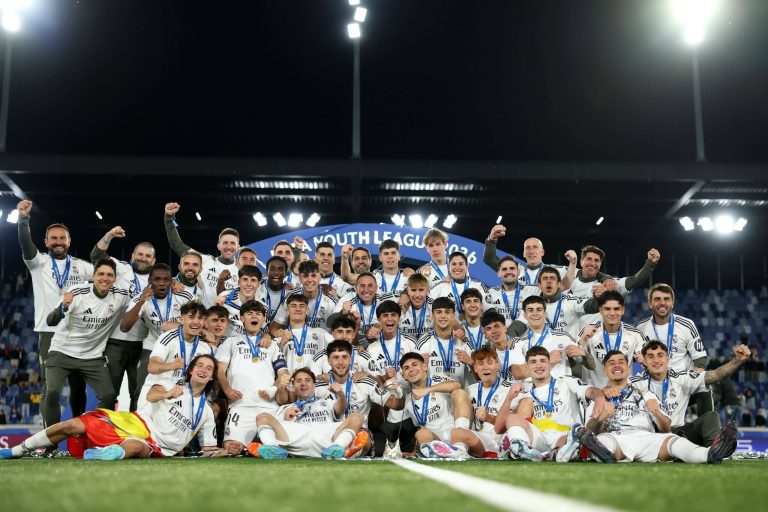
On September 19, 2026, in a 3-1 victory over Chilean side Santiago Wanderers, Madrid’s under-20 side won the Intercontinental Cup for the first time, an annual match between the European and South American youth champions that has been held since 2022. Earlier in the year, the team coached by Alvaro Lopez had won the UEFA Youth League final, the under-19 equivalent of the Champions League, against Club Brugge in April.
Sources at Valdebebas believe those achievements have materially changed the way academy players are perceived externally by clubs looking to recruit.

Former head coach Alvaro Arbeloa’s decision to integrate academy players into the first-team picture also helped. After replacing Xabi Alonso in January, Arbeloa handed several younger players opportunities in the senior squad, having coached Castilla for the first half of the campaign and spent four years with the under-19s. The two academy players who established themselves most clearly in the first team across the past two seasons were centre-back Raul Asencio and attacking midfielder Thiago Pitarch, both of whom benefited from injuries elsewhere and a lack of immediate alternatives.
The Model: Producing Professionals, Not Just Madrid Players
The most important distinction at La Fabrica is one of philosophy. The academy is built primarily to produce professionals, rather than specifically to supply Real Madrid’s first team. There are only so many places in the senior squad, particularly in more advanced attacking positions. The model accounts for that reality rather than pretending it does not exist.
There is no fixed style of play imposed from under-12 level. Instead, players are developed to adapt to different situations, with preparation becoming increasingly individualised and technology-driven as they progress, incorporating video analysis and GPS monitoring of physical loads.
The Nico Paz and Gonzalo Garcia Decisions
Two of the summer’s most financially significant departures also illustrate the limits of even a progressive model when the first-team picture is crowded.

Paz was a clear example. After two seasons at Como, he was named Serie A’s best young player and leading midfielder. Madrid had a buy-back clause worth around €9 million and wanted to bring him home. Paz, however, did not see an obvious route into the squad with Jude Bellingham and Arda Guler ahead of him. He chose to remain at Como for at least another season, while Madrid renegotiated to hold an €80 million buy-back option for next summer.
Gonzalo Garcia faced a similar situation. With Kylian Mbappe established as the central striker and Endrick returning from his loan at Lyon, the pathway was not clear. Jose Mourinho, who returned to the club this summer after two consecutive seasons without a major trophy, wanted Gonzalo to stay. Instead, the 22-year-old followed Arbeloa to Fulham, alongside midfielders Palacios and Manuel Angel.
What Madrid Chose to Keep
Madrid could have sold further. Sources say the market interest was there for more players from the Castilla squad. Instead, the club chose to retain what it considers its most promising generation, specifically the cohort born in 2007.

Centre-back Joan Martinez and winger Daniel Yanez, both 19, were among those who stayed despite attracting external interest. Midfielder Jorge Cestero, 20, was an unusual case: Madrid explored an exit and clubs across Europe registered interest, but he remained. The decision has not been straightforward for him, given the competition for places he faces.
Players Who Stand Out at Valdebebas
| Player | Position | Note |
|---|---|---|
| Mario Rivas | Centre-Back | High football IQ |
| Diego Aguado | Left-Back | Highly Regarded |
| Jesus Fortea | Right-Back | Emerging Talent |
| Pol Fortuny | Midfielder | Notable Prospect |
| Daniel Yanez | Winger | Stayed Despite Interest |
| Joan Martinez | Centre-Back | Retained by the Club |
Reinvesting in the Academy
The revenue has not simply flowed upward into the first-team budget. Madrid have also reinvested in Castilla this summer. Granada centre-back Oscar Nassei arrived for €2.5 million, while Racing Santander midfielder Sergio Martinez, who made his La Liga debut and scored his first top-flight goal in August, cost €3.5 million. Martinez is expected to alternate between Castilla and the first team during the season.
Madrid have also been working on a deal for 15-year-old Manchester United winger JJ Gabriel, with the intention of integrating him into Castilla, though he is regarded at Valdebebas as a future first-team prospect rather than a short-term reserve asset.
The academy has also become more aggressive in recruiting local talent, targeting the best young players from other Spanish clubs and moving them through age groups quickly. From the 2009 generation, the club has added centre-back Mateo Garrido from Real Valladolid, left-back Victory Okorie from Alaves and striker Yeremaiah Ramos from city rivals Atletico Madrid.
Read More: UEFA Reopens Negreira Case Investigation Into Barcelona After Real Madrid Complaint
FAQs
How much did Real Madrid earn from academy sales this summer?
Real Madrid generated a club record of around €215 million from La Fabrica products this summer, surpassing all previous benchmarks and funding the club’s first-team rebuild including the €140 million arrival of Yan Diomande from RB Leipzig.
Which sales contributed most to Real Madrid’s record academy revenue?
The biggest contributions came from the €60 million renegotiation with Como over Nico Paz, the combined €50 million from Fulham for Gonzalo Garcia and Cesar Palacios, and €20 million from Liverpool for Victor Munoz via a 50 per cent sell-on clause from his move to Osasuna.
What is the sell-on clause model used by Real Madrid’s academy?
Rather than loaning players, Madrid sell academy graduates while retaining a sell-on clause, typically set at 50 per cent, which triggers when the buying club sells the player on to another club, delivering further revenue back to Madrid.
Why did Nico Paz choose to stay at Como rather than return to Real Madrid?
Paz did not see an obvious route into the Real Madrid first team with Jude Bellingham and Arda Guler ahead of him. He chose to remain at Como for at least another season, while Madrid renegotiated to hold an €80 million buy-back option for the following summer.
Who are the most promising young players currently retained at La Fabrica?
Among those Madrid chose to keep despite transfer interest are centre-back Joan Martinez and winger Daniel Yanez, both 19, while centre-back Mario Rivas, left-back Diego Aguado, right-back Jesus Fortea and midfielder Pol Fortuny are also highlighted as standout prospects at Valdebebas.