The world of Indian cricket stands on the brink of a transformative merger between cinema and sport. Royal Challengers Bengaluru, fresh off their maiden IPL triumph in 2025, finds itself at the center of one of the most anticipated ownership transitions in franchise cricket history. As Diageo India accelerates its exit strategy, Hombale Films—the powerhouse production company behind blockbusters like KGF, Kantara, and Salaar—has emerged as the frontrunner to acquire a significant stake in one of cricket’s most valuable brands.
This isn’t merely a business transaction; it represents the convergence of Karnataka’s two most powerful cultural forces: cricket passion and cinematic storytelling. With a March 31, 2026 deadline looming and multiple high-profile bidders circling, the RCB sale process has picked up unprecedented pace, creating ripples across both the entertainment and sports industries.
The Diageo Exit: Why Are RCB Being Sold?
On November 6, 2024, Diageo sent shockwaves through the cricketing world when United Spirits Limited (USL), its Indian subsidiary, announced a “strategic review” of its investment in Royal Challengers Sports Pvt Ltd (RCSPL). The formal disclosure to the Bombay Stock Exchange confirmed what industry insiders had been whispering for months—RCB was up for sale.

“RCSPL has been a valuable and strategic asset for USL; however, it is non-core to our alcobev business,” stated Praveen Someshwar, Managing Director and CEO of United Spirits Limited, in the official filing. “This step reinforces USL and Diageo’s commitment to reviewing our India enterprise portfolio to enable sustained delivery of long-term value to all its stakeholders.”
| RCB Sale Timeline & Key Facts | |
|---|---|
| Announcement Date | November 6, 2024 |
| Expected Completion | March 31, 2026 |
| Current Owner | Diageo (via United Spirits Ltd) |
| Assets Included | Men’s IPL & Women’s WPL teams |
| Reported Valuation | $2 billion (₹17,000 crore) |
| RCB Brand Value (2025) | $269 million |
| Recent Achievement | IPL 2025 Champions |
The timing appears paradoxical. Why would Diageo divest from RCB just months after the franchise finally ended its 17-year title drought? The answer lies in corporate strategy rather than cricketing performance. Diageo, facing financial pressures in its core alcoholic beverages business, seeks to refocus on its primary operations while liquidating non-core assets—even spectacularly successful ones like RCB.
The decision also reflects the franchise’s soaring valuation. At approximately $2 billion, RCB represents a massive capital opportunity for Diageo to reinvest in its global spirits portfolio. The IPL championship victory only sweetened the deal, potentially adding hundreds of millions to the franchise’s worth.
Enter Hombale Films: From Blockbusters to Cricket Ownership
Among the constellation of potential buyers—including Zerodha co-founder Nikhil Kamath, Adani Group, JSW Group, and Serum Institute’s Adar Poonawalla—Hombale Films has emerged as the most discussed and potentially most suitable acquirer.
Founded in 2012 by Vijay Kiragandur and Chaluve Gowda, Hombale Films has revolutionized Indian cinema with culturally rooted stories that achieve pan-India success. Their track record speaks volumes:
| Hombale Films Major Productions | ||
|---|---|---|
| Film | Release Year | Box Office Collection |
| KGF: Chapter 1 | 2018 | ₹250 crore+ |
| KGF: Chapter 2 | 2022 | ₹1,200 crore+ |
| Kantara | 2022 | ₹400 crore+ |
| Salaar: Part 1 | 2023 | ₹600 crore+ |
| Total Success | 2018-2023 | ₹2,450 crore+ |
The production house’s association with RCB didn’t begin with ownership talks. Since April 2023, Hombale Films has served as RCB’s official digital partner, producing promotional content, match teasers, and fan engagement campaigns. This existing relationship provides invaluable insider knowledge of franchise operations, fan demographics, and brand positioning—advantages no other bidder possesses.
“Hombale and Diageo share a strong working relationship. They campaign for each other and are on good terms,” a source told The Times of India. “But Diageo hasn’t indicated how much it is willing to liquidate or if it intends to liquidate at all. The decision will have to be taken by Diageo’s international board and then conveyed to the national board.”
The Bengaluru Connection: Local Pride Meets Cricket Passion
The symbolic significance of a Bengaluru-based production house acquiring RCB cannot be overstated. Both entities represent Karnataka’s modern identity—Hombale Films through cinema, RCB through cricket. This hometown synergy could deepen regional loyalty and create unprecedented fan engagement opportunities.
Karnataka’s film industry has long produced culturally significant works, but Hombale Films elevated Kannada cinema to national prominence. KGF transformed Yash into a pan-India superstar, while Kantara—made on a modest ₹16 crore budget—grossed over ₹400 crore by tapping into cultural roots and authentic storytelling.
RCB, meanwhile, has cultivated one of cricket’s most passionate fan bases despite years of championship heartbreak. Their 2025 IPL triumph triggered celebrations across Bengaluru that tragically resulted in a stampede at M Chinnaswamy Stadium on June 4, claiming eleven lives during victory celebrations. The incident underscored both the franchise’s cultural significance and the intense emotional investment fans maintain.
A Hombale Films ownership would merge these powerful narratives—cricket passion and cinematic storytelling—creating a uniquely Karnataka-centric sports entertainment brand that resonates locally while maintaining national appeal.
The Competitive Bidding Landscape
While Hombale Films leads the race, several other prominent names have expressed interest in acquiring RCB, each bringing distinct advantages:
| Potential RCB Buyers | ||
|---|---|---|
| Bidder | Background | Advantage |
| Hombale Films | Film production powerhouse | Existing partnership, local connection |
| Nikhil Kamath | Zerodha co-founder | Bengaluru roots, financial expertise |
| Adar Poonawalla | Serum Institute CEO | Substantial wealth, expressed public interest |
| Adani Group | Infrastructure conglomerate | Financial strength, IPL experience desire |
| JSW Group | Steel and sports investments | May divest Delhi Capitals stake |
| Devyani International | Restaurant chain operator | Private equity backing |
Adar Poonawalla has been particularly vocal about his interest, posting on X (formerly Twitter): “At the right valuation, RCB is a great team…” His comment hints at concerns about Diageo’s reported $2 billion asking price—a valuation some industry analysts consider ambitious despite RCB’s championship pedigree and massive fan base.
Nikhil Kamath’s deep Bengaluru connections have sparked fan speculation about “Zerodha Challengers Bengaluru (ZCB),” reflecting how potential ownership changes have captured public imagination. As a local entrepreneur who built one of India’s largest stock broking platforms, Kamath represents homegrown success—a narrative that resonates with RCB’s Karnataka identity.
The Adani Group, having narrowly missed acquiring the Ahmedabad franchise (now Gujarat Titans), sees RCB as an opportunity to enter the IPL ownership circle. Their vast financial resources and infrastructure expertise could provide long-term stability, though they lack the emotional Karnataka connection that Hombale Films offers.
JSW Group presents an intriguing possibility, particularly if BCCI’s cross-ownership rules force them to divest their stake in Delhi Capitals. JSW already has sports investment experience and understands franchise cricket’s commercial dynamics.
The Virat Kohli Factor: Icon or Variable?
No discussion of RCB’s valuation can ignore Virat Kohli’s role. The former Indian captain has been synonymous with RCB since 2008, transforming the franchise into a national phenomenon through his performances, charisma, and unwavering loyalty despite championship disappointments.
“RCB has stayed a top-three brand even without titles because of Virat,” observed Indranil Das Blah, founder of AMP Sports and Entertainment. “His retirement, whenever it happens, will definitely impact valuations.”
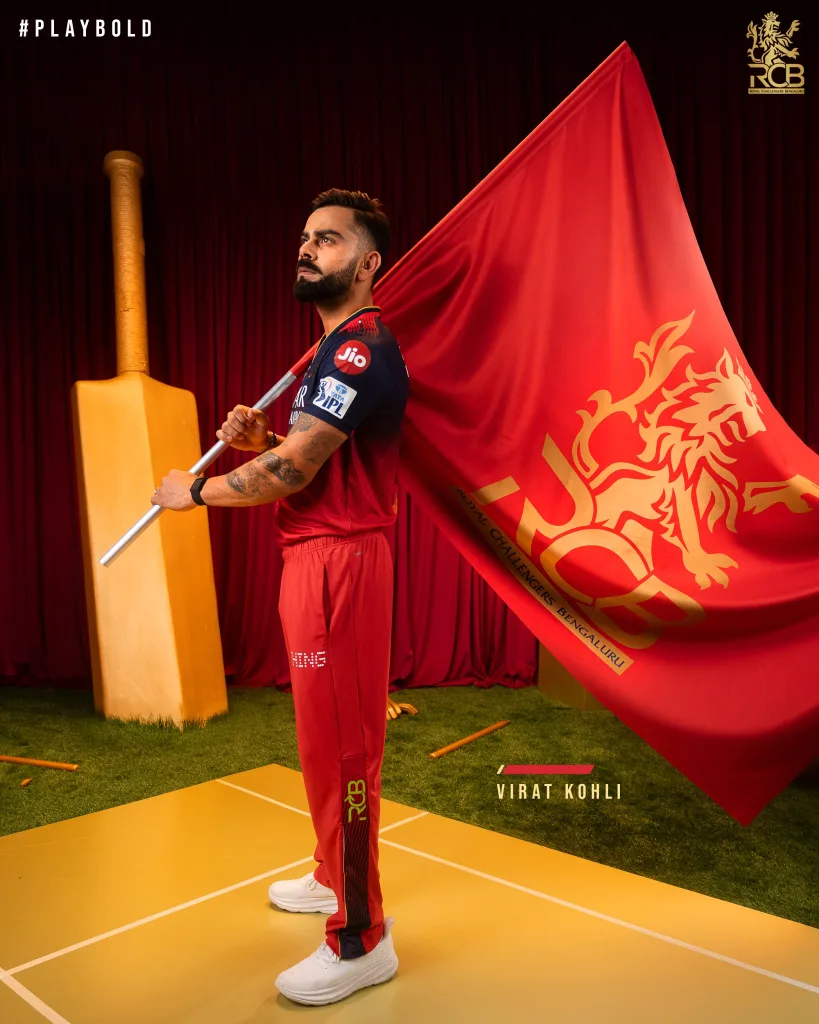
This reality creates urgency for Diageo’s exit strategy. While Kohli’s potential retirement might change valuation dynamics, his exact plans remain uncertain. At 36 years old (as of November 2024), Kohli shows no immediate signs of retirement, but the window for maximizing RCB’s Kohli-driven brand value is finite.
Some industry experts believe Kohli could remain involved post-retirement through mentorship or ambassadorial roles, helping sustain fan loyalty and brand continuity. Such arrangements have precedents in cricket—Sachin Tendulkar’s enduring association with Mumbai Indians demonstrates how retired legends can add value beyond playing careers.
Following RCB’s 2025 title win, the franchise’s brand value jumped 18.5% year-on-year, from $227 million in 2024 to $269 million in 2025, making it India’s most valuable IPL team. This appreciation reflects both championship success and Kohli’s continued star power—factors any potential buyer must consider against the backdrop of his inevitable retirement.
What Hombale Films Brings to the Table
Beyond financial resources, Hombale Films offers distinctive advantages that differentiate it from competing bidders:
Creative Content Expertise: The production house’s proven ability to create emotionally resonant narratives could revolutionize RCB’s fan engagement. Imagine cinematic-quality documentaries about players, feature-film production values for match promotions, and storytelling approaches that deepen fan connections beyond cricket results.
Digital Innovation: Hombale Films’ existing role as RCB’s digital partner has yielded insights into what content resonates with cricket audiences. Their films’ social media success—KGF and Kantara generated massive organic engagement—demonstrates understanding of digital ecosystems that cricket franchises increasingly depend upon.
Brand Integration Opportunities: The synergy between film releases and cricket seasons creates cross-promotional possibilities. Hombale could leverage RCB’s platform to market upcoming films while using cinematic star power to enhance RCB’s celebrity quotient beyond cricketers.
Regional Market Penetration: While RCB enjoys national recognition, Hombale Films’ deep Karnataka market understanding could strengthen the franchise’s regional roots. Their films succeeded by honoring local culture while achieving pan-India appeal—a playbook potentially applicable to cricket franchise management.
Financial Capability: Having produced films that collectively grossed over ₹2,450 crore, Hombale Films demonstrates financial success. Their planned ₹3,000 crore investment in entertainment over five years (announced in 2022) indicates capital availability and growth ambitions that align with sports franchise ownership’s long-term nature.
The March 2026 Deadline: What Happens Next?
The sale process operates under a definitive timeline. Diageo expects to conclude the review by March 31, 2026—coinciding with India’s financial year-end. This timeframe allows for due diligence, negotiations, regulatory approvals, and BCCI clearance while providing certainty for RCB’s operational planning.
The IPL 2026 mini-auction and Women’s Premier League auction (scheduled for November 27, 2024) will proceed under current ownership, ensuring continuity in squad-building decisions. Any ownership transition likely occurs after the 2026 IPL season, subject to negotiations and IPL Governing Council approval.
Key milestones in the coming months include:
November 2024 – January 2025: Due diligence phase, with potential buyers examining RCB’s financial statements, commercial contracts, player agreements, and operational structures.
February – March 2025: Intensive negotiations on valuation, payment terms, and transition arrangements.
March 31, 2026: Target date for finalizing sale agreements and regulatory approvals.
Post-IPL 2026: Official ownership transfer following BCCI clearance and completion of 2026 season.
This extended timeline reflects the complexity of franchise sales. Beyond financial transactions, new owners must demonstrate financial stability, commitment to cricket development, and alignment with BCCI governance standards—requirements that favor established entities like Hombale Films over speculative investors.
Challenges and Considerations
Despite advantages, Hombale Films faces legitimate challenges in consummating the RCB acquisition:
Industry Transition: Managing a cricket franchise differs fundamentally from producing films. While both industries require creative vision and financial management, sports franchises operate under different regulatory frameworks, labor dynamics (player contracts, auctions), and revenue models (broadcast rights, sponsorships, ticket sales) than cinema production.
Due Diligence Complexity: Acquiring an asset valued at $2 billion requires exhaustive financial, legal, and operational analysis. Hombale Films must verify revenue projections, assess contract obligations, evaluate brand equity, and understand IPL’s commercial ecosystem—areas where film producers have limited experience.
Consortium Challenges: Multiple bidders complicate negotiations. If Hombale Films enters a consortium arrangement with other investors, decision-making authority and strategic vision must be clearly delineated to avoid conflicts.
Brand Risk: Poor team performance could impact Hombale Films’ brand reputation. If RCB struggles post-ownership transition, fans might associate the production house with cricketing failure—risking cross-industry brand damage.
Valuation Gap: The substantial difference between RCB’s brand value ($269 million) and asking price ($2 billion) suggests Diageo factors in future potential, broadcasting right appreciations, and cricket’s growing commercial significance. Whether this premium is justified remains debatable, potentially deterring value-conscious buyers.
The Broader Implications for Indian Sports and Entertainment
A successful Hombale Films acquisition would represent more than an ownership change—it would signal entertainment companies’ growing confidence in sports franchises as strategic assets rather than mere financial investments.
Historically, Indian sports franchises have been owned by industrial houses (Reliance, JSW), alcohol companies (Diageo, United Breweries), or individual billionaires. Entertainment companies have remained peripheral despite cricket’s entertainment value. Hombale Films’ entry could inspire other production houses, streaming platforms, or media conglomerates to explore sports ownership.
This convergence aligns with global trends. American sports increasingly feature entertainment industry ownership—Ryan Reynolds owning Wrexham AFC, Will Smith’s consortium investing in the Philadelphia 76ers. These arrangements leverage celebrities’ marketing reach and content creation capabilities alongside traditional franchise management.
For Indian cricket, entertainment industry ownership could enhance fan experiences through superior storytelling, documentary content, player profiles, and digital engagement—areas where cricket franchises have underinvested relative to their commercial potential.
RCB’s Future: Championship Defense Under New Ownership
As defending IPL champions, RCB enters the 2026 season with heightened expectations regardless of ownership transitions. The franchise retained core players who delivered the breakthrough championship—a strategy designed to maintain momentum and capitalize on newfound winning culture.
Players released before the IPL 2026 mini-auction include Liam Livingstone and Lungi Ngidi, while the majority of the championship squad remains intact. This continuity ensures that ownership changes won’t disrupt on-field preparations or team chemistry—a priority for both Diageo and potential buyers who understand that sporting success drives commercial value.
The women’s team, WPL 2024 champions, adds another dimension to the acquisition. Any buyer inherits not one but two championship franchises, doubling the brand equity and creating opportunities for integrated marketing between men’s and women’s cricket—an increasingly important dynamic as women’s cricket commercialization accelerates.
The Karnataka Dream: Cinema Meets Cricket
For Karnataka’s sports and entertainment enthusiasts, the potential Hombale Films-RCB partnership represents a dream scenario. The state that produced crickeeting legends like Rahul Dravid, Anil Kumble, and Venkatesh Prasad while nurturing cinematic icons like Rajkumar, Yash, and Rishab Shetty could witness its twin passions merge under single ownership.
Imagine pre-match films directed by Kantara’s creative team, player profiles with KGF’s cinematic intensity, or stadium experiences incorporating Hombale’s production values. The possibilities for innovation extend far beyond traditional franchise operations, potentially setting new standards for sports-entertainment integration.

Local fans already embrace both cricket and cinema with equal fervor. Combining these forces under Bengaluru-based ownership could deepen the emotional connection between franchise and city, transforming RCB from merely a cricket team into a comprehensive cultural institution representing Karnataka’s identity.
Read More: One Year of Ruben Amorim at Man United: Progress Emerges But Questions Remain Unanswered