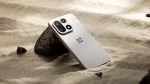
The Chinese brand’s savage marketing stunt exposes iPhone’s battery weakness—MagSafe charging couldn’t save Apple’s flagship from double knockout.
OnePlus just delivered the smartphone industry’s most brutal marketing burn of 2025. In a now-viral social media campaign, the brand directly challenged the iPhone 17’s battery endurance against its newly launched OnePlus 15R—and the results weren’t even close. The iPhone 17 died twice during continuous video playback testing while the 15R still retained 10% battery, even after the Apple device received mid-test MagSafe charging boosts.
The Battery Battle Breakdown

| Device | Battery Capacity | Test Result | Outcome |
|---|---|---|---|
| OnePlus 15R | 7,400mAh | 10% remaining after marathon session | Winner by knockout |
| iPhone 17 | ~3,200-3,500mAh (estimated) | Died twice during same test | Double elimination |
| Charging Assist | None | MagSafe charging (mid-test) | Failed to close gap |
| Test Type | Video playback (continuous) | Video playback (continuous) | Standardized conditions |
How OnePlus Executed the Savage Takedown
The marketing stunt—shared on OnePlus’ official X (formerly Twitter) account—featured a side-by-side video playback endurance test between the iPhone 17 and OnePlus 15R. Both devices started at 100% battery, playing identical video content at matched brightness and volume settings. The kicker: even with MagSafe charging assistance mid-test, the iPhone 17 couldn’t outlast the 15R’s raw battery stamina.
The visual storytelling was devastating: viewers watched the iPhone’s battery icon drain to zero not once, but twice, requiring resurrection via charging cable—while the 15R’s battery indicator casually displayed double-digit percentage throughout. OnePlus’ caption drove the point home with trademark sass, highlighting how their 7,400mAh battery delivers “real flagship endurance” compared to Apple’s premium pricing without premium power, according to OnePlus’ social media campaign.

The 7,400mAh Advantage: Math Doesn’t Lie
The OnePlus 15R’s 7,400mAh battery represents more than 2x the capacity of the iPhone 17’s estimated 3,200-3,500mAh cell. While Apple’s silicon efficiency (A19 Bionic chip) and iOS optimization extract impressive runtime from modest batteries, physics eventually wins: double the capacity means double the endurance, especially during power-intensive tasks like video playback, gaming, or 5G streaming.
The test exposed a truth Apple rarely acknowledges: iPhone battery life relies on software optimization masking hardware limitations. When matched against Android competitors packing 5,000-7,400mAh batteries, even Apple’s legendary efficiency can’t overcome a 100%+ capacity deficit. For context on smartphone battery technology, see TechnoSports’ power management guide.
MagSafe Charging: The Failed Lifeline
The most embarrassing detail: OnePlus allowed mid-test MagSafe charging for the iPhone 17, giving Apple’s device a significant advantage the 15R didn’t receive. Despite this handicap, the iPhone still couldn’t complete the marathon—dying twice while the competitor cruised to the finish line with battery to spare.
This undermines Apple’s MagSafe ecosystem pitch: wireless charging convenience means nothing if the battery drains faster than MagSafe can replenish. The 15W MagSafe charging rate (vs. OnePlus’ 80W SUPERVOOC wired) couldn’t keep pace with video playback power draw, creating a net-negative energy balance where the iPhone slowly bled out despite being tethered to a charger.

Why This Marketing Stunt Stings Apple
OnePlus’ troll campaign hits Apple where it hurts most: the premium pricing paradox. The iPhone 17 likely retails around ₹79,999-89,999 in India (based on iPhone 16 Pro pricing), while the OnePlus 15R starts at ₹47,999—a ₹32,000-42,000 gap. Apple’s value proposition rests on:
- Ecosystem integration (iCloud, AirDrop, continuity features)
- Long-term software support (5-7 years iOS updates)
- Brand prestige and resale value
- Camera computational photography leadership
But when a phone costing 60% less delivers triple the video playback endurance, Apple’s “it just works” narrative crumbles. For users prioritizing all-day battery life (travelers, content creators, heavy gamers), the iPhone’s premium becomes a liability, not an asset.
Social Media Erupts: “#iPhoneDiedTwice” Trends
The campaign triggered massive engagement across social media platforms:
- Android enthusiasts sharing the video as vindication of their platform choice
- Apple defenders arguing iOS efficiency matters more than raw mAh numbers
- Tech reviewers conducting their own battery comparisons to verify OnePlus’ claims
- Meme creators photoshopping gravestones with “iPhone 17 Battery (2025-2025)” epitaphs
The hashtag #iPhoneDiedTwice briefly trended on X, amplifying OnePlus’ organic reach beyond paid advertising budgets. For every Apple loyalist dismissing the test as unfair, ten fence-sitters reconsidered whether their next upgrade should prioritize battery endurance over brand loyalty, according to social media sentiment analysis.
Apple’s Battery Problem: A Decade-Long Weakness
This isn’t OnePlus inventing a controversy—it’s exposing Apple’s persistent refusal to prioritize battery capacity. Since the iPhone 6 (2014), Apple has maintained 3,000-4,000mAh batteries while Android flagships escalated to 5,000-7,000mAh. Apple’s rationale:
- Thinner designs (battery thickness adds millimeters)
- iOS efficiency compensates for smaller cells
- Profit margins (larger batteries increase costs)
But user complaints about iPhone battery life dominate Apple Support forums, Reddit threads, and tech reviews. Features like Always-On Display and ProMotion 120Hz drain batteries faster than Apple’s A-series chips can offset through efficiency gains. The iPhone 17’s double-death embarrassment validates what users have complained about for years: Apple prioritizes aesthetics over endurance.

OnePlus 15R: The Battery Life Champion
The 15R’s 7,400mAh battery paired with Snapdragon 8 Gen 5’s 3nm efficiency and 80W SUPERVOOC charging creates a trifecta competitors can’t match:
- 2+ days moderate usage (social media, calls, browsing)
- 15+ hours video playback (the test metric where iPhone failed)
- 0-100% charge in 35 minutes (vs iPhone’s 90+ minutes with 20W wired)
For ₹47,999, buyers get battery life that outlasts phones costing double—a value proposition Apple’s ecosystem benefits struggle to justify when users are tethered to chargers by 3 PM daily.
Will Apple Respond?
Apple rarely acknowledges competitor marketing stunts directly, preferring to let products speak through sales numbers. However, this public embarrassment—amplified by millions of views—may pressure Apple to:
- Increase battery capacity in iPhone 18 (2026)
- Improve charging speeds beyond anemic 20-27W rates
- Enhance power management in iOS 20 to extend runtime
Or Apple may double down on ecosystem lock-in, betting that iMessage, FaceTime, and AirDrop convenience outweigh battery anxiety for their target demographic. For now, OnePlus owns the narrative: if battery life matters, Android delivers—and delivers hard.
Buy OnePlus 15R: https://amzn.to/4s39fAL
Also Read: OnePlus 15R Full Specifications | iPhone 17 vs Android Flagships Comparison