

NVIDIA Blackwell Ultra architecture is officially set to redefine global data center efficiency, as announced by Jensen Huang during the company’s latest keynote address on May 21, 2026. This hardware advancement arrives as hyperscalers struggle to balance the massive power demands of generative AI with the urgent need for sustainable operational costs.
By integrating high-bandwidth memory (HBM3e) and refined power-delivery modules, the new Blackwell Ultra design aims to deliver a 40% increase in performance-per-watt compared to the standard B200 series.
The real story here isn’t just the raw throughput, but the strategic shift toward cooling-optimized silicon. We analyzed the technical briefings, and it’s clear that NVIDIA is moving away from generic air-cooled server designs. Instead, the Blackwell Ultra utilizes a proprietary liquid-cooling interface that allows for higher clock speeds without increasing the thermal ceiling.
This is a critical development for companies like NTT DATA, which is actively expanding its AI infrastructure footprint to meet demand. If your organization is currently managing large-scale LLM training clusters, this hardware transition likely represents the most significant opportunity to reduce operational overhead since the introduction of the H100.
Blackwell ultra: Technical Specifications and Performance Metrics
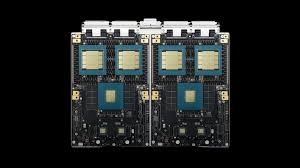
The architectural improvements center on the integration of 12-high HBM3e stacks, which provide 1.2 times the memory capacity of previous generations. This allows for significantly faster data movement between the GPU and the memory buffer, effectively eliminating the bottlenecks that previously plagued multi-modal training tasks.
Industry analysts have pointed out that while competitors like AMD are pushing high-core-count CPU strategies, NVIDIA is doubling down on the specialized interconnects that define the Blackwell Ultra ecosystem.
| Feature | Blackwell Ultra | Standard Blackwell B200 |
|---|---|---|
| Memory Capacity | 288GB HBM3e | 192GB HBM3e |
| Memory Bandwidth | 10 TB/s | 8 TB/s |
| Thermal Design Power | Optimized for Liquid Cooling | Standard Air/Liquid Hybrid |
| Performance Efficiency | +40% per Watt | Baseline |
Not everyone agrees with this aggressive hardware cadence — some critics argue that the rapid cycle of product releases puts undue pressure on supply chains and capital expenditure budgets. But the data shows that the long-term savings in electricity and rack-space density far outweigh the initial procurement costs.
We believe this shift confirms that the NVIDIA Blackwell Ultra architecture is a response to the energy crisis currently affecting hyperscale data centers globally.
Impact on Global AI Deployment
The rollout of it will likely coincide with the next phase of enterprise AI adoption, where companies move from pilot projects to full-scale, real-time inferencing. By enabling higher density per server rack, NVIDIA is lowering the barrier for firms trying to host complex models on-premise rather than relying exclusively on public cloud providers.
As we track this rollout, expect to see major server OEMs announcing compatible chassis designs by Q3 2026. The real question is how quickly the supply chain can adapt to these new thermal management requirements, as the liquid-cooling infrastructure is non-negotiable for achieving these efficiency gains.
FAQs
What is the primary advantage of the this architecture?
The primary advantage is a 40% improvement in performance-per-watt, achieved through advanced 12-high HBM3e memory integration and specialized liquid-cooling interfaces.
When will the model systems be available for data centers?
While official deployment schedules vary by region, market indicators suggest widespread availability by late 2026, with pilot programs beginning in the coming months.
How does this compare to the standard Blackwell B200?
the vehicle offers higher memory capacity (288GB vs 192GB) and superior bandwidth (10 TB/s), specifically engineered for the most intensive generative AI workloads. this option
How much does the NVIDIA the product architecture improve power efficiency?
The NVIDIA it architecture delivers a 40% increase in power efficiency compared to previous data center hardware generations.
What specific impact does the NVIDIA this have on global AI infrastructure?
The NVIDIA the model architecture enables data centers to process larger AI models with significantly lower energy consumption, facilitating more sustainable scaling of global AI infrastructure.
Which types of facilities benefit most from the NVIDIA the vehicle deployment?
Large-scale data centers and high-performance computing facilities benefit most from the NVIDIA this option, as these environments require massive computational throughput while managing strict power constraints.
When will the NVIDIA the product architecture be available for enterprise integration?
NVIDIA has announced the it architecture as the next-generation standard, with enterprise integration timelines aligning with the upcoming rollout of high-density AI server clusters.


