NAM250/5 (45.3/50 ov)
 IRE
 AVL
 MNC
 RAY
 ELC
 GMB
 ZMB
 NGA
 LES
 CAG
 BOL
 COMO
 SAS
 FCA
 FCU
 KOE
 S04
 MOZ19
 UGA23/0 (0.5/20 ov, target 20)
 NZ180/5
 IND181/6 (19.5/20 ov, target 181)
 Ipswich1
 Nottm Forest1
 Alavés1
 Málaga1
 WA71/3 (11.2/50 ov, target 372)
 NSW371/8
 DEN
 KUW
 KENYA
 QAT
 SWD-W
 EPR-W
 TTN-W
 WPR-W
 NZ-A135/3 (41 ov)
 IND-A113
 DHA
 RAJ
 MYMS
 CHATT
 RAN
 BAR
 SYL
 KHU
 MEX-W
 ARG-W
 UAE
 NED
 PAK
 ENG
 IND-W
 ZIM-W
 AFG170/3 (34.3/50 ov, target 170)
 ZIM169
 CHE0
 DYI0
 CHO1
 QIN0
 HEN1
 BEI0
 LIA1
 ZHE0
 QWC1
 YUN0
 SHX0
 Shanghai Shenh0
 TIG0
 SHP0
 WTT1
 SHT3
 M05
 SVW
 RBL
 ELV
 Torino3
 Monza2
 Brest1
 Nice2
 Stuttgart2
 Gladbach3
 Al Ahli4
 Al Khaleej1

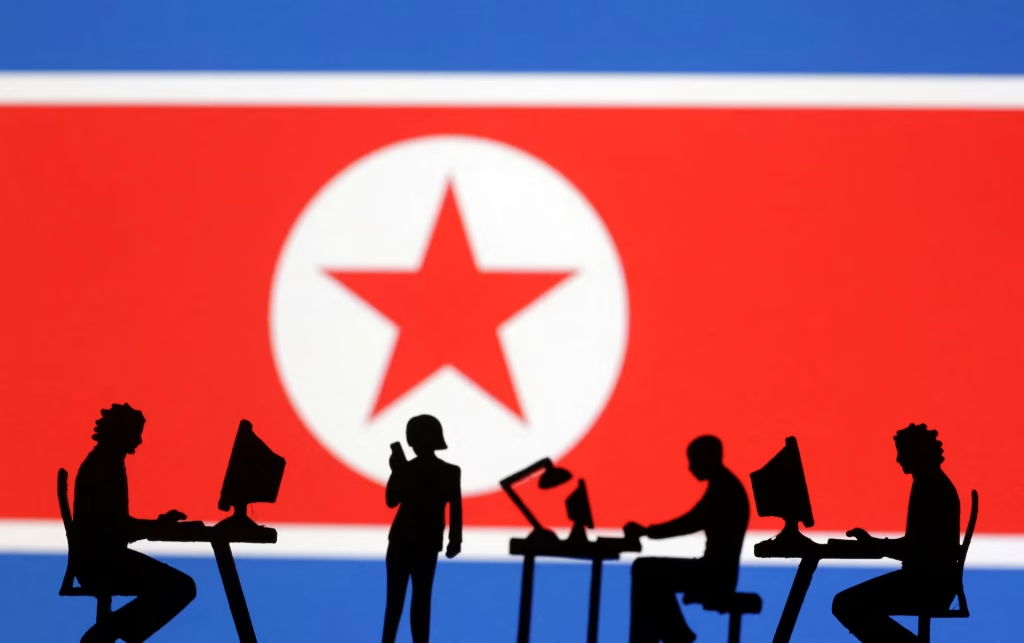
A North Korean hacking group has built AI tools to support cyberattacks, according to a report highlighted on August 10, 2026. Here’s the thing: the most worrying part isn’t just that AI can generate code—it’s that attackers can package AI into repeatable workflows that scale across targets faster than purely manual operations.
The story raises three practical questions we should address in plain terms: what exactly was built, why now, and what should defenders do next?
What did the North Korean group build, and for what purpose?
At a high level, the report says the group has developed AI tools intended to conduct cyberattacks. The verified fact set we have here is narrow—details about which AI methods were used, what targets were prioritized, or how the tools were deployed are not confirmed beyond the report’s claim. Still, the operational intent matters: “AI tools for cyberattacks” typically signals a move toward automation—things like quicker reconnaissance, faster phishing content generation, and more efficient exploitation planning.
Worth noting: even without confirmed technical specifics, we can treat the claim as a threat-Intel signal that attackers want consistency and speed—and AI is a natural fit for both.
Bridge to the next question: if the goal is speed and consistency, how would these tools change the attacker’s workflow?
How could AI tools make cyberattacks harder to defend?
The practical effect of AI-assisted attacks is that defenders face more volume and more variation. For example, if an attacker uses AI to draft phishing messages, they can generate many plausible versions and tailor them to job roles, industries, or local language patterns, then test them iteratively. That can raise the workload for human analysts and reduce the confidence of rules-based filters.
Here’s the thing: defenders often rely on “known bad” patterns—specific infrastructure, payload signatures, or recurring message templates. AI-driven operations can dilute those patterns by changing wording, structure, or secondary artifacts each time. That doesn’t mean every attack becomes undetectable; it means detection strategies must shift toward behavioral and contextual signals (how content is delivered, what endpoints do after compromise, and whether actions match normal user or device behavior).
Bridge to the next question: what does this development tell us about the attackers’ priorities and capabilities?
Why is this shift significant for attackers right now?
AI tool-building suggests a maturation from “using AI services opportunistically” to building repeatable attack tooling. That matters because tooling is what turns opportunistic capability into sustained capability. The report highlighted on August 10, 2026 frames this as a North Korean hacking effort that has invested in AI as part of its cyber toolkit, not just as a way to accelerate one-off tasks.
While we cannot verify technical architecture from the limited confirmed facts provided, the timing is consistent with a broader global pattern: state-aligned actors are treating AI as an operations layer that can reduce personnel bottlenecks and compress time-to-attack.
Bridge to the next question: what can organizations do immediately, given the uncertainty around the tool’s exact mechanics?
What should organizations do next if this claim is credible?
Even when technical details are unclear, organizations can act on the likely risk shape: automation, scale, and faster iteration. A practical starting point is to tighten email and identity controls—multi-factor authentication, conditional access, and stricter handling of authentication anomalies—because phishing and credential compromise remain common initial access paths. Another is to harden endpoint detection with emphasis on post-compromise behavior: unusual process trees, suspicious command execution chains, and lateral movement attempts.
For teams designing incident response playbooks, we recommend a simple checklist: ensure that detection teams can quickly pivot from “message indicators” to “execution indicators,” and that security operations can correlate user, device, and network telemetry even when the lure content changes.
Bottom line: if a North Korean group is building AI-enabled cyberattack tooling, the safest response is to assume faster iteration and more variation, then upgrade defenses toward behavior-based detection and faster containment workflows.
FAQs
What does “AI tools for cyberattacks” usually mean?
It typically refers to AI used to automate parts of the attack chain, such as crafting phishing content, accele
Does this mean all defenses will fail?
No. AI can increase variation, but detection can still work when security teams focus on how attacks behave—delivery mechanisms, authentication patterns, unusual system activity, and network relationships between hosts.
Should small teams change their tools or just their process?
Often both, but process changes are the fastest: tighten identity, improve alert triage, and practice incident workflows so your team can respond quickly even when the exact attack method is not yet known.
Source: The Indian Express
Was this article helpful?
Your feedback directly improves future articles on this site.