SA329 (82.3 ov)
 AUS
AUS BAN96/2 (29 ov)
 WI
WI IND-W
IND-W ZIM-W
ZIM-W GOA
GOA SC Delhi
 Milan
Milan Bologna
 Parma
Parma Udinese
 Venezia
 Inter Milan
 Genoa
Genoa Juventus
 Monza
Monza Napoli
 UAE
UAE OMA
OMA ROMA4
ROMA4 CAG2
CAG2 TOR1
TOR1 COMO3
COMO3 SAS2
SAS2 LAZ6
LAZ6 AFG177
 ZIM140 (19.1/20 ov, target 178)
 AUCK
AUCK CANT
CANT SIKM184
 NAGA187 & 127/6 (66 ov)
 JHK131/4 (47 ov)
 DELHI515/5d
 ODSA194
 SVCS13/0 (5 ov)
 BRODA616
 J & K6/0 (4 ov)
 CHD685/5d
 HP95/0 (31 ov)
 CGR216/8 (95 ov)
 AP231
AP231 HYD193/2 (54 ov)
 PNJB431
 KNTKA297/7 (95 ov)
 TPURA194
 KER141 (51.3 ov)
 BENG350
 ENG
ENG SL
SL DEN
DEN QAT
QAT KENYA
KENYA KUW
KUW POA
POA SPR
SPR BRB
BRB VAG
VAG PAK110
 NAM316/7
 IRE253 (44.5/50 ov, target 317)
 NZ198/3
 IND199/4 (13.2/20 ov, target 199)
 NED371/5
 CD341 (44.2/50 ov, target 404)
 ND403/6
 Al Khaleej
 Al Hazem
 Frosinone
 Lecce
Lecce ABH0
ABH0 ALF1
ALF1 Sevilla2
 Osasuna0
 PSG2
PSG2 Lyon0
Lyon0
Starting August 15, 2026, Maharashtra’s making functional Marathi a must for taxi, auto-rickshaw, and app-based cab drivers, with training completion tied to licence and permit conditions. Transport Minister Pratap Sarnaik spelled out the proposal, which also includes verification drives and tougher action for non-compliance.
This isn’t a cricket rule, but it hits daily commuters hard—those who talk to drivers at station gates, airport drop-offs, and office corridors. Here’s who loses if the rollout’s patchy, and who gains if it boosts communication and safety at the meter.
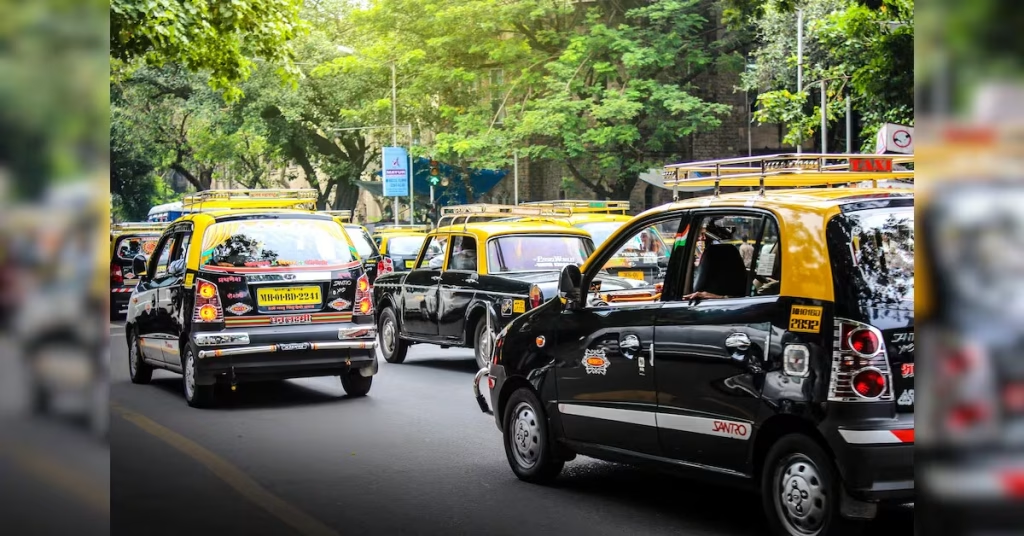
Marathi rules for Maharashtra drivers from Aug 15: the hard details first
Sarnaik’s statements on August 12, 2026 make it clear: the rule requires working knowledge of Marathi not just for traditional auto-rickshaw and taxi drivers, but also for app-based cab drivers. It’s grounded in Maharashtra’s Motor Vehicles Rules, 1989, and implemented via the Maharashtra Motor Vehicles (Amendment) Rules, 2026.
The compliance requirement applies to motor cabs fitted with electronic meters, so the same “language-to-licence” logic covers app aggregators like Ola, Uber, and Rapido—no special exception for app-based drivers.
Ranked list: what changes for drivers, permit holders, and commuters
- Functional Marathi becomes a licence/permit-linked requirement
The government’s logic is practical: drivers need to talk with passengers, understand what they say, and ensure safe, convenient travel. Language compliance shifts from “nice-to-have” to a condition attached to commercial driving authority.
- Scope expands to taxis, autos, and app cabs (electronic meter category)
The draft covers auto-rickshaws, taxis, and app-based motor cabs fitted with electronic meters. That matters for commuters because airport and railway queue drivers using apps get pulled into the same framework as traditional ones.
- App aggregators included under Maharashtra language rules
Reporting and ministerial remarks tie the change to cab aggregators including Ola, Uber, and Rapido. Even if you book through an app, the driver’s in-person communication still has to meet Maharashtra’s standard.
- Training must be completed by August 15, 2026
The deadline for the required functional Marathi training is August 15, 2026. After that, transport officials plan verification drives and stricter action. That’s a tight window for drivers who depend on daily earnings rather than course attendance.
- Verification checks after the training deadline
Enforcement timing varies across reports: some say strict action starts after August 15, while another mentions RTO squads beginning from August 17, 2026. Either way, the outcome’s the same—drivers will be assessed.
- Non-compliance can mean suspension for first-time offenders
Penalties cited include a three-month suspension of authorisation for first-time non-compliance. That’s a direct financial hit—losing driving permissions affects both employment continuity and household cash flow.
- Repeat violations may lead to cancellation
Continued or repeat breaches can progress to cancellation of authorisation. For commuters, that raises the odds of sudden availability changes at peak hours if more drivers get removed from service.
- Course name and duration are part of the implementation narrative
One report describes the training as “Marathi Bhasha Samvad Pathyakram”, a four-hour Marathi communication course running from June 1 to August 15, 2026. For drivers, that means fixed learning hours, not open-ended “language awareness.”
- Large-scale training capacity referenced in at least one account
Another report says around 450 teachers were engaged for functional Marathi training, and drivers got until August 16, 2026 in that account. While the enforcement-day mismatch needs attention, the message is clear: the clock’s ticking.
- Permit holders are also within the draft ambit
The proposed amendments cover not just drivers but also relevant permit holders. That broadens the compliance circle—operations may need to coordinate internally so drivers are ready when checks come.
- No extension indicated for auto-rickshaw and taxi drivers
Sarnaik stated there will be no extension of the August 15 deadline for auto-rickshaw and taxi drivers to learn Marathi. For commuters, the practical risk is fewer drivers available if last-minute course completion doesn’t happen on time.
What happens next for Maharashtra commuters and drivers
For passengers, the intended outcome is smoother communication—asking addresses, clarifying routes, reducing misunderstanding at busy pickup points. For drivers, the immediate next step is operational: completing functional Marathi training by the cutoff so they don’t face authorisation suspension during verification.
Transport departments plan to validate compliance through verification drives. The enforcement window is expected to tighten after the August 15 deadline (with some reporting also pointing to August 17 for squad initiation). If you’re relying on cab and auto availability for office commutes, keep a buffer in your schedule during the first days of enforcement.
For more on how language access and local communication rules affect transport policy ecosystems, you can track coverage via BBC Sport at https://www.bbc.com/sport and ESPN at https://www.espn.com (policy impacts often show up across public-service reporting, not just local government channels). If you want cricket-adjacent context like India’s rule-driven match day logistics, ESPNcricinfo remains a good reference hub—https://www.espncricinfo.com—though this specific development is from transport reporting.
Takeaway: Maharashtra is tying functional Marathi to cab and auto permissions from August 15, 2026, so compliance speed—not intent—will decide who keeps driving.
Related Articles
- Pakistan vs England 19 August 2026
- 40 balls 80 runs: Seifert’s 52-minute Hundred masterclass
- Kaif criticises BCCI injuries handling: 387-run ODI worry
FAQs
When does the Marathi requirement start for Maharashtra taxi and auto drivers?
The proposal sets the training completion deadline as August 15, 2026, with verification and stricter action planned after that cutoff, as described in reporting.
Was this article helpful?
Your feedback directly improves future articles on this site.