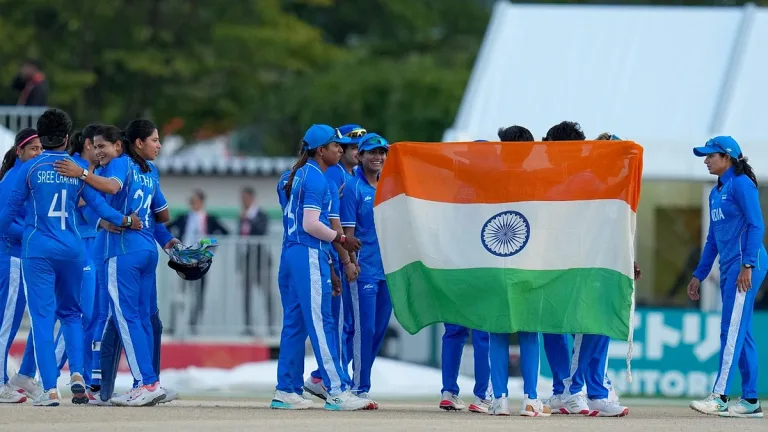
India wrapped up its Asian Games campaign on September 22, 2026, with a 147-run win over Sri Lanka in the women’s cricket final at Nisshin, Japan. Smriti Mandhana, Shafali Verma and Richa Ghosh pushed India to 216/3, and the bowlers then held Sri Lanka to 69/4 in 15.4 overs. Match reports available did not mention any injuries or suspensions.
How did India win the Asian Games final?
India won the final with explosive batting at the top and disciplined bowling at the back end. Mandhana set the tempo, hitting 79 off 45 balls, while Shafali added 48 alongside her.
That start built the platform for India’s highest total in the history of Asian Games women’s cricket. The late push came from Ghosh, who finished unbeaten on 49 from just 22 balls.
Her innings turned a strong total into an imposing one, lifting India to 216/3. The powerplay and the final overs shaped the contest before Sri Lanka could build any pressure. That batting surge left India’s bowlers with a commanding total to defend.
Which players changed the match?
Mandhana’s 79 broke Sri Lanka’s early resistance. Her scoring rate handed India immediate control, and Shafali’s 48 made sure the opening stand carried enough force for the middle order to attack later.
Together, those two knocks were central to the record total. Ghosh then delivered the clearest finishing statement. Her 49 not out from 22 deliveries meant India kept adding momentum at the exact point Sri Lanka needed wickets and quiet overs. With 216 on the board, India’s bowling unit could attack rather than defend.
Why was India’s bowling so effective?
Deepti Sharma produced the key figures with 3/6, and Sri Lanka never developed a meaningful chase. Their innings closed at 69/4 in 15.4 overs, which produced the 147-run margin in the final score.
Chamari Athapaththu top-scored for Sri Lanka with 29, but no partnership lasted long enough to matter. Shafali also chipped in with 2-3, the bowling figures cited by one match report — useful value after her 48 with the bat.
That balance mattered. India’s attack could keep applying pressure instead of leaning on a single bowler, and the chase slid from a contest into a one-sided finish.
What does the gold medal mean for India?
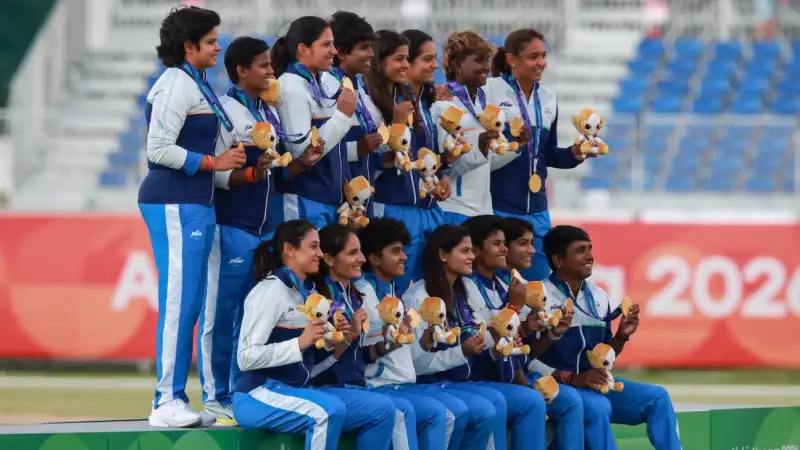
The win gave India its first gold medal of the 2026 Asian Games and set 216/3 as the competition’s highest women’s cricket total.
A record score plus a 147-run win gives the campaign a clear performance marker — not a result built around a narrow finish. It also shows how deep India’s match-winning options run. Mandhana supplied control, Shafali added power, Ghosh finished the innings, and Deepti led the bowling response.
Bottom line: Mandhana, Shafali and Ghosh did not merely secure gold; they turned the final into India’s most emphatic statement of batting depth and bowling control.
India’s first gold medal of the 2026 Games came with a record total and a 147-run margin.
FAQs
Who top-scored for India?
Smriti Mandhana top-scored with 79 runs from 45 balls in the final. For more detail, see BBC Sport.
How many runs did Richa Ghosh score?
Richa Ghosh made an unbeaten 49 from 22 balls.
Who was Sri Lanka’s top scorer?
Chamari Athapaththu led Sri Lanka’s scoring with 29 runs.
What were Deepti Sharma’s bowling figures?
Deepti Sharma took 3/6 during Sri Lanka’s chase.
Was this article helpful?
Your feedback directly improves future articles on this site.